
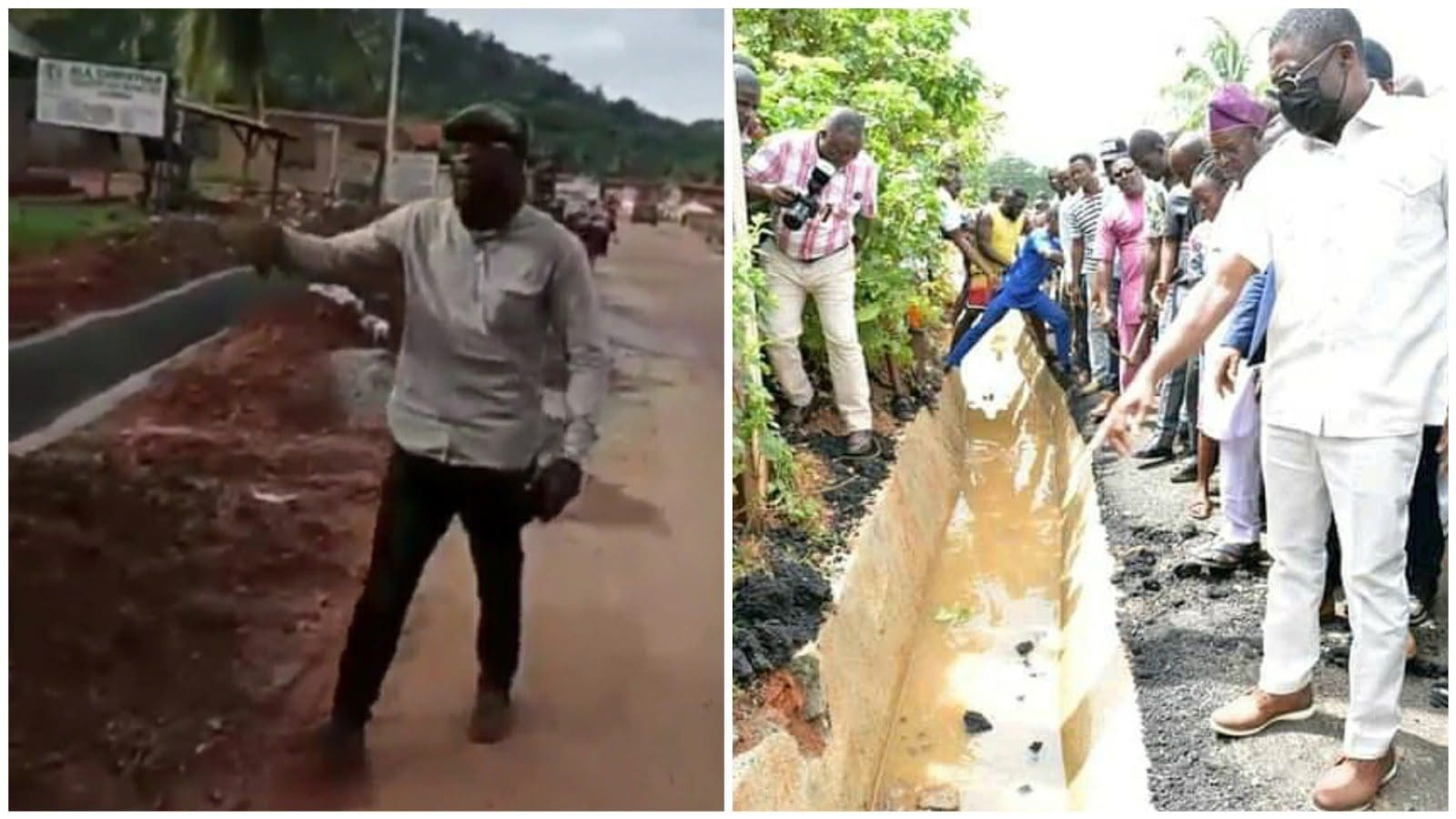

‘The worthy example of citizen Lawani has become a rally point for advocates of good governance, who have continued to stress that his activism presents a model of what Nigerians in all communities should be doing to ensure good and accountable governance. In the end, citizen Lawani may have been speaking for his community in Igarra, Akoko Edo Local Government Area of Edo State, but his activism has sparked renewed hopes that it is possible for “we the people” to make the governance process deliver quality service.’
EARLIER in the month of July, a citizen, Alaba Lawani shot himself to national limelight by simply recording a video, which gave a no-holds-barred account of how community projects executed with public resources were being shoddily done. As he pranced all about the project site, simultaneously using his bare hands to yank off what was supposed to be the finished concrete casting of the drainage project, his voice rang out in clear denunciation of all those responsible for such a corruption-prone and badly executed project. The viral nature of the content in the video, sent shock-waves all over cyberspace. It jolted many, especially because its impact reverberated across the country.
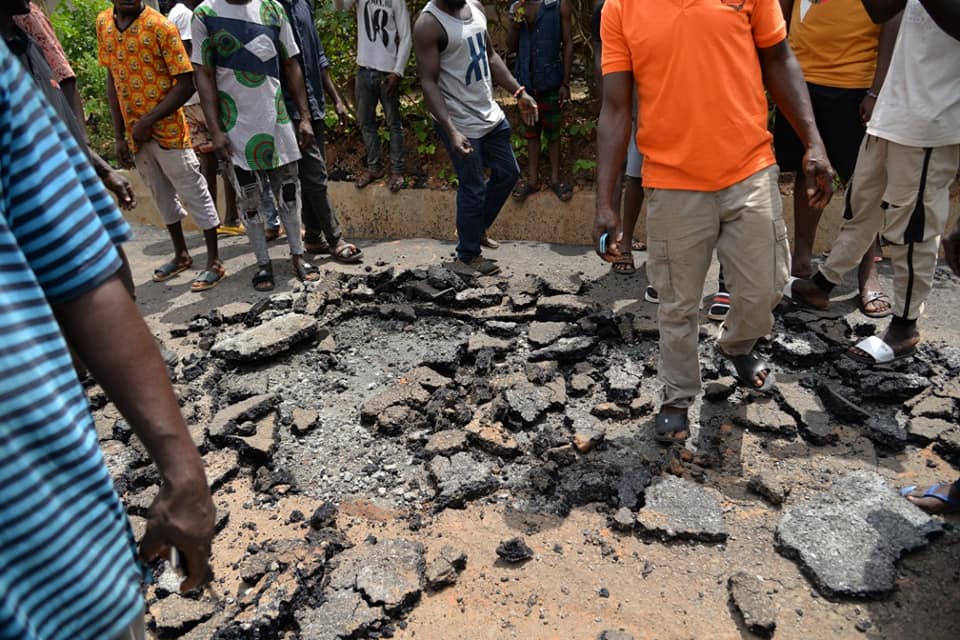
Leveraging on the multiplier effect of social media, the footage chronicled the frustration, anger and indignation of many ordinary Nigerians who have watched over the years as the monster of corruption undermined the capacity of the state to deliver social goods and services. The project, which substandard execution drew the critical lenses of the very active citizen was for the construction of link roads and drains in Igarra Akoko-Edo Federal Constituency.
Following the viral video, there was a flurry of activities, including a probe by the Edo State Government, as well as the celebrated handover of the contractor to the anti-graft agencies to enable him explain the motivations for such below par execution of a public works project, which cost taxpayers hundreds of millions.
Peter Akpatason, the lawmaker, who nominated the project for his constituency has since been creating the impression that he is a victim, who was not part of the project design and execution process. The lawmaker was quick to write to the Federal Ministry of Agriculture and Rural Development Agency under whose purview the project falls. Feeling the heat from the backlash and the public outcry, the nominator of the project has had to volunteer tons of explanations.
With citizens’ groups and anti-corruption activists calling for urgent investigation of the allegations as exposed in the video, the lawmaker, who should ordinarily have been the one playing the oversight role, which would ensure proper execution of the project, has been all over the place talking about how embarrassed he has by the sub-par execution of the project.
Notwithstanding the claims and counter-claims, anti-corruption groups, who have expressed excitement about the exemplary approach of Lawani are hoping to see similar actions replicated across the country.
In the specific context of constituency projects, there has been anger that the vast majority of citizens have not benefited from the implementation of the projects. Anti-corruption groups have also observed that apart from the debilitating effects of corruption on the constituency projects, there is the challenge of little or no citizens’ participation in the budgeting, design and implementation of the projects.
Flawed as it has been described, Nigeria’s 1999 Constitution as amended has created clear provisions mandating the government in concert with citizens to abolish all forms of corrupt practices. Specifically, Section 14 (1c) states that “the participation by the people in their government shall be ensured in accordance with the provisions of this Constitution.” Similarly, Section 15(5) of the Constitution mandates that the State “shall abolish all corrupt practices and abuse of power.”
What it means therefore is that as active citizens like Lawani blow the whistle by exposing what is happening on the ground, teeth actors as the anti-corruption agencies are known, have to do their bit by keeping a close watch on how public funds are expended. These realities have probably informed the recent efforts by the Independent Corrupt Practices and other Related Offences Commission (ICPC), which has been at the forefront of ensuring that the public interest, with particular reference to constituency projects, is not sacrificed for the greed of contractors and political actors.
One of the areas the Commission has been looking at is the issue of the opaque appropriation for constituency projects. To address this, it has been pushing for the passage of the proposed Constituency Projects (Budgeting Provision) Bill 2019. At a recent public hearing, stakeholders made a case for the Constituency Projects (Budgeting Provision) Bill, 2019. The Chairman of the ICPC, Bolaji Owasanoye harped on the need for openness in constituency project budgeting.
According to him, “Constituency Projects are highly beneficial to the people but opaque appropriation for capacity building and empowerment, which enables abuse and diversion of public revenue, needs to be regulated by the proposed Act. The Bill should provide that projects must be completed to ensure that projects are not abandoned after the tenure of a particular legislation,” he recommended further.
In support of the proposed legislation, the ICPC boss stated that the Commission, guided by its work on tracking of constituency projects over the last two years, had submitted a five-page memorandum. On clauses 3 to 5 of the Bill, which deal with the procedure for infusion of constituency projects in the budget, the Commission proposed a Needs Analysis to guide the Appropriations Committee in the consideration and allocation of projects.
Professor Owasanoye who frowned at vague description of projects, saying that it was the bane of constituency projects, called for adequate description to avoid switching and changing of the scope of the projects by MDAs, aides or sponsors. As these institutional reforms take shape, anti-corruption activists have remained persistent in making the point that citizens oversights cannot be jettisoned.

The worthy example of citizen Lawani has become a rally point for advocates of good governance, who have continued to stress that his activism presents a model of what Nigerians in all communities should be doing to ensure good and accountable governance. In the end, citizen Lawani may have been speaking for his community in Igarra, Akoko Edo Local Government Area of Edo State, but his activism has sparked renewed hopes that it is possible for “we the people” to make the governance process deliver quality service.

