
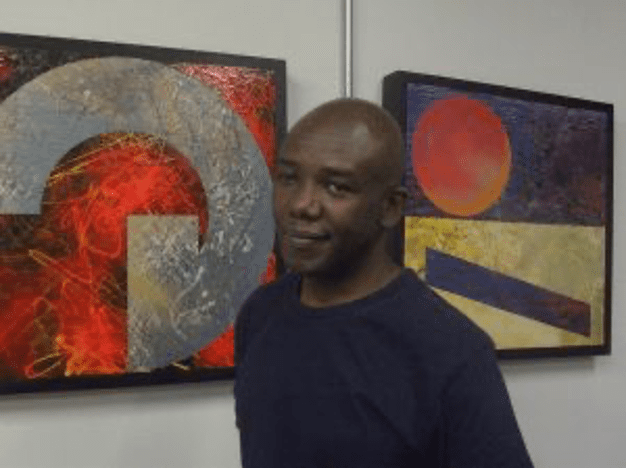

Words on the Times caught up with writer, academic Sanya Osha to discuss his workflow and workload during the pandemic, balancing research and output, the migration to the Zoom-iverse, and how the virtues of humanism help us… Osha is the author of several books including Postethnophilosophy (2011) and Dust, Spittle and Wind (2011), An Underground Colony of Summer Bees (2012) and Ken Saro-Wiwa’s Shadow (Expanded Edition) (2021) among other publications. He works at the Institute for Humanities in Africa (HUMA), University of Cape Town, South Africa.
COULD you tell us a bit about your work and the ways that the pandemic has affected your plans for it?
Sanya Osha: I work as a senior research fellow at the Institute for Humanities in Africa (HUMA), University of Cape Town, South Africa. At the Institute, I curate a seminar series on African epistemologies in which we invite mainly established scholars, academics and intellectuals from different parts of the world who prioritise African themes and issues. The seminar series began earlier this year and so far the response from both presenters and participants has been quite encouraging. I also co-ordinate the post-doctoral programme in which colleagues at the Institute present their ongoing research. In addition, the Institute is planning on establishing an in-house journal, Palava Sauce, and I have been involved in efforts to kick off the publication.
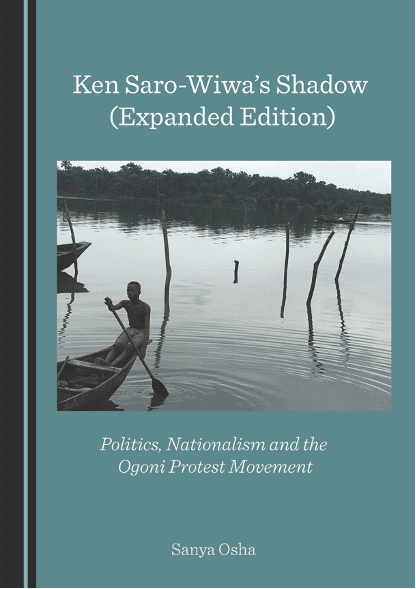
I also have my own research projects that are undertaken as part of pursuing the thematic research programmes of the Institute. As such, most of my work address topics in African epistemologies- which my book, Dani Nabudere’s Afrikology: A Quest for African Holism (2018) addresses – the question of ‘being human’ and the public sphere in Africa which is the focus of my most recent book, Ken Saro-Wiwa’s Shadow (the expanded edition): Politics, Nationalism and the Ogoni Protest Movement (2021).
I was invited for a number of activities in Europe for instance which I couldn’t take up due to the pandemic. The same situation occurred in various parts of Africa which I couldn’t visit due to the plague. Travel was once a big part of my work but all that has changed for now.
In what ways are you working now that you weren’t before?
Due to the COVID 19 pandemic, most of our work is conducted online. All our meetings are held via Zoom. We organise a wide range of other seminar series largely of an interdisciplinary nature that are conducted as Zoom meetings. There are also regular book launches that take place through the same medium. In addition, various forms of academic research are conducted online. Indeed all our professional and personal activities have simply migrated into the digital sphere. In the age of the internet, this trend had already been established but in the age of the pandemic, the migration has been wholly total and the consequence of this has been quite dramatic.
Suddenly, various aspects of life, work and business in particular, are wholly dependent on technology. Not just for primary operations but the entire gamut of the rhythms of existence have been drawn into a vortex of highly evolved technological processes to which they have become arguably subordinated. We have also accepted that we now live and work in an era of social distancing and this has transformed the ways in which we relate to one another. The questions of space and physical presence have also been radically transformed by digitalisation. It is possible to work remotely and efficiently meanwhile presence has become infinitely tactile, mediated by technologies that capture, extend and ultimately, disseminate the self.
What have you found most supportive and/or heart lifting in this time?
It has been gratifying to note that even in the age of the pandemic and the complete migration into the digital realm, many of the spaces being created via WhatsApp and varied social media, for instance, seek to maintain and extend the human need for conviviality, reciprocity and cordiality. So historically and philosophically, in order to locate the nuclei of the human, we still need to continue to engage with the ethics of mutuality. And as historically social beings, humans are populating ordinarily impersonal digital spaces with age-old core values that seek to secure the foundations of what we understand to be human. The virtues and requirements of complementarity, interconnectedness, mutuality and sociality are acquiring new inflections, tonalities and currency within an ostensibly transhuman dispensation and in contexts of astonishing velocities, transitoriness and dissolution. For me, all of this speaks to the fundamental adaptability and resilience of the human spirit.
How can our blog communities best support you?
Blog communities can continue to provide support by promoting the core values and virtues of humanism and the related ones I mentioned earlier; conviviality, reciprocity and mutuality. In other words, when as individuals we confront the infinite chasm of solitude and the terror of social isolation and alienation, we should be able to remember that there are safe spaces that can provide us with care, understanding and decency. And once these basic principles are established, we can then begin to enjoy the often ineffable pleasures of sharing art, discourse and ideas for which blogs such as yours were created.

