

A Synoptic summary
BEFORE meeting the subject in this power conversation, it is important to have a historical summary of the evolution of the Nigerian Electric Power Industry.
The history of electricity generation in Nigeria started as far back as 1896 when electricity was first generated in Lagos. The capacity of the plant, which was more than the maximum demand was 60kw. That was 15 years after electricity was first produced in England.
In spite of the fact that electricity was introduced to Nigeria more than a hundred years ago, development of the product has been slow. In 1946, electricity supply in Lagos, Warri, Port-Harcourt and many other places in the country, was taken over by the Public Works Department (PWD).
The colonial government allowed a mining company to set up a hydroelectric plant in the Plateau; and the Nigeria Electricity Supply Company, (NESCO), started operations at Kuru, near Jos. NESCO had permission to serve the mines. By agreement, it sold power to the ECN, which resold to Jos and the population of the area.
Ordinance No 15 of 1950, established the Electricity Corporation of Nigeria, ECN. However, the ECN started operations on April 1, 1951. By that Ordinance, management of electricity supply in Nigeria, had a body focused entirely on the development of the product, for social and economic development of the country.
Within the first decade, the ECN made considerable progress. Regions were self-governing for about half a decade and the Federal Government saw the need for increased power generation. By 1962 an Act of Parliament established the Niger Dams Authority, NDA.
On first of April 1973, operation of Electricity Corporation of Nigeria and Niger Dams Authority were merged in a new organisation known as National Electric Power Authority, NEPA. In essence, the new body amounted to a renaming of the ECN, whose duty was to develop all facets of the three links that make the chain of electricity supply industry – generation, transmission and distribution.
After about 40 years of poor governance by successive Federal Military Governments due principally to insidious management control, and denials of essential subsidies, ineptly managed NEPA ran into a web of difficulties. Distribution, the warehouse, the link between the industry and consumers of its product, the cashier/banker, indeed, the façade of the industry, was asphyxiated. Distribution networks everywhere in the country, some more than 60 years old, could not be maintained. Naturally, they turned decrepit, some needing wood straps to keep conductors apart.
Poor governance continued. Endemically, the FGN found square pegs for round holes. Fractionalisation of the industry continued. The message to those in search of electricity supply of the right characteristics was, we can’t seem to know what is happening; so, please supply your need if you can.
After more than 40 years, the message drove the prime drivers of electricity supply industry viabilitysaway. Now only residential and small commercial users patronize the industry. As a consequence, the load factor became low and the industry cannot supply low cost electricity. And, therefore, there has to be tariffs to make the industry a worthwhile venture for any entrepreneur!
Change had to happen. The FGN decided that it would privatise the sector. In place of NEPA, it created the Power Holding Company of Nigeria, PHCN. In March 2005, when President Olusegun Obasanjo signed the Power Sector Reform Bill into law, the FGN, through the Bureau of Public Enterprises, BPE, created Nigerian Electricity Regulatory Commission.
Private companies were given opportunities to participate in electricity generation, transmission and distribution. However, transmission remains without private investment. Deregulation of PHCN took place on November 1, 2013. It created eleven Discos and six Generation Companies, GENCOs, all with varying degrees of ownership shared with the FGN.
Indeed, the journey of Nigeria’s electricity supply from ECN, through NEPA to PHCN, and many current owners has been tortuous and bumpy. The power sector continues to experience difficulties and one hopes that governance that understands the complicated mechanics of the industry — the interplay between plant costs, the costs to serve, and the population of consumers, will someday emerge to end the people’s anguish.
******
Nigeria Power sector: The Uwaifo memoirs…
How ethnicity, influence-peddling cripple efficiency, growth (1)
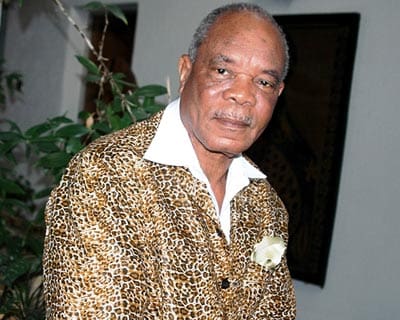
In a nutshell, that was a synoptic summary of Nigeria Power sector. But the story goes deeper than that. Naija Times had an interview session with one of Nigeria’s foremost Metering and Instrumentation, Distribution, and Commercial engineers, SOLOMON OMORODION UWAIFO FNSE, FAEng. His accomplished career in the industry began more than 65 years ago. He says merit was not what ran the power sector in Nigeria and that personal connections, ethnicity, and religion were the criteria for progress, yet it was and is the atrociously unthinking governance, that has destroyed the electric power supply sector.
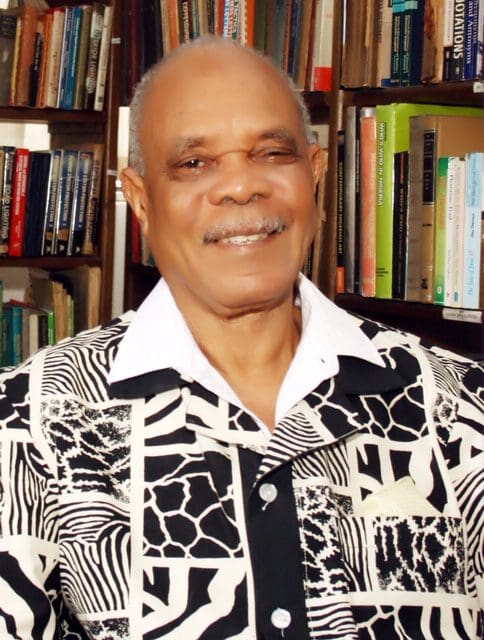
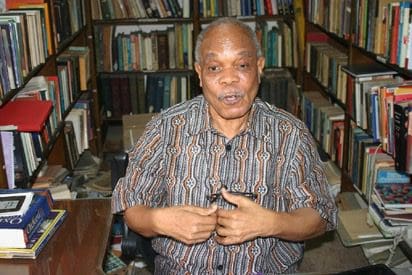
Nearly 90 years old, Uwaifo talks to CHRIS OTAIGBE in this first piece. Here is the excerpt of the interview:
In the beginning…
THE Electric Power Industry in Nigeria employed me in 1954. I left after about 20 years of service when ECN and NDA were merged to become NEPA. I didn’t see the ECN, particularly its governance, as one that did justice to individual’s ability as well as contribution. After I left, and over the succeeding years, that perception held true. In my time, the ECN was more interested in lengths of tenure, how long one has served the Corporation. It was not about one’s quality of mind or contribution. Where did one come from? And from which ethnic nation? Nigeria was positioning herself for where the country is today — the more powerful, voluble, or deceitful tries to take over everything including the country.
I happen to come from Edo. Because of that, politically, I mattered little and could be treated anyhow. It did not start today; that is the way Nigeria has gone on over the years. At home now, and at my age, I speak my mind. Anything less, and I would not have deserved life and living.
Looking back, Nigeria has hardly ever given her engineers opportunities to contribute to the development of the Electric Power Supply sector in the same way that the colonial government did to British engineers between 1951 and 1960.
(He gave me a copy of a lecture, ‘Save our electric power supply industry,’ which he delivered in Abuja on November 22, 2019, after he read a paragraph from the blurb — his citation on the back page.)
I had been lucky to be a student at the Yaba Technical Institute in 1950 after a difficult start in life. That watershed passed and I joined the ECN in 1954 to train as an Assistant Technical Officer. I graduated in 1957 as the best Electrical Engineering student. By 1958, I was a Federal Government Scholar and I studied Electrical Engineering at the Faraday Engineering College London, the first Engineering College in the world. The door was open and life in the engineering profession had truly begun.
I returned from the UK in 1962. By the first quarter of 1963, I was Engineer and Manager of the ECN, Onitsha. Late 1965, I was Distribution Planning and Design Engineer at the ECN Headquarters, Lagos. By January 1967, I was Instruments and Meter Engineer. I spent nine months in Austria, the UK, and Switzerland training and familiarising myself with Meters and Instruments, with some of the world’s best manufacturers. I returned to Lagos late that year.
Unfortunately, the Civil War precipitated a state of flux in the ECN and I moved yet again to the Commercial Engineering Department, after I was head-hunted by Mr Roy G. Blanchette, the Chief Commercial Engineer. He baited me with an offer of Acting Senior Commercial Engineer. However, I told him that I would go to the Commercial Department only if management, on its own, posted me there. Indeed, management did and I accepted.
Just before I resumed, Roy Blanchette rushed home to care for his wife, who was reported to have fallen gravely ill. Sadly, she passed and Roy did not want to remain in Nigeria on his return. As it turned out, the ECN posted another engineer, who had served the Corporation longer, to the department as Acting Chief Commercial Engineer. And we both arrived in the department the same week.
How did I get to Kaduna in 1970 after the head-hunt that took me to the Commercial Department? I was shipped out of Headquarters to Kaduna as the District Manager.
I was 37 and sad because I didn’t think I was, at that time, a material for a District Manager, whose duty was, principally, that of a Chief Faults-man, as I had insisted in many of my earlier writings.
District Manager was a higher position, wasn’t it?
In those early years of my life, positions were of little interest to me. I had returned to Nigeria after I was an Eisenhower Fellow in the United States in 1969. Given the aim and spirit of that Fellowship, my overwhelming interest was to influence the ECN’s Commercial Engineering practices. Transferring me to Kaduna at that time was, therefore, a dissolution of that interest.
Roy Blanchette had assured me that because of my track record and exposure in the ECN, I was the best material for the advertised position of Senior Commercial Engineer, which he froze when I accepted the offer. Although I had served for about nine months as Acting Senior Commercial Engineer before I became an Eisenhower Fellow, I did not agitate to be confirmed for that position because I believed that my time would come, given the situation of my boss, who was also acting. What has always been important to me was performance, which I thought would ultimately be recognised.
Jockeying for Position by Nigerians
I knew that it had happened again. As soon as Roy Blanchette’s situation happened, jostling to fill the position of Chief Commercial Engineer began. At that point, knowledge was not important; it was how long one had served the ECN, even if one didn’t know what Commercial Engineering was about. As was expected, management posted an Area Manager to Act as Chief Commercial Engineer. Roy Blanchette had promised me upgrade, but he was no longer around. However, I did the work and my position was so designated.
I started to see a lot of funny things happen. Well, I soldiered on. We surveyed new towns for electrification, around the country, and reported on the things to do in each town to provide electricity and at what costs. However, those were planning and design functions that should have been handled by the Planning and Design Department of the same ECN, but they were drudgeries that the department would let go and that the Acting Head of Commercial Engineering Department was happy to take on, because he had no idea what the duties and purpose of Commercial Engineering Departments were.
That was 1968. Towards the end of that year, there was the information from the Nigeria Society of Engineers that the Eisenhower Exchange Fellowship, through the US Embassy, wanted a Nigerian Engineer to be exposed to Marketing in Electric Utilities. That was relevant to the work of Commercial Engineering Departments. The idea was that Nigeria had borrowed a lot of money to build the Kainji Dam for mostly Hydro-electricity generation, which Nigeria needed to upgrade her generating capacity. And Kainji was to be commissioned in the first quarter of 1969. So, I, like other engineers in and outside the ECN, applied.
At the interview, a colleague and friend and I, found that an Assistant General Manager, the Divisional Head of the ECN’s Commercial Engineering Department, was in the hall. My colleague restrained me when I wanted us to leave. I thought that we would be wasting time competing with an elite of the industry. My colleague thought otherwise, and we stayed to be interviewed. So, America is not Nigeria, my colleague had insisted.
You and Chris knew who he was and you knew he came for the interview. Yet, you wanted to him to ask. Did you do that for some sort of humor?
No, we knew him, but we thought he had come as an expert to help the embassy select a good engineer. I had told you that he was an Assistant General Manager. I was only Acting as a Senior Engineer. My colleague was not a Senior Engineer. In the end, surprisingly, I was the one selected. So, I became the Eisenhower Fellow that year after spending over seven months in the United States. It was a wonderful experience.
I came back and wrote a paper, Marketing, Rates, and the Electric Utility in Developing Countries. Published in the Nigerian Engineer, a journal of the Nigerian Society of Engineers, in December 1969, I presented it before members of the Society in November 1969. It was very well received by the audience, and, with the benefit of hindsight, I had, unwittingly, triggered competition with my boss.
It never got into my head that we were rivals. After all, I had been moved from one department to another in the past. Rumours started flying around that Prince S I A Akenzua later crowned Oba Erediauwa of Benin, Chief Anthony Enahoro, and Lt. Colonel Ogbemudia, all had convinced the US Embassy to select me as the Eisenhower Fellow, as a prelude to an Edo taking over the Commercial Department of the ECN.
It was ludicrous, yet I was happy and I thought that Commercial Engineering Department was a good place to settle down. I came back and I wanted to start operating as a Commercial Engineer should. But my acting Head of Department wanted no part of it. That was when he started his mantra, “You don’t sell what you don’t have.”
Why?
I thought the answer to your question was obvious. Even if I knew to the contrary, what could I have done about it? But it could be because I was designated Senior Commercial Engineer in-charge of Sales or because he thought that Commercial Engineering was not about selling. Anyway, I said to him that doing the detritus or drudgeries of other departments was not Commercial Engineering. I pleaded that we could do the right thing learning together. I believed that the General Manager told him the same. But he had made up his mind. Some of those old General Managers and Chief Executives appointed by the World Bank, were notorious at avoiding what they thought bothered on politics.
(How he was taken from the headquarters unceremoniously, the plagiarism angle)
What really led to my transfer from Headquarters? I confess to some naivety at that time. As I said, I had presented my paper before the NSE. Competition was in the air, but I did not know. My Acting Head of Department sent me an Internal Memorandum that I should do a study to convince the Lagos commercial and industrial community about the benefits of the new power supply from Kainji and why a new tariff might be necessary. At that time the NDA was angling for a price higher than the ECN had expected. I did the study as he requested and I handed it over to him.
A week after, I went to the drawing office and the draughtsman had blown up the graphs I drew as part of my study. What the hell is this? Blowing up my graphs? Why? I asked.
The draughtsman was surprised, “don’t you know?” he replied. The Chief is presenting a paper to the West African group of the Institution of Electrical Engineers (IEE) of the UK. My study was to be used in an international forum, and I was not told? I asked in visible annoyance.
I went to the Acting Chief Commercial Engineer and I said, “I saw the Draughtsman blowing up my graphs. What is going on? I couldn’t believe the man when he said you were using them for your paper for the IEE. His reply infuriated me. “I am the Head of Department. What I do with reports in the Department is business.”
“Even for the ECN, my employers, my reports are my intellectual properties and it will acknowledge my ownership in whatever forum it is used. You must do the same. If you will not, you do not have my authority to use the report”. He responded, “don’t be puerile!” Riled, I told him that, “I have not come to be insulted.” It is my study, not yours. You do not have my permission to use it.
He did everything to stop me from going to America. The ECN owed me 14 months leave because I had not been on leave for seven years. So, I applied for leave and travelled for the Fellowship. It was late Engr. Chief S.O Fadahunsi, who called him to order when he wouldn’t stop meddling with the situation.
I came back and he covertly wanted benefits of the Fellowship. He seemed hell bent on not learning Commercial Engineering, while unsuccessfully trying to work out his own job description for the Department.
In such circumstances, he was probably right to tell management that he could not work with me. I understood that the General Manager and Chief Executive could not muster the guts to tell him that he would rather build a Commercial Engineering Department than waste time settling issues of personal relationships. Rather, he said to him, “if you do not want Mr. Uwaifo to help you build the Commercial Engineering Department, give him to me.” And the man quickly asked him to have me.
That was how I got to Kaduna as District Manager. That was how the ECN stopped me from spreading orthodox Commercial Engineering Practice and knowledge to other Nigerian Engineers. That was how my American experience through the Eisenhower Exchange Fellowships ended up in my lone head except for my books and professional papers, which I treasure. I would have been happier if I had the opportunity to practice it with Nigerian colleagues in the ECN.
Did you have a freer hand there in Kaduna?
Yes, within the limits of the authority of that position. District Managers were heads of both Districts and Undertakings, that is, the geographical town or city where their offices were located. But their personal performances were almost entirely based on how well their Undertakings did. Such split managements are bad, almost useless, without essential tools, usually more engineers and subsidiary staff.
ECN management rewarded my performance, however, when less than a year after, it posted me to the higher position of the Northern Area Manager. Just before the merger of the ECN and the NDA, I withdrew my service in 1973.


6 comments
… [Trackback]
[…] Read More Information here to that Topic: naijatimes.ng/power-a-journey-through-troubled-times/ […]
… [Trackback]
[…] There you can find 87610 more Info on that Topic: naijatimes.ng/power-a-journey-through-troubled-times/ […]
… [Trackback]
[…] Here you can find 33678 more Information to that Topic: naijatimes.ng/power-a-journey-through-troubled-times/ […]
… [Trackback]
[…] Find More on that Topic: naijatimes.ng/power-a-journey-through-troubled-times/ […]
… [Trackback]
[…] Find More on on that Topic: naijatimes.ng/power-a-journey-through-troubled-times/ […]
… [Trackback]
[…] Info on that Topic: naijatimes.ng/power-a-journey-through-troubled-times/ […]
Comments are closed.