
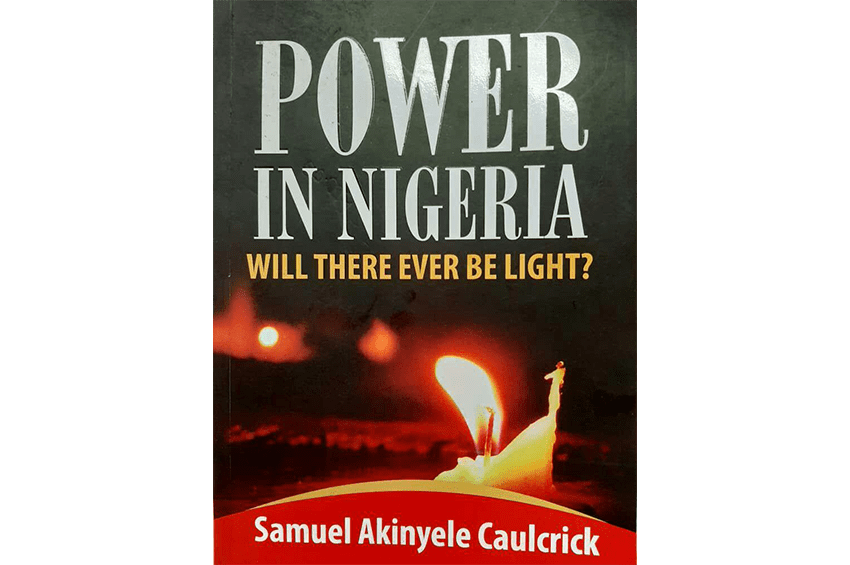

By Samuel Akinyele Caulcrick
If history repeats itself, and the unexpected always happens, how incapable must man be of learning from experience! — George Bernard Shaw
IT all started with an event in a faraway land in Iran. The 1979 Iranian Islamic Revolution was then innocuous to Nigeria and its people, but it turned out to impact on the lives of Nigerians and their country’s fortunes. In the wake of that revolution was the global oil glut of early 1980 that precipitated the prolonged global recession of the mid-1980s to early 1990s. Consequently, in response to that trying period, Nigeria in 1986 tweaked its resource allocation, but not before a countrywide deliberation – the Structural Adjustment Programme debate. The outcome liberalised the country’s foreign exchange allocation formula as the antidote, at the time, to contain the fallouts of that recession. The nation thus did away with the allocation of the country’s resources based on the import licensing financial system and replaced it with a liberalised currency market.
The government at the time, adopted the bidding method at the foreign exchange market to allocate resources; in other words, to sell to the highest bidder – the first in Nigeria’s history. The concept of the neoliberal economic policy, popularised and encouraged by the IMF and the World Bank in the early 1980s was to allow an economy, particularly in the Third World, to operate freely based on market forces and devoid of central planning. It was a difficult time as the politicised and corrupted import licensing system for resource allocation had become a bottleneck and had started weighing down the development in the country. It was a landmark decision that has had a profound effect on Nigeria’s economic fortunes.
Future historians, sitting in their quiet moments, might question the wholesome adoption of a liberalised currency market in 1986. The economy that ensued in the late 1980s and beyond saw a distinct pattern of performance based on either short-term or long-term investments. Economic activities with quick returns on investments would perform better and flourish but to the detriment of other segments. Buying and selling imported finished products powered by the oil receipts dominated forex allocation as traders outbid other sectors at the foreign exchange market. Critical sectors of the economy such as import substitution activities that ought to preserve the nation’s wealth, even if they do not add much to the sovereign wealth lost out in forex allocation.
Long-term investment activities such as education; manufacturing; farming; animal husbandry; mineral extraction, to name a few that use engineering principle to create wealth by adding physical or intellectual values, somewhat continue to struggle. These socioeconomic activities regrettably could have improved immensely or multiply the sovereign wealth of the nation valued in real terms, by either additional forex earning through exports or by way of preservation of Nigeria’s wealth using import substitutions with locally made products and produce.
The Nigerian economy reacted to the market forces as economic activities with faster returns on investment regularly outbid other sectors at the forex market, hence securing a more substantial portion of the country’s resources. With this, development could not match the gains in oil receipts as import substitutions continue to lose out at the forex market and 30 years on, overshadowed by imports of various finished products from all over the world. Activities, such as the time it takes to produce a doctor or to harvest a crop, to name a few pursuits that could add wealth to the nation, became suppressed, and people now see trading in whatever form as a way out of poverty. The first reaction to the adoption of the neoliberal policy in 1986 was the “Andrew effect” of the early 1990s, which prompted an exodus of Nigeria’s best brains into the diaspora in search of value for what they were worth.
Two years, after the introduction of the structural adjustment programme, when the adjustment was to terminate, the country had hoped that the market would right itself, but as time went by it never did; thirty (30) years on, development had stagnated; buoyed only by the proceeds of oil. With the absence of central planning that the IMF did not encourage and believed to interfere with free enterprise, there has been no instrument to recalibrate this distortion in the economy. Most achingly and regrettably, is the manifestation of a seemingly unpatriotic and quick take-profit mentality of most Nigerians that has assaulted all the civilising infrastructures of an organised society.
Within ten years of the introduction of SAP, Nigeria had become the dumping ground or generously put, a showroom for all manner of finished products from every corner of the world. Its oil receipts frittered away on many fronts, and the foundation for massive unemployment began in earnest. As the free market dictated the direction of the economy, mercantile activities determined the exchange rate. With no sound tax administration, governance became a problem. Trading and those with corrupt or slush funds always outbid others for forex. In no time, those that intended to capital flight found haven in the process and had more access to the oil capital than sectors that could develop the economy. The only significant source of funding the public treasury is the conversion of the petrodollars into Naira at the foreign exchange market to meet government’s obligation of salaries, overheads and pay for contracts.
Consequently, quality deliveries in schools, hospitals, roads, rail, etc. became an illusion. And by the year 2018, there is hardly any household that does not engage in the business of buying or selling one thing or the other to survive. Long-term investors always find it difficult to plan – not sure of what will become of their investment or the local currency, down the line. The government runs week by week, while the citizens await decisions at the weekly Federal Executive Council, which mostly preoccupies itself to disbursing the millions of devalued Naira – the proceeds of the exchange of petrodollar at the Central Bank essentially with traders. It is to fund imports of finished goods into the country, and little for anything else – intrinsically a runaway hollow economic arrangement that has stagnated development in Nigeria.
To get a grip of the state of Nigeria’s development, a visit to a showroom with a backroom would be aptest. There are few job opportunities in showrooms, which only display and sell finished products as against the high employment opportunities available in the backrooms, that produce the products. This scenario is a microcosm of Nigeria’s economic development – depicting why the unemployment figure in Nigeria is massive. Nigeria has become a showroom where finished products from all over the world are on display. The country practically imports almost all its needs, and in reality has outsourced its backrooms to other countries that manufacture the imports into Nigeria or provide health care for instance, etc. The backrooms of the Nigerian economy are the factories; schools; agriculture; mining; transport system of roads, rail and air; hospitals, etc., which ought to preserve the sovereign wealth as a way of forex substitution, but they continue to struggle.
In the meantime, the mercantile sector continues to thrive, and in its wake determines the exchange rate at their whims. The government, of course, seems more than glad since the Treasury increasingly earns more Naira (devaluing), frequently, for less dollar. It is a muddled economic process that defies the indices of production; allowing currency speculators to dilute the gains of the labour of the citizens. It lowers the purchasing power of the people and kills real wealth-creating enterprises and the reason why there is also no light. As the traditional import substitute-segments began to decay one after the other, Nigerians started to look elsewhere for alternatives. The international air transport sector, for instance, has no longer a substitute to preserve Nigeria’s wealth as it has lost out to foreign carriers; the health management sector that could conserve the sovereign wealth is in a dismal condition, and people now go abroad on medical holidays, to name a few. In the secondary education sub-sector, it is a drain on the sovereign wealth when Nigerian children go outside the country.
The “Showroom/Backroom” characteristics aptly manifest in the amount of energy Nigeria needs. Whereas a showroom’s need for power is only for lighting and probably for air-conditioners, maybe not more, tenfolds of that requirement are the minimum for production in the backroom to power the pieces of industrial machinery. Thus the existing energy delivery of 5,000 megawatts is unsustainable, and a little less than 4,000 megawatts seems like the saturation ceiling for Nigeria’s “showroom” status; anything above this level, since the country does not produce, has become difficult to sustain. Admittedly as many Nigerians would swear, there is an inadequate supply of public electricity in Nigeria. Two factors, however, negate the provision of a constant power supply; firstly, the country’s low per capita limits the ability of most Nigerians to pay the reflective cost tariffs, unless subsidised. Secondly, the manufacturing industry that ought to create incentives for investments in the power sector does not command a sizeable market share for local products to sustain higher installed capacity utilisation.
Have Nigerians shot themselves in the foot then? Most likely. Most Nigerians’ preference for imported goods against locally manufactured products reduces the market share of the country’s industrial outputs. In turn, it lowers the installed capacity utilisation of local producers, which translates to a lower need for power. These and others are the pictures a potential investor in the power sector sees, and they are ugly. Apart from the lack of adequate patronage of locally made goods, which reduce employment opportunities for Nigerian youths, it has turned out to contribute to the no light situation in Nigeria significantly.
Glaringly, it is becoming evident that only enormous energy necessary for higher industrial outputs will stimulate interest in investors to finance the power sector. Electricity is a delicate and volatile commodity that requires immediate usage after generated and a consistent demand by industry is security to the investment in the power sector. Therefore, there must be a continuous demand for power before generation, as the Nigerian experience has shown and not the other way round. There has to be steady higher installed capacity utilisation by the local industry for Nigeria to have light. Unfortunately, the assault on locally made products by imports into Nigeria has not allowed higher installed capacity utilisation of the domestic manufacturing sector. Thus, their level of electricity needed for production does not guarantee the security for investment in the power sector.
In a different circumstance, the shortage of power for household and light business energy ought to attract investment in the power sector anywhere else. Nigeria’s per capita is low, and that is a stumbling block; should the buying power of most Nigerians increase, it would provide most people with the means to afford the reflective cost of uninterrupted power supply. Later in the book, we shall see there is a complicated additional cost to provide continuous public power supply.
The model followed by China at the start of their current industrial drive is worthy of consideration. In the beginning, China’s public power supply was a far cry to the over one (1) million megawatts of electricity it has today. China began to nurture its manufacturing industries, by banning imports of finished products only raw materials. With cheaper power provided by coal, mined at almost zero labour cost, sometimes allegedly using prisoners, and less expensive Chinese labour, China attracted foreign investors. Today, China has made its brand names all over the world, and its industries now use cleaner energy provided by foreign investors in their power sector.
Questions get often asked if the free market was a wrong choice for Nigeria. The context of free enterprise inspires the writing of this book; however, it highlights the consequences of some decisions taken that impacted negatively on the development in the country. The work attempts to connect the dots in the economic activities in Nigeria in its entirety with consideration to improve the power sector at no extra budgetary cost or burden on the Treasury. Nevertheless, there are assumptions that the government will alter its policies to exit the embarrassing logjam in the power sector. The book deliberately stays clear of the wasteful gas flaring that the country ought to pipe to utility ends to power industries and other areas of the economy. The proposed scheme as being suggested premises an awareness to link the poor patronage of locally made goods to the country’s no light situation.
The government needs to defend the local industrial outputs against imports for Nigeria to have light. There should be zero duties for industrial pieces of machinery, raw materials and their spares. Also, the government will reduce the value-added tax (VAT) on local produce and products, and with the support of the banks, start a credit facility for Nigerians when only purchasing made-in Nigeria goods. The primary target is thirst for more energy for higher industrial outputs to attract investors to the power sector. The plan will alter the laissez-faire attitude of the government in business. Nigeria’s locally produced goods must gain market share as a national project. At some point, there will be the need for government to redirect a fraction of the current subsidies on PMS to subsidise the gas or diesel bills for production of those on the scheme. The target is the present subsidy on petrol that fuels the over 58 million petrol-driven generators because homes and businesses in the design will have constant light. In summary, it will be an executive order to shrink unemployment figures and the blackouts drastically.
TO BE CONTINUED


5 comments
… [Trackback]
[…] Read More Information here on that Topic: naijatimes.ng/power-in-nigeria-will-there-ever-be-light-2/ […]
… [Trackback]
[…] Read More here on that Topic: naijatimes.ng/power-in-nigeria-will-there-ever-be-light-2/ […]
… [Trackback]
[…] Here you can find 50244 more Information to that Topic: naijatimes.ng/power-in-nigeria-will-there-ever-be-light-2/ […]
… [Trackback]
[…] Read More on on that Topic: naijatimes.ng/power-in-nigeria-will-there-ever-be-light-2/ […]
… [Trackback]
[…] Read More on to that Topic: naijatimes.ng/power-in-nigeria-will-there-ever-be-light-2/ […]
Comments are closed.