
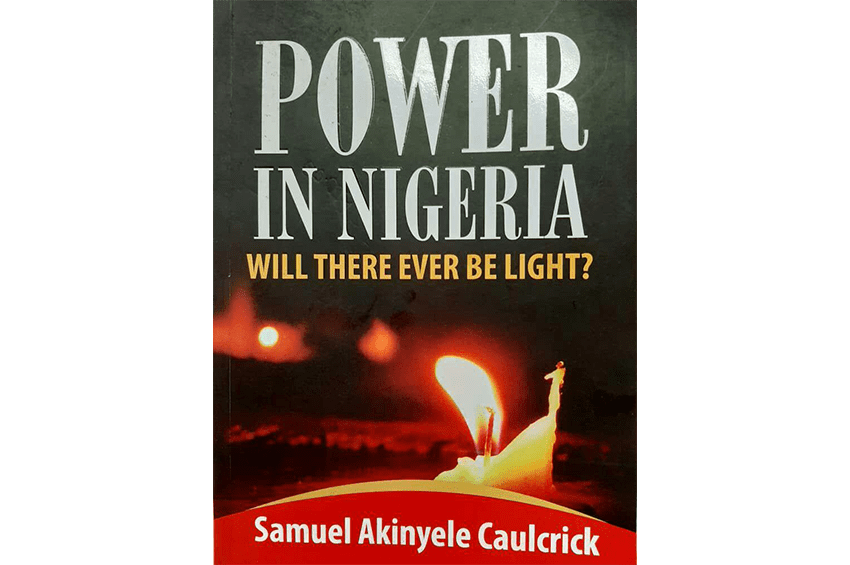

- CAUSE AND EFFECT
TRADE or mercantilism, for long in human history, has made nations prosperous if conducted across national borders. Trade creates wealth by way of commissions charged for transactions for outflow of deals made or goods exported. It seldom, though, adds physical value to whatever products exchanged, or if any, little for services. The returns on investment in mercantile activities are faster when compared to sectors that require engineering principles to add either intellectual value as in learning or physical value as in manufacturing. The time it takes to reward on investments in mercantile activities is an advantage during the bid for foreign exchange allocation at Nigeria’s foreign exchange market. While other sectors in the economy might still have their investments locked in, waiting for harvest, the turnaround time in any form of trading allows outbidding others. Banking, stock exchange, buying and selling, and general services, including information services, to name a few are examples of the activities in the mercantile sector, and they have performed quite well in Nigeria since the adoption of the liberalised financial market.
Nevertheless, the mercantile sector has not added to the external earning of Nigeria. The nationalisation of some of the trading businesses, however, may have preserved the national wealth to some extent. It sure did not create enough wealth for Nigeria to develop, in real term, except increased activities of buy and sell, hence higher GDP. The long-term investment sectors, on the other hand, employ the principles of engineering to create wealth by adding either intellectual or physical value to whatever raw materials to develop human or other materials into desirable products and thus have greater potential. Thus, manufacturing in a factory; farming in the field; mineral extraction; learning process to impart knowledge onto a pupil, and animal husbandry, to name a few are examples. The long-term investment sectors characteristically lag in the time it takes to reap returns on their investments, such as the time it takes to train a professional or fabricate a desirable product or harvest a crop. However, it is these long-term investment activities that most likely would build on and multiply the sovereign assets of the country more; these long-term investment sectors regularly come second best while bidding for forex at the Central Bank of Nigeria (CBN).
In spite of the advantages of quicker turnaround time, easier access to forex for imports and being the domineering players in the forex market, the mercantile sector only generated a “lot of movement, but no motion”. The trading sector that does not engage in an outflow of goods and services of Nigeria’s origin will not add to the country’s wealth comparatively. It is more of the proverbial of burying the talent as the sum-total of Nigeria’s wealth is practically the same as earned from oil plus the remittances by Nigerians abroad. The exports of products and produces of Nigeria’s factories, farms, quarries and schools would have performed better. At a time when things got unbearable and a lot of Nigerians, particularly the best graduates of Nigeria’s preSAP educational system, left Nigeria’s shores into the diaspora, the country has benefitted immensely in remittances back home. And in 2017 alone, it amounted to well over $20 billion. Were these Nigerians to be still around to contribute to the nation’s building, the gains could have been several times more. The country’s cash pot seems only the oil and the Nigerians in the diaspora.
Welfare economics is the branch of economics, though normative, it deals with how well an economy performs and not necessarily how it works. In contrast, macroeconomics and microeconomics explain how the economy works. The distortions in the Nigerian economy ought to have been a subject of review using the welfare economics principles long after the introduction of the structural adjustment programme in 1986. That did not happen; one has to lay the blame on the country’s economists who generally are hooked on neoliberal economic policies. Nigeria’s economists, over the years, subjected the people to complex economics jargons, which meant little in the face of poor performance. Nigeria continues to panel the struggling economic policy. In the book, the work takes an economics’ eavesdropper approach and not what economics principle to adopt, but an attempt to find how best to manage the power sector within the present economic structure by suggesting ways out of the current no power logjam in Nigeria.
The evident “stunted growth” in the power sector is a direct result of poor performance in the manufacturing industry. Regrettably, the mercantile sector that flourished used a higher allocation of the country’s resources, at the expense of the long-term investment sectors. It, however, had less demand for electric power to function – the nature of their type of business. As it has turned out, trading or mercantile creates a lower incentive for potential investment in the power sector. The manufacturing industry, on the other hand, with a higher need for public electricity cannot compete for forex on the same platform and thus continually lose out in the country’s resource allocation. It is easier to calculate than all the yardsticks of socioeconomics, the size of the damage to Nigeria’s development that trails the adoption of the forex bidding methods. Perhaps if the country had factored considerations to the time it takes an investment for returns, the result today could have been much better. The Nigerian experience in resource allocation has become a test case in most ivy league universities around the globe as a validated wrong financial policy for sustained growth.
Subsequent upon the long-term investment sector lacking the ability to compete in the foreign exchange market for spare parts and raw materials, and the resultant low industrial outputs after that, particularly the manufacturing sub-sector, the situation cascaded into the lack of adequate power supply in Nigeria. The engineering-based sector, apart from being the largest employer of labour, is most likely the sector to demand a large quantity of electricity for its operations. Unless a sustained, sufficient, need for public electric power by factories in Nigeria is in place, the power sector will remain unattractive to potential investors. Nigeria has to sustain an insatiable desire for a large volume of electricity, stimulated by the greater patronage of made-in-Nigeria goods, which ultimately will support an increase in the installed capacity utilisation. Only then would there be an attraction index for investment in the power sector.
Almost forever, power outages, whether blackouts or brownouts are a part of expectations in Nigeria for both the residents and visitors to the country alike. The no-light situation is a norm, and people crack ribs joking about it. Nigeria’s showroom characteristics create unpredictable demand for electricity by the manufacturing industry due to less market share, even with the backdrop of the shortage of electricity supply to households and light businesses – an albatross in Nigeria’s electricity logjam. Two key things ordinarily bother investors – returns on investment and security of investment funds. For returns on investment, the household and light business is incapable of affording uninterrupted supply because of Nigeria’s low per capita plus the need to hold some power in reserve to prevent system collapse on the grid. The manufacturing industry, on their own, has not been able to sustain the demand of public electricity because their products do not command enough patronage to keep the production lines running. The government also, presently, does not have the economic capacity to refinance the power sector, and therefore, private sector partnership is inevitable.
For as long as Nigeria’s “backroom” (factories, schools, hospitals etc.) remains in a state of decrepitude, countries that manufacture the products imported into Nigeria will continue to attract investors to their power sector. Globalisation facilitates investment in the power sector possible in any country that continually produces finished products for the world. Hence, the meteoric growth of the power sector in China. Politicians, in Nigeria, aspiring to public office, have always made it a campaign promise to address the low regime of the public electric power supply but to no avail. Consequently, there is now a need to step out of the box. The theme of this book is a radical approach, to better the state of the no-light situation at no extra cost. Whatever is presently on the table is not sustainable. The development in Nigeria gets a knock from free enterprise as practised in Nigeria, and theoretically solvable as it seems, it needs a reinventing of the Nigerian wheel. The concept of spending the oil money, exchanged with importers to bring in commodities from all over the world to satiate the needs of everybody is anti-growth; it is time, therefore, to come down to brass tags. The idea put forward in this book is an alternative rope to pull Nigeria out of the economic quagmire and place the country, yet again, on the path of growth with mitigation of the existing high unemployment figure.
Governance in Nigeria is replete with numerous elements of inefficiency. It is inescapable if Nigeria has to grow, therefore, for the country to start to separate equity from efficiency in the economy. There must be a definite plan to decrease the squandering of Nigeria’s resources. However, this does not preclude the current fight against corruption. Should the country wait for sufficient power supply to launch its industrial revolution or does it start to nurture the local productive sector, protect the local industrial products and produces to increase their share in the Nigerian market, which will stimulate investment in the power sector? An increase in installed capacity utilisation of Nigeria’s industries is possible only if there is protection for the local products against imports – if nothing, but to reduce the import bills to free the budget to finance other infrastructural developments. The people in Nigeria fail to realise that inadequate attention to bad roads, for instance, and other insufficient facilities in all aspect of their lives get withheld by their lifestyle of love for imported goods. Most successful economies had had to protect the local industries at one time or the other to grow. Alternatively, Nigeria could continue the perpetual subsidies on consumption, most of which are finished products manufactured outside its borders. People believe the politics of “subsidy”, in whatever form, is the arteries that slush funds flow to the “cabal” – a real vehicle for sleaze.
One of the measures a government, in power, takes to make available some essential commodities to the majority of its citizens is by way of subsidies, which is a form of equity. It is a concept of social justice that there are some basic needs that people should have and spread without impartiality. The subsidy on petrol, commonly known as premium motor spirit (PMS) has been the most contentious in Nigeria for a long time. Petrol has attained a cult dimension with an emotional impact on the lives of most Nigerians, and why not? Gasoline is the fuel for millions of inefficient mass-transit contraptions in Nigeria, and millions of cars due to the middle-class prosperity. Of most interest to this book is the use of petrol for the over 58 million petrol driven private generators that litter the country’s landscape, put to use because of the no-light situation. The current subsidies on PMS for both on the road and in others like households and light businesses to generate power are not sustainable, particularly as it squanders the country’s resources. Besides, there ought to be a fuel tax at the petrol pump to build and maintain decent road conditions.
For as long as there are subsidies on petroleum products, there will always be a strong argument for their removal; this may be the time to revisit, yet again. Down the ages, philosophers have failed to address the issue of the chicken and the egg; which one came first? Does the country put out an economic recovery plan to nurture its industrial outputs by subsidising production, or does it allow the whims of the free market to exit this bewilderment? Nigeria’s lingering massive unemployment is a ticking bomb but is somewhat intertwined with the low regime of the power supply. Manufacturing outputs in Nigeria are low and locally manufactured products do not command sufficient patronage to sustain a high installed capacity utilisation. Even if Nigeria has an adequate power supply today, the seeming level of the apparent adequacy in power is unsustainable until Nigerians start to patronise made in Nigeria goods in great quantity to support a higher installed capacity of the local factories.
In other words, an attitudinal shift in preferences for made-in-Nigeria goods by Nigerians would create the need for more electricity by the local industry and make the power sector attractive for better returns on investment in the power sector. Nigerians should not complain if their shunning of local products prevents the growth in electricity that could have been possible by default. Ultimately, through economies of scale, the high volume of megawatts of the country’s power supply, if sustained by industrial demands, will eventually enhance the energy security of households and light businesses and reduce light users’ electricity tariffs. By redirecting the subsidies on the petrol that powers the petrol-generators alone to the productive sectors, like the manufacturing sector, millions of new jobs will come begging, which are likely to alter the socioeconomic matrix in Nigeria.
The intelligent question Nigerians should be asking themselves , or is it a dilemma, is should there be sufficient power supply first, to spur an industrial revolution, or should the country nurture the products of the local industrial outputs to gain market share that will demand more power to produce, which eventually could attract investment in the power sector? Considering Nigeria’s per capita, the writer will settle for the egg, in the chicken and egg legend. Nurturing of Nigeria’s industrial outputs is the sensible way to go for sustained growth in the power sector, particularly in the regime of low purchasing power of most Nigerians, where reflective cost tariffs in the power sector are beyond their means.
There is a conscious need for Nigerians to start patronising made-in-Nigeria goods as a factor to attain a reliable power supply. It is pertinent to those desirous to gain employment and those working as security for their jobs to at least join and create the awareness. For parents and guardians, it is to generate job opportunities for Nigerian youths. The country has gone around in circles as almost all policies tried have come to nought. Nigeria’s per capita is embarrassingly low and not likely to improve soon unless Nigeria starts producing their needs locally. Electricity supply to homes and light businesses is presently unattractive to investors in the power sector, but that could change. Even the newly introduced Eligible Customers, where those who consume more than 2MW get their supply directly from the GenCos, is not sustainable unless the government protects their products against comparable imports. It is a higher sustained industrial output with a constant thirst for a large quantity of electricity that would discount the light users’ tariffs eventually. Unless that, the power saturation most likely will remain at the 5,000 megawatts ceiling tops, irrespective of the sector’s higher capacity.
A paradigm shift in the people’s attitude and the government policy is inescapably imperative. The people must realise that preferences of foreign-made goods over locally manufactured ones is equivalent to an extra night of no light. The government should also understand, to kickstart the industrial revolution, a separation of equity from efficiency in the economy is inescapable. Judging from the country’s experience, the current low capacity on the grid cannot support both light users and the maximum demand consumers together. Therefore, it would be discerning to suspend the connection of some maximum demand consumers (MDC), for the time being, from the grid. The purpose is to release more grid power supply to the household and light business users, who will not mind higher tariffs if there is constant light; this will, as expected, cut down the home/light business use of the private generators that mostly run on subsidised PMS, and ultimately save on their subsidies..
There are an estimated fifty-eight (58) million petrol-powered generators in Nigeria of various capacities that run on subsidised PMS. The existing subsidy on their petrol can discount the gas or diesel bills in the manufacturing sub-sector should there be constant lights in the households and light businesses. Constitutionally, it may be difficult to achieve these by presidential order to discount from the national treasury, without first declaring a state of emergency in the power sector. The power sector is already in a state of emergency in any case, so what will be the delay?
The proposed scheme requires more remote power generating stations as a priority to ease the burden of energy subsidies on the treasury on the long run. Large power stations are usually justifiable considering the economies of scale as they produce cheaper electricity than individual factories’ power plants or even the contemplated modular power stations. Investment in renewable power is a good addition but pales in comparison to the country’s needs. It is strange that people have never asked why investors, both local and foreign, have always shunned putting money in the power sector. Electricity is unlike other commodities that one can put into storage on a national demand like putting oil in a drum to keep. Once produced and not used, for instance by manufacturers for lack of adequate market share and unsold goods in their warehouses, the electricity companies are bound to incur losses for the unused electricity. In the design, the reconnection of those participating on the off-grid project would be as the country commissions more generating stations or when capacity allows. The partakers in the program will source their gas and diesel at commercial rates upfront and only make application to the treasury for reimbursement later. The formula for compensation could vary, such as the number of jobs created or sustained; the volume of production, the contribution to external earnings (exports), etc.
The aforementioned wealth-creating sectors, particularly manufacturing and agriculture, for a while yet will remain the largest employers of labour in Nigeria. Efforts to lower the obstacle to growth in these engineering-based production lines will boost the country’s development. The mercantile sector, a more or less a “pay for service” sector, adds little or no value to the commodity in exchange; it presently increases little to the sovereign wealth. The situation is even worse in the general trading sub-sector, where employment opportunities are as few as just a storekeeper, cashier, and security man; yet the allocation of resources in forex is multiple of that of a factory that manufactures what the store sells. There is no criminality in the process but what the market dictates. It is sad that thousands of imported used vehicles, parked along the roadsides, scattered over the country’s landscape, wait for buyers for months on end. These resources, drawn from Nigeria’s sovereign wealth, get tied down after outbidding the wealth-creating sectors at the forex market.
One of the anticipated downside in the project is urban migration, particularly of youths, which is the byproduct of modernisation and a desire to secure gainful employment. The mercantile sector has not created enough opportunities to limit rural drifts. The purpose of credits proposed in the scheme will mitigate development gaps between the federating units of the Nigerian union. Each local government in Nigeria and the country has over 770 local governments, must have an industry for whatever is unique in their area. There should be zero import duties on pieces of machinery, raw materials and spares to manufacturers and factories. There could be after sales taxation on locally made goods, but competitive to allow protection against imports. Every federating states would have to begin to add value to whatever agricultural produce, like processing and packaging to fast-track industrialisation and redress the inequalities among the federating states, and also mitigate urban migration. The bigger picture is the Nigerian brand as a driving force and encourages cooperation among the federating units, with the aim to conquer the universe in this world of globalisation. Not every stakeholder is likely to key into this project initially, particularly those in the mercantile sector, and most especially the importers. The importers need to realise they are already in a pole position in the business of goods movement, and with a small adjustment turn the movement of goods in the opposite direction to market and sell Nigeria, firstly to Africa then to the world.
The book, on purpose, does not dwell on Nigeria’s economists’ unwillingness to employ welfare economics to assess how well the country’s economy has performed, but to learn from it. It is ironic for Nigeria with the benefits of abundant human and material resources to often diagnose, for the most part cursorily, its problems and thus regularly miss the elements. Numerous in-depth analyses by experts often gloss over the underlining causes but only dwelled on the visible effects. Perhaps, by linking the various dots in the economy, using a different lens, the country could tackle the logjam in the power sector. It is an alternate approach purposefully designed to find a way forward to develop Nigeria in general, and in particular, the power sector and in doing so, to mitigate the massive unemployment condition that is more than sure likely to explode soon.
- BACKGROUND
ELECTRICITY plays a significant role in the socio-economic and technological development of every modern nation and has become the backbone of modern industrial society, with its versatility as a source of energy. Limitless use of the application of electricity is in transport, cooling, heating, communications, lighting, manufacturing and computation.
- Universally, an uninterrupted supply of this type of energy requires the constant generation of more than needed; a reserve capacity to spare. Anything short requires a radical approach.
- In Nigeria today, demand for electricity far outstrips its supply. As the country faces acute electricity problems with the epileptic supply, it increasingly hinders Nigeria’s development.
- Unfortunately, it is against the backdrop of the vast availability of natural resources that could have enhanced a reliable and uninterrupted commercial electric power generation.
- A textbook approach to get Nigerian out of this embarrassing situation of ”no-light” is proving increasingly untenable, and Nigeria may have to re-invent the wheel.
- A shortfall in reserve capacity of public utility electrical energy requires a radical approach to guarantee a reliable power supply. The country has had to grope in a regime of perpetual “low capacity” for too long a time.
- Sunlight is not available at night, and it is understandable because the earth rotates on its axis; seasons also are because the earth revolves around the sun. People then know when to expect sunrise and sunset at a given location or season. One only imagines the turmoil if sunrise and sunset were to appear randomly without a pattern; the distress residents in Nigeria experience on the power supply.
- Almost forever, those who live in Nigeria grapple with the irregular supply of public electricity, with no forward notice of when to anticipate power-supply. Consequently, Nigerians seem more depressed by the unreliability of the little supplied than the inadequate supply itself.
- Presently, own generation of electrical power has become the norm, as over 60 million Nigerians now own generators in a mix of diesel or petrol driven. In most cases, a few hours of public utility supply in a week, if one is lucky, is available. The uncertainty of light from the electricity distribution companies (Discos), makes privately produced electricity a nerve wrecking adventure.
- In Nigeria today, and without delusion, the available generated capacity of commercial electricity in Nigeria (7,000 Megawatts at peak and 2,500 Megawatts somewhat sustainable) is inadequate for the domestic/light business and the industrial users – maximum demand users (MDCs), put together on the grid.
- Disconnection of one of the sections in the supply chain from the national grid, at this time, will release more capacity to the remaining ones; seems the only option available to break the 5,000-megawatts ceiling in power availability, which has bogged down the nation for so long.
- The maximum demand consumers (MDCs) have enough capacity to generate energy needs for their operations, which presently is about 4,500 megawatts. They should be the ones to most logically go off the grid, in the meantime. All this, while the country doubles its effort to build more power stations, and evacuate the more than 12,000 megawatts already built.
- The maximum demand consumers disconnected from the grid, in line with the scheme as premised, are to have their energy bills discounted from the federal treasury. The increased consumption of electricity would make the sector attractive to investors, and the government would offset the subsidy through increased VAT and other taxes.
- This off-grid scheme will create enough capacity in the remaining sections of the distribution lines that are still connected to the grid and offset the disruptions and loss of power that often occur; guaranteeing constant power supply to those connected.
- HISTORY OF ELECTRICITY IN NIGERIA
COMMERCIAL electricity was first introduced in Nigeria as far back as 1896 in Lagos, and that was only fifteen years after a similar introduction in England. In spite of this long history, however, improvement in Nigeria’s commercial electricity has remained slow. Ref:Power Sector Reform: The Nigeria Experience.
Engr.A. D. Okafor; B. Eng., M. Eng.2005
- In 1950, Electricity Corporation of Nigeria (ECN), now defunct, was established by the legislative council as a central body for electricity supply and development.
- Bodies such as Native Authorities and Nigeria Electricity Supply Company (NESCO) were later licensed to produce electricity in some other locations, in Nigeria.
- The Niger Dams Authority (NDA) was another body established by the act of parliament with the sole purpose for construction and maintenance of dams and other works on the River Niger and elsewhere.
- The dams improved and promoted irrigation and fish brines, but also generated electricity using the energy of flowing water sold to the then ECN for distribution at utility voltages.
- In 1979, a new Energy Commission of Nigeria (ECN), not to be confused with the earlier Electricity Corporation of Nigeria, was established by Act No. 62 of the same year, as amended by Act No. 32 of 1988 and Act No. 19 of 1989.
- Statutorily, the commission was mandated for strategic planning and coordination of national policies in the field of energy and became the government’s organ empowered to carry out overall energy sector planning and policy coordination.
- On the Energy Commission of Nigeria’s shift, the power sector did not witness any substantial investment in infrastructural development for 20 years until 1999 or thereabouts.
- In that period, there was no construction of new plants, while there was no proper maintenance on the existing ones. That brought the power sector to an unforgivable state.
- Meanwhile, demand for electrical power in the country has increased exponentially.
- By 2001, the generation had gone down from the installed capacity of 5,963MW to an average of about 1,750MW. The steady load demand, meanwhile, was 6,000MW or 8,000MW for reserve capacity to absorb disturbances.
- Nineteen (19) out of the seventy-nine (79) installed generating units were the only ones operating at the time in 2011.
- PRESIDENTIAL PROPOSITION
IN his paper, presented at the Sheraton Hotel and Towers in July 2008, A S. Sambo, the then Director General of the Energy Commission of Nigeria, used the International Atomic Energy Agency (IAEA) tools -Model for the Analysis of Energy Demand (MAED) – to calculate Nigeria’s energy demand and supply projections covering the year 2005 to 2030: Ref: Energy Commission of Nigeria 2008.
Table (i) Electricity Demand Projections per Scenario, in megawatts (MW)
| Scenario | 2005 | 2010 | 2015 | 2020 | 2025 | 2030 |
| Reference (7%) | 5,746 | 15,730 | 28,360 | 50,820 | 77,450 | 119,200 |
| High Growth (10% | 5,746 | 15,920 | 30,210 | 58,180 | 107,220 | 192,000 |
| Optimistic I (11.5%) | 5,746 | 16,000 | 31,240 | 70,760 | 137,370 | 250,000 |
| Optimistic II (13%) | 5,746 | 33,250 | 64,200 | 107,600 | 172,900 | 297,900 |
- economic growth and structure of the economy was used
- electricity demand was projected and translated into a demand-for-grid electricity and peak-demand on the bases of assumptions for losses, auxiliary consumption, load factor and declining non-grid generation.
- the table indicated the electricity demand projections for four (4) scenarios; emphasised the demand indication in 2005 as a representation of suppressed demand, because of inadequate generation, transmission, distribution and retail facilities.
- in the analysis, demand was suppressed as non-existent by 2010. For the 13% GDP growth rate, demand was projected to rise from 5,746MW in the base year of 2005 to 297,900MW in the year 2030.
- this projected an average construction of 11,686MW every year to meet the demand. Correspondingly, the cumulative investment (investment & operations) was to cost US$ 484.62 billion for the 25-year period.
- this was a colossal investment averaging US$ 80.77 billion every five years.
- the studies did not preclude all the available energy resources in the country; they were only considered in order to broaden the nation’s energy supply mix and enhance its energy security.
- for the total energy supply possibilities, Model for Energy Supply Strategy Alternatives and their General Environmental Impacts (MESSAGE) was used, which is another IAEA modelling tool as the projected energy demand in order to arrive at a supply strategy.
- MESSAGE represents energy conversion and utilisation processes of the energy system (or its part) and their environmental impacts for an exogenously given demand of final energy.
- MESSAGE is usually used for development of medium-term strategies of a planned horizon of 30 years; the time scope is limited by uncertainties associated with future technological development.
- the energy system dynamics were modelled on a multi-period approach, with an optimisation that used a set of existing and possible new technologies. This was used to select the optimal mix of technologies to cover the country’s demand for various energy forms during the whole period that was studied.
- by using MESSAGE analysis, demand variations of various final energy forms during the day, week and year, as well as different technological and political constraints of energy supply were accounted for. It was an energy and environmental impact model.
- the application of the MESSAGE model results in the least-cost inter-temporal mix of primary energy, energy conversion and emission control technologies in each scenario as listed in the table below:-
Nigeria’s Energy Supply Projected Scenario:
Table (ii) ElectricityDemand (Peak) Projections. Ref: Energy Commission of Nigeria 2008.
| Scenario | 2005 | 2010 | 2015 | 2020 | 2025 | 2030 |
| Reference (7%) | 5,746 | 15,730 | 28,360 | 50,820 | 77,450 | 119,200 |
| High Growth (10%) | 5,746 | 15,920 | 30,210 | 58,180 | 107,220 | 192,000 |
| Optimistic I (11.5% | 5,746 | 16,000 | 31,240 | 70,760 | 137,370 | 250,000 |
| Optimistic II (13%) | 5,746 | 33,250 | 64,200 | 107,600 | 172,900 | 297,900 |
- THE OLD POWER HOLDING COMPANY of NIGERIA (PHCN)
ON 7 October 2008 in Washington D.C, another analyst, Mr Bolaji Osunsanya, the then CEO of Oando Gas & Power, delivered a paper on “Meeting-Nigeria-Power-Infrastructural-Demand” at the U.S – Africa Conference. He posited a truism at the time and made a forecast as stated below: Ref:Bolaji Osunsanya CEO Oando Gas & Power 2008 U.S.A
- The Power Holding Company of Nigeria, PHCN was a state monopoly, with less than 40% of the populace connected to the national grid.
- The peak load forecast, however, was at over 9000MW at the existing infrastructure in 2011. Moreover, seven of the fourteen generating stations were over 20 years old in 2011.
- Petrol & diesel power generations, estimated over 3,000MW of self-generation, littered Nigerian landscape – this did not support sound economies of scale.
- Transmission lines were poorly maintained and repeatedly vandalised; coupled with regular system collapse. It resulted in transmission losses of over 35% of electricity produced.
- The revenue generation, in the sector, is a shortfall of the actual consumption due to poor billing procedures that are still less than 90% of consumed electricity.
- The peak load forecast, however, was at over 9000MW at the existing infrastructure in 2011. Moreover, seven of the fourteen generating stations were over 20 years old in 2011.
- Low power generation relative to population hinders the real sector development
- Low capacity in generation and supply underscores by a vast 40% alternative privately-owned capacity, made up of diesel and petrol generators.
- This alternative capacity produced at a premium of up to 800% of the grid price is a colossal waste to the economy.
- Currently, industrial consumers own the bulk of the alternative capacity, which is close to 4500MW.
- The country’s per capita generation relative to other countries remains extremely low, and when compared with GDP, this low generation slows down development of the real sector.
5.2 Government Intervention
- The Government embarked on spending aimed at improving the power generation capabilities by implementing the National Integrated Power Project (NIPP) from December 2004.
- Five (5) Greenfield natural gas-fired plants (2,250 MW total) were in the Niger Delta region comprising 18 GE gas turbines:
- One (1) 3,050 MW hydroelectric power plant in Mambila, Taraba State
- 22 power transmission sub-projects; include 17 new substations and expansion of 32 existing substations
- 250 power distribution projects
- Several new gas pipelines and other related equipment and infrastructure
- The estimated total expenditure by the Federal Government on the projects was over $16 billion, in 2011 financed from Nigeria’s excess crude revenue account..
- Government coerced the international oil companies, IOCs, to invest in Power Generation Facilities.
5.3. Funding and Problems of Infrastructure
In 2007 for instance, the Revenue Mobilisation Allocation and Fiscal Commission (RMAFC) obtained a court injunction restraining the FGN from utilising the excess crude oil account on the ground that the FGN, State governments, and local governments jointly own it:
- Consequently, the 2008 Federal budget did not include any substantial planned spending on the NIPP project and the FGN announced that it would source for alternate funding arrangements, primarily from the private sector.
- Federal Executive Council, FEC, due to regulatory constraints, did not declare the proposed emergency in the power sector.
- The government gave gas producers sufficient incentive to increase supply.
- Inadequate transportation infrastructure hindered the delivery of some turbines to their intended destination.
- There was no harmonised integrated infrastructure for the dispatch of gas gathered to the power stations.
- 2009-2014 Administration Drive
- Alternative funding from various tiers of government existed for NIPP projects.
- PHCN was unbundled
- Planned government-led spending for the distribution system implemented.
- Encouragement was given to the private sector to invest in new power projects; this was albeit at a slow pace.
- Existing Power Generation Capacity
The planned generation capacity for the future in Nigeria is bright; the supply of uninterrupted power currently is, however, faced with so many challenges:
. low capacity power generation;
- a totally mismanaged supply system that seems to be left to luck
- low staff morale
- unregulated wiring at the consumer end (premises), which put undue stress on the grid
- delayed maintenance of facilities
- insufficient of funding of power stations, grid maintenance and sub-stations
- obsolete equipment and safety tools
- Insufficient or/and irregular supply of gas/fuel/water level to drive power stations.
Table (iii) Existing Power Generation Capacity in 2014. Ref: Presidential Task Force on Power 2014.
| S/N | PLANT | PLANT TYPE | LOCATION | AGE | UNITS | INSTALLED CAPACITY | UNIT AVAIL |
| 1 | Egbin | Thermal | Lagos | 24 | 6 | 1320MW | 4 |
| 2 | Egbin AES | Thermal | Lagos | 8 | 9 | 270MW | 9 |
| 3 | Sapele | Thermal | Delta | 31 | 10 | 1020MW | 1 |
| 4 | Okapi | Thermal | Cross River | 4 | 3 | 480MW | 2 |
| 5 | Afam | Thermal | Rivers | 19 | 20 | 702MW | 3 |
| 6 | Delta | Thermal | Delta | 19 | 18 | 840MW | 12 |
| 7 | Omoku | Thermal | Rivers | 4 | 6 | 150MW | 4 |
| 8 | Ajaokuta | Thermal | Kogi | N/A | 2 | 110MW | 2 |
| 9 | Geregu | Thermal | Kogi | 3 | 3 | 414MW | 3 |
| 10 | Omotosho | Thermal | Ondo | 2 | 8 | 335MW | 3 |
| 11 | Papalanto | Thermal | Ogun | 2 | 8 | 335MW | 4 |
| SUB-TOTAL (THERMAL) | 93 | 5976MW | 47 | ||||
| 12 | Kainji | Hydro | Niger | 42 | 8 | 760MW | 6 |
| 13 | Jebba | Hydro | Niger | 26 | 6 | 540MW | 6 |
| 14 | Shiroro | Hydro | Niger | 24 | 4 | 600MW | 2 |
| SUB-TOTAL (HYDRO) | 18 | 1900MW | 14 | ||||
| GRAND TOTAL | 111 | 7876MW | 61 |
5.6 Near Future Generating Capacity
THE government in its drive to get private investments involved in power generation, granted licenses to some private investors. The volatility of electricity as a product, however, is a big concern to foreign investors. For this reason, investors have shied away from power generation in Nigeria.
- Electricity is a very volatile commodity that if not used immediately is not easy to store for future use and a high cost of export across the borders. For these, investors in the sector are wary of unaffordable tariffs and possible waste
Table (iv) Future Generating Infrastructure and capacity. Ref: Presidential Task Force on Power 2014.
| S/N | POWER STATION | TYPE | LOCATION | CAPACITY (MW) | STATUS |
| 1 | Egbin | Thermal | Lagos | 1320.00 | Existing |
| 2 | Ijora | Thermal | Lagos | 40.00 | Existing |
| 3 | Afam | Thermal | Rivers | 969.60 | Existing |
| 4 | Sapele | Thermal | Delta | 1020.00 | Existing |
| 5 | Delta | Thermal | Delta | 912.00 | Existing |
| 6 | Geregu | Thermal | Kogi | 414.00 | Existing |
| 7 | Omoku | Thermal | Rivers | 230.00 | New IPP |
| 8 | Omotosho | Thermal | Ondo | 335.00 | New |
| 9 | Papalanto | Thermal | Ogun | 335.00 | New |
| 10 | Alaoji | Thermal | Abia | 504.00 | New |
| 11 | Sapele | Thermal | Delta | 451.00 | New IPP |
| 12 | Orji | Coal | Rivers | 20.00 | Existing |
| 13 | Rain/Ube | Thermal | Bayelsa | 225.00 | New IPP |
| 14 | Eyaen | Thermal | Edo | 451.00 | New IPP |
| 15 | Egbema | Thermal | Imo | 338.00 | New IPP |
| 16 | Caliber | Thermal | Cross River | 561.00 | New IPP |
| 17 | Kainji | Hydro | Niger | 760.00 | Existing |
| 18 | Shiroro | Hydro | Niger | 600.00 | Existing |
| 19 | Jebba | Hydro | Niger | 578.40 | Existing |
| 20 | Mambilla | Hydro | Taraba | 2600.00 | New |
| 21 | Zungeru | Hydro | Niger | 950.00 | New |
| 22 | AES | Thermal | Lagos | 300.00 | IPP Existing |
| 23 | AGIP Okpai | Thermal | Delta | 480.00 | IPP Existing |
| 24 | Ibom Power | Thermal | AkwaIbom | 188.00 | IPP Existing |
| 25 | Omoku | Thermal | Rivers | 150.00 | Approved |
| 26 | Obajana | Thermal | Kogi | 350.00 | Approved |
| 27 | Ethiope Energy Ltd | 2800.00 | Approved | ||
| 28 | Farm Electric Ltd | 150.00 | Approved | ||
| 29 | Supertek Ltd | 1000.00 | Approved | ||
| 30 | ICS Power | 624.00 | Approved | ||
| 31 | Geometric Ltd | 140.00 | Approved | ||
| 32 | Westcom Tech Ltd | 1000.00 | Approved | ||
| 33 | First Independent Power Co. Ltd | 150.00 | Approved | ||
| 34 | Anita Energy | 136.00 | Approved | ||
| 35 | Lotus &Bresson Ltd | 60.00 | Approved | ||
| 36 | First Independent Power Co. Ltd | 95.00 | Approved | ||
| 37 | Mabon Ltd | 39.00 | Approved | ||
| 38 | Hudson Power Ltd | 200.00 | Approved | ||
| 39 | Ibafo Power Ltd | 640.00 | Approved | ||
| 40 | AgbaraShoeline Ltd | 1800.00 | Approved | ||
| 41 | Index Thermal Power Ltd | 1800.00 | Approved | ||
| 42 | Shell Distribution | 100.00 | Approved | ||
| TOTAL | 24,106.00 |


7 comments
… [Trackback]
[…] Information to that Topic: naijatimes.ng/power-in-nigeria-will-there-ever-be-light-3/ […]
… [Trackback]
[…] Read More to that Topic: naijatimes.ng/power-in-nigeria-will-there-ever-be-light-3/ […]
… [Trackback]
[…] Read More on that Topic: naijatimes.ng/power-in-nigeria-will-there-ever-be-light-3/ […]
… [Trackback]
[…] There you can find 12906 more Information on that Topic: naijatimes.ng/power-in-nigeria-will-there-ever-be-light-3/ […]
… [Trackback]
[…] There you will find 76329 more Info to that Topic: naijatimes.ng/power-in-nigeria-will-there-ever-be-light-3/ […]
… [Trackback]
[…] Find More on that Topic: naijatimes.ng/power-in-nigeria-will-there-ever-be-light-3/ […]
… [Trackback]
[…] There you will find 27042 additional Info on that Topic: naijatimes.ng/power-in-nigeria-will-there-ever-be-light-3/ […]
Comments are closed.