

FOLLOWING the extensive reviews of published works nominated for the 2020 Chief Isaac Oluwole Delano Book Prize for Yorùbá Studies by the members of the Jury, complemented by external evaluations by four prominent figures in the field, votes by nine scholars, and endorsement by the Supervisory Committee, it is my pleasure to announce the emergence of Henry Lovejoy’s Prieto: Yoruba Kingship in Colonial Cuba during the Age of Revolutions (Chapel Hill: The University of North Carolina Press, 2018) and John Thabiti Willis’s Masquerading Politics: Kinship, Gender and Ethnicity in a Yoruba Town (Indiana University Press, 2018), as the co-winners of this outstanding award. By implication, these two books have been selected by the jury and independent evaluators as the best books in Yoruba Studies in the last three years.
About the Winners
Henry Lovejoy

HENRY Lovejoy, an Assistant Professor of African Studies with a research lens focused on the political, economic, and cultural history of Africa and the African diaspora at the University of Colorado—Boulder, also engages in digital humanities methodologies. He is currently directing three resources: www.SlaveryImages.org, www.LiberatedAfricans.org, and www.YorubaDiaspora.org. Lovejoy received his Ph.D. from the University of California, Los Angeles, where he held multiple awards including a Fulbright-Hays fellowship. His research has been supported by the Social Sciences and Humanities Research Council of Canada, National Endowment for the Humanities, the Andrew J. Mellon Foundation, the Hutchins Center for African and African American Research at Harvard University, The Universities of California-Cuba Academic Initiative, and the Eugene M. Kayden research grant, among many other awards. In addition to these, he sits on the advisory board for the Black American West Museum & Heritage Centre in Five Points, Denver.
His Prieto: Yoruba Kingship in Colonial Cuba during the Age of Revolutions which co-won this year’s Delano Book Prize is a biography of an enslaved African who rose through the ranks of Spain’s colonial military and eventually led a socio-religious institution at the root of an African-Cuban religion, commonly known as the Santería. Before this remarkable publication, he has contributed extensively to the vast network of knowledge production on Africa. Professor Lovejoy is currently working on his second monograph, The Collapse of Ọ̀yọ́ and the Creation of the Yorùbá: An Illustrative History, which is under contract with Brill.
John Thabiti Willis

JOHN Thabiti Willis is an Associate Professor of History and Director of Africana Studies at Carleton College. His scholarship has attracted several fellowships, awards and honors from reputable institutions including the Carleton College Faculty Endowment Grant, 2013-2014; Carter G. Woods on Post-Doctoral Fellowship, 2008-2009; Fulbright-Hay Doctoral Dissertation Research Abroad Fellowship, 2005-2006; and Sage Graduate Fellowship/Cornell University, 1998-1999; among many others. His Masquerading Politics: Kinship, Gender and Ethnicity in a Yoruba Town, which stems from his 2008 dissertation and selected as the co-winner of the 2020 Delano Book Prize, made the finalist list of the African Studies Association Book Prize. The book takes a close look at masquerade traditions in the Yoruba town of Otta, exploring transformations in performers, performances, and the institutional structures in which masquerade was used to reveal ongoing changes in notions of gender, kinship, and ethnic identity. Willis has presented lectures in several states in the United States, parts of Europe and Africa. He is a member of many professional bodies including the American Historical Society, African Studies Association, and Middle Eastern Studies Association.
Intersection
ALTHOUGH both books that co-won this year’s Delano Book Prize interrogate different aspects of Yoruba civilization and culture in terms of space and theme, together, they tell the story of the struggle, resilience, and reproduction of the people as a cultural entity. While Lovejoy’s book focuses on the Yorùbá in the Diaspora, bringing to light the struggle of the community in Cuba for relevance through the study of a prominent member of the community, Prieto, Willis’s work explores how this struggle has shaped the cultural practices of the people in modern Nigeria through the lens of the Egungun traditions found among the people of Otta in present-day Ogun State.
From the Diaspora to the homeland in Southwestern Nigeria, these two books remind us of the transnationality of the Yorùbá culture as well as the resilience of the people. In this way, they are celebrated as major contributions to the value which Chief Delano stood for during the time he led. Through several of his publications, Chief Delano had only one aim: to project the Yoruba culture and civilization to the world that was bent on asphyxiating its historical grandeur and heritage. Both Lovejoy and Willis have extended Chief Delano’s discussion further with their years of research experience and other engagements that enhance our understanding of the Yoruba people. This award is indeed a well-deserved honor in recognition of this scholarship.
Both will receive a cash prize, a citation, and a public recognition.
Toyin Falola for:
The Chief Isaac Delano Foundation
Babcock University
The Supervisory Board of the Delano Book Prize, and
The Jury, 2020-2022
About the Delano Book Prize
Worth a sum of $1,000, the Delano Prize is the most robust prize for Yoruba Studies and the most prestigious recognition in the world for Yoruba scholarship. It is a solid and remarkable platform for the promotion and further development of Yoruba Studies in continuation of Isaac Delano’s legacy.
The Isaac Oluwole Delano Book Prize in Yoruba Studies was set up as a celebration of the contributions of the Yoruba and the understanding of cultures and human civilization in general. Over the last century when the documentation of cultures, histories and practices of Yoruba people began to gather momentum, the interest of scholars in uncovering every aspect of the civilization has never waned.
This notwithstanding, the Yoruba tradition, culture, and language are amongst those under strain and stress. Some scholarly works have risen to this occasion to bridge the contradictions by directing the search to those structures and ideas within which an endangered culture subsists or has been replicated. Others have gone beyond praise-singing the grandeur of the civilization to offering valuable critique that contributes to our understanding of the past and present of the people.
In this emerging literature, the grasp of transdisciplinary academic methods of inquiry seems to have reached its crescendo. They simply exhibit no disciplinary bound in their methods and language as they adopt expertise knowledge of appropriate disciplines that best illuminate different aspects of their inquiries. As such studies burgeoned, the paradigm of knowledge production on Africa also expanded. So, we see the tempo of Yoruba Study on the rise as scholars continue to produce works on the diaspora Yoruba population in different locations around the Atlantic World. In the same manner, scholars have opened our horizon to the picture of what could be referred to as transnational Yoruba, i.e., the collectivity of the Yoruba identity in terms of people, language group, and ideas across boundaries.
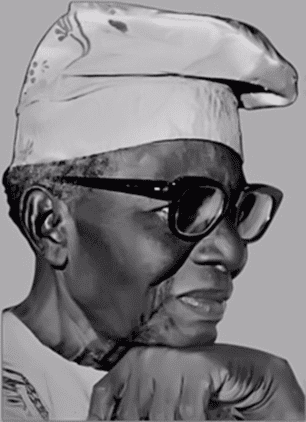
Chief Isaac Delano, 1904-1979
ALL through the better part of his life, Chief Isaac Oluwole Delano lived as a Pan-Yoruba enthusiast whose over a dozen publications with Oxford University Press and other leading presses in the 1950s through the 1970s contributed immeasurably to our understanding of the historical, ethnographical, anthropological, sociological, linguistical and political aspects of the Yoruba civilization.
Chief Delano had written extensively on the question of religion, particularly Christianity, in Nigeria. In fact, at this point, it is hard to tell which area he had made more impact, namely politics, history, culture, biography, linguistics, religion, ethics or literature. Regardless, it will be safe to sum up his contributions under the modernization theme. Using the transdisciplinary methodology to the extent at which could be grasped at the time, his publications speak to the contradictions of modernization and how this should be navigated carefully for a prosperous Yoruba nation in the main, as well as Nigeria and Africa on the whole.
The Delano Book Prize, therefore, serves as a platform for celebrating the best of books published on any of the aforementioned subjects so as to further encourage increased production of good research on the Yoruba people.
******
The four finalists
THE Jury has chosen four books that discuss different aspects of the Yoruba world. A winner is expected to be chosen from this list of finalists.
The Finalists (not arranged in order of ranking)
1. Vicki Brennan, Singing Yoruba Christianity: Music, Media and Morality (Bloomington: Indiana University Press).
2. Andrew Apter, Oduduwa’s Chain: Locations of Culture in the Yoruba-Atlantic (University of Chicago Press, 2018).
3. Henry Lovejoy, Prieto: Yoruba Kingship in Colonial Cuba during the Age of Revolutions (Chapel Hill: The University of North Carolina Press, 2018).
4. John Thabiti Willis, Masquerading Politics: Kinship, Gender and Ethnicity in a Yoruba Town (Indiana University Press, 2018).
Analysis Of The Four Books
THE four books are centered on the historical experiences of the Yoruba in areas of religion and modernity, culture and values, as well as epistemologies and mythologies.
Singing Yoruba Christianity: Music, Media and Morality
PUBLISHED in 236 pages of eight chapters by Indiana University Press in 2018, Brennan’s text on Yoruba Christianity, Singing Yoruba Christianity: Music, Media and Morality, is an outstanding contribution to Yoruba spirituality in the modern world. Weaving the historic and ethnographic with the anthropologic to lay the basis of her discussion, Brennan, herself a well-trained anthropologist, has indeed succeeded in elucidating to us in one single piece “ways in which religion articulates cultural ideas and enables practices of sociality.”
Her methodology of participation, keen observation, interactions, coordination of interviews, and textual analysis on the Cherubim and Seraphim Christian Church (Ayo ni O) in Lagos, Nigeria, tailored in a theoretical frame provide us with a unique perspective on how common religious practices are transformed into an agency of cultural incubation. Accordingly, we are informed about ways in which music, sound, rhythm, imagery, dance, and other collective performances of members of this Christian denomination in Nigeria developed over time, serve as a loop through which members attain a spiritual unison, maintain a moral code, and express their imagined collectivity. The significance of this text to the Yoruba study lies in the language and grand philosophy that goes into the making of all of these “aesthetic sensations.” As a movement borne out of the struggle for an epistemic liberation of Christianity in Yorubaland, the Ayo ni O Cherubim and Seraphim Church occupies a peculiar space in the cultivation of foreign ideas on the ground where the traditional meets the modern.
Of course, in about three volumes on Nigerian Christianity, Delano was emphatic on the need to Yorubanize Christianity, which was at the time heavily Europeanized. Like Delano, Brennan has shown in this work how the ideational basis of religions brings about the preponderance of culture and cultural practices in their interpretations and expressions. In other words, culture serves as a loop through which religious thoughts are articulated, animated, and passed on to others. And for this essence, it could be cultivated to suit the cultural form of a society or people. This is shown to us through the ritual practices and structure of worship at the church in focus where extensive data was gathered by Brennan.
******
Oduduwa’s Chain: Locations of Culture in the Yoruba-Atlantic
ON the greater part, every religion came into being through the construction of myths and mythical bodies influenced through the lived experiences of the people. In the very context of the Yoruba civilization, this is built around multiple layers of mythical entities. Holding the political space with a social potency that sustains the Yoruba spirituality and religion in this mythical conjunction is the myth launched for centuries to account for the creation of the world through Oduduwa. Apter, in his Oduduwa’s Chain: Locations of Culture in the Yoruba-Atlantic, published in 2018 by the University of Chicago Press, gives a lucid account of the phenomenon of a global Yoruba using the logic of revisionist hermeneutics. This very approach brought to the fore the need to go into the ancient history of the Yoruba people represented in myths and legends that began with the creation of the world by Oduduwa. Drawing from several traditions that collectively create the ground for our understanding of the ethnogenesis of the Yoruba people, Apter promotes the idea that, indeed, as against the problematic of a paradigm which seeks to interpret the syncretic form of African religions and cultures to imply an absence of form, order, and ingenuity—African syncretism should be seen as being responsible for the unique identity of its members across the Atlantic world and the continued connectivity to its homeland, centuries after some of its people were forcefully transported to different locations in the Americas.
To buttress his argument, Apter shows how the making of the Yoruba hermeneutics created an agency for the people from their primordial homeland to the Americas where these ideas and practices have been further transformed and given new meaning within their organic form. Advancing the theory further, Apter cites instances where Catholic Saint characters in places like Haiti, Cuba, and Brazil are replaced by Yoruba gods. In many ways, this text contributes to the increasing scholarship on Black/Yoruba-Atlantic, the exigency of culture and religion in shaping the political life of a people, and the role of myth as an identity force that transcends time and space as seen in the experience of the Yoruba population in the Americas; Haiti, Cuba, Jamaica, and Brazil, principally.
******
Prieto: Yorùbá Kingship in Colonial Cuba during the Age of Revolutions
WHEREAS Apter had taken the Yoruba-Atlantic, or rather the Global Yoruba discourse from the mythical angle, linking Social Anthropology with Cultural History in the process, Lovejoy takes to the economic and biographical frame of assessing the world. Published in the “Envisioning Cuba Series” by the University of North Carolina Press in about 241 pages of eight chapters, Prieto: Yorùbá Kingship in Colonial Cuba during the Age of Revolutions, gives a detailed historical account of slavery, slave trade, Atlantic Creole, and the Black-Atlantic, from the Yorùbá world. What this text does is to bring to life the experiences of African slaves in the Americas through the interrogation of documents related to the central character of discussion, Juan Nepomuceno Prieto. Through the experience of Prieto, we are taken back to the horrors of racism, cultural prejudice, and barbarism that fueled slavery and its trade in slaves between Africans and European slave merchants, particularly from the opening of the Lagos and Badagry trading ports. Prieto, according to the text, was among those captured, enslaved, and eventually traded to Cuba in the eighteenth century. This situates the setting of the historical study to colonial Cuba where Prieto and other persons of Yoruba ancestry were referred to as Lucumi by their white masters.
Therefore, while their kinsmen back home took on the Yoruba identity equally foisted on them, they became Lucumi, both with implications that shaped their sociopolitical and economic realities. As with many others who had risen to become a real or imagined threat to the colonial government and the slave institution, Prieto faced many persecutions from the Colonial government in Cuba during his lifetime. The account of the life of Prieto also speaks to the endurance of Yoruba spirituality in the Americas, explaining in different ways how and why this culture has become a cat with many lives in the face of its sophisticated detractors and rough trajectory. In a nutshell, Lovejoy has once again brought us to the reality of the continued dialogue between the homeland—Yorubaland— and the Atlantic world as well as the resilience of the Yoruba people.
******
Masquerading Politics: Kinship, Gender and Ethnicity in a Yoruba Town
LEAVING the Atlantic and the Atlantic-Yoruba population back to the primordial home of the people in Southwestern Nigeria, John Thabiti Willis in Masquerading Politics: Kinship, Gender and Ethnicity in a Yoruba Town takes us through the egungun (masquerade) tradition among the people of Otta in present-day Ogun state. Expectedly, Willis uses historical anthropology to assess the structural and performative changes that have occurred in the making of the egungun tradition among the people of the town. Although a tradition only observed occasionally, Willis explains the egungun tradition there as an institution of its own, administering justice, installing kings, maintaining order, and ensuring prosperity. In this pursuit, he looks into the social as well as the political roles of the institution over the course of time, factors responsible for the changes, and how these changes have shaped the history of the people and distorted the traditional form of society.
******
ALL of these books, it should be noted, are products of long years of intensive research from the archives to the fields, libraries, and institutions. The fact that these authors are mature lends credence to the texts as their years of expertise, through the scrupulousness graduate to post-doctoral field research and theoretical frameworks, is put to rigorous use. For instance, while Apter’s work is a refined product of his selected works presented and published variously between 1991 and 2013, that of the other finalists are a culmination of the ideas that have thus far sustained their academic careers and defined their intellectual contributions.


0 comments
… [Trackback]
[…] Read More Info here to that Topic: naijatimes.ng/winners-emerge-in-the-2020-isaac-oluwole-delano-book-prize-for-yoruba-studies/ […]
… [Trackback]
[…] There you will find 39671 more Info to that Topic: naijatimes.ng/winners-emerge-in-the-2020-isaac-oluwole-delano-book-prize-for-yoruba-studies/ […]
… [Trackback]
[…] Read More on on that Topic: naijatimes.ng/winners-emerge-in-the-2020-isaac-oluwole-delano-book-prize-for-yoruba-studies/ […]
… [Trackback]
[…] Find More Info here on that Topic: naijatimes.ng/winners-emerge-in-the-2020-isaac-oluwole-delano-book-prize-for-yoruba-studies/ […]
… [Trackback]
[…] Find More Information here to that Topic: naijatimes.ng/winners-emerge-in-the-2020-isaac-oluwole-delano-book-prize-for-yoruba-studies/ […]
… [Trackback]
[…] Read More on to that Topic: naijatimes.ng/winners-emerge-in-the-2020-isaac-oluwole-delano-book-prize-for-yoruba-studies/ […]