

Reviewed by Razinat Mohammed.
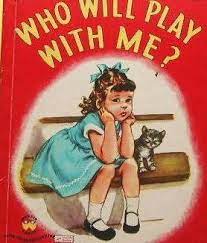
The vision of Wole Soyinka International Cultural Exchange, WSICE to build a formidable environment for youths through arts and culture and to foster unity among mankind regardless of nationality, ethnicity and religion has been sustained over the decade by myriad of relationships with a community of stakeholders and strategic collaborations. Drawing from this year’s theme “That Our FUTURE may Not DISAPPEAR” participants in the Internal Youth Assembly of the 12-year-old WSICE, will be getting copies from the book, “Who will play with me” by Tom Hom, donated by Professor Lily Cheng of the San Diego State University, SDSU.
A POPULAR Chinese proverb states that the best time to plant a tree was 20 years ago and the second-best time is NOW. If we have failed to plant that tree of oneness 20 years ago then the clarion call is that now, is the time. Figuratively, the tree here surely represents unity, friendship, and togetherness a message very succinctly conveyed by Tom Hom’s brief depiction in “Who will Play with Me?” a lone animal seeking friendship from unlikely quarters of the animal kingdom where predators reign over their prey. The author’s dream of dismantling the differences of colour, size, character and origin amongst people is captured in this beautiful fable.
The story assumes an allegorical portrayal which draws our attention to the falling walls of our common humanity and how we have allowed obvious but divine differences set us apart on the ruinous path of hatred which has multiplied itself in manifolds of destruction and other forms of pains. The world, according to this short but significant piece, can be a better place if every single tribe of our universe can forget his strength or weaknesses in relation to the other and foster a common understanding which the spirit of Ubuntu, the popularised principle of upholding one’s humanity through a shared system of inter connectedness with others pursues. A principle that sums up to mean, “I am, because you are.”
In this tangible fable, Hom’s illustration is seen from the eyes of different animals and their young. It is significant that the author presents series of dialogue between the young Kitten, Cub or even the Puppy in all manner of innocence while the mother, in her wisdom, chooses the instrument that the young will play. The mother’s roles represent the older generation who have perhaps, lost the opportunity to make the world a better place. Hence, their hope rest in the younger generation and for this reason, they decide what choices their young would make to “…feel calm, warm and happy.”
Also, the musical instruments represent the kind of sacrifice that each animal makes in order to achieve the desired harmony. Everyone contributing a little something to achieve the whole; discouraging the attitude of one man knows it all. At the end of the day, every animal including the Lion is prepared to put aside their differences to achieve one goal, “…a beautiful symphonic masterpiece” under the guidance of the old and wise, Owl.
The discovery of friendship and happiness in very unlikely spheres conclude the message of peace and harmony. The unity of these animals also, symbolises the hope for the world because the author believes that music is a universal language that is able to speak to the feelings of all peoples of the world. As Ubuntu dictates, the world should shun existing differences in creed, political affiliations, religious beliefs, and statuses in life and begin to live for one another because recognizing our common humanity by showing love and peace are the only way to bring about healing to our damaged universe.
- Dr Mohammed is of Department of English and Literary Studies, University of Maiduguri, Maiduguri.
*Copies of the book were shared at the one-day event held July 13 virtually. Details at www.wsice.org

