
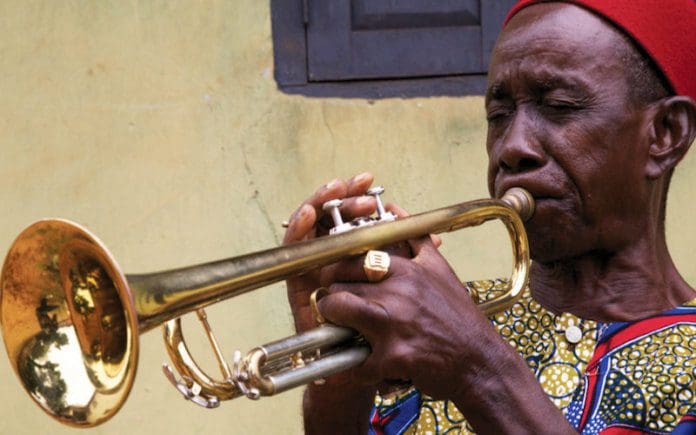


ELDER‘s Corner, a Musical Voyage of Discovery, conceived and written by the UK-based Nigerian musician, Siji Awoyinka, but produced in collaboration with the musician, activist, Ade Odukoya, aka Ade Bantu, has been selected for screening at the Afrika Film Festival, Koln Germany. It will be screened on September 19.
Breaking the news to NaijaTimes.ng yesterday, Bantu, who with Awoyinka, traversed the length and breath of Nigeria to have direct live interviews with many of the old musicians, — many of who are now dead — said he would be present at the screening with the writer, director, to formally present the film. He also shared the festival’s scheduling as below:
Since its completion last year, the film has made round of many festivals, including the Sheffield Docs, 2020 (World Premiere); IN-EDIT Film Festival, Barcelona, 2020 (Official Selection); DOC NYC, 2020 (North American Premiere); RAI Film Festival 2021, UK (Official Selection); Blackstar Film Festival, 2021 (Official Selection).
A note accompanying the North American premiere, captured the film thus: “When a young London-born Nigerian music fan makes the shocking discovery that many Nigerian musical icons don’t possess copies of their own recordings, he returns to Lagos to re-record them. This film chronicles the music — from juju to Afrobeat and everything in between — and its parallels to Nigeria’s socio-political evolution from the colonial 1950s through the nationalist movement and independence in the ’60s. Rare archival footage colors this performance-rich tour through the history of the nation’s music.”
In explaining the idea behind the film, the director, producer, Awoyinka, says: “From the colorful, celebratory sounds of Juju music to the politicized urgency of Afrobeat, Nigerian musicians have spearheaded some of Africa’s most prominent musical movements. Oftentimes, their work formed the backdrop against which the nation blossomed and floundered. So what happened to these pioneering artists who rose to prominence during the country’s halcyon years – and continued to endure when it faltered?”
A rich and resourceful documentary, Siji and crew spent over a year to amass over 30 hours of interview footages including those of pioneers and veteran musicians, including notably the trumpeter-composer, EC Arinze (late); Fatai Rolling Dollar (late); Chis Ajilo (late); The Lijadu Sisters (one of whom is now late) and Emperor Dele Ojo and others.
Also featured are: the guitarist, Sir Victor Uwaifo, Paulson Kalu; leader of The Ikenga Superstar; the veteran actor-musician and storyteller, Jimi Solanke; the Afro-highlifer, Orlando Julius; singer/composer, Kareeb Abdulkareem; the singer, Mary Afi Usiah, the pianist, Tony Benson, also younger acts such as the DJ/founder of Yoruba Records, Osunlade and the singer-performer, Wunmi Olaiya. The team also interviewed non-Nigerians including, the late pianist Randy Weston, and Roy Ayers, among others.
The film stats reads:
Director: Siji Awoyinka
Executive Producer: Siji Awoyinka, Tunji Olowolafe
Producer: Siji Awoyinka, Ade Bantu;
Co-Producer: Tunji Ladoja, Abby Ogunsanya, Kay Hung, Edel Kelly
Writer: Siji Awoyinka
Cinematographer: Siji Awoyinka
Editor: Siji Awoyinka, Charlie Hoxie
Language: Yorubá, English
Country: Nigeria, USA
Year: 2020
*******

REVIEW
‘Elder’s Corner’ Reveals a Musical Portrait of the Past
Vanessa Obioha (THISDAY) writes that ‘Elder’s Corner’, the new documentary by musicians Ade Bantu and Siji Awoyinka, gives a sense of what the music scene was like in the halcyon days of Nigeria
HARDLY do we glean the history of Nigeria from a musician’s perspective, but in ‘Elder’s Corner’, a co-production of musicians Ade Bantu and Siji Awoyinka, Nigerian legendary musicians retell the story of Nigeria. The stories they tell are compassionate, reflective, intimate and resilient. Through their eyes, we see a country that was once the pride of Africa.
The compelling narrative parades the best musicians the country has ever produced while inviting us into their world. Told from the perspective of Awoyinka, a passionate music lover/musician, who also wrote and directed the film, these elders give their account of the Nigeria they grew up in, starting from the pre-independence era. We see their passion, their patriotism like that of Mary Afi Usuah, a soprano, who left a lofty career in Italy to return home to sing for Nigeria.
In telling the history of Nigeria, they also share the history of our indigenous music. It doesn’t focus too much on Fela’s Afrobeat, the most recognised sound from Nigeria; rather the director takes us through the origins of highlife, a genre the late music veteran Victor Olaiya described as the sound of West Africa. We meet the Oriental Brothers, late E.C. Arinze who lost his fiddle bass during the civil war. At the time of filming, Arinze was still alive. The producers limited their conversations to musicians who were alive at the time of production.
During those years, highlife music was the most popular genre along the coast of West Africa and Nigeria had a great share of her stars. Profound storyteller, folk singer and poet, Jimi Solanke recalled that a standard song is recognised if it has an element of highlife. The prevalence of highlife music also gave birth to big bands. They were ubiquitous: clubs, parties. And with the likes of Bobby Benson, new talents like Olaiya were discovered. Arguably, Rex Lawson is the most revered highlife musician in Nigeria who the late Afrobeat legend Fela considered a rival. Other prominent highlife musicians include Chief Stephen Osadebe, Etubom Rex Williams and Celestine Ukwu.
However, with the arrival of the Nigerian Civil War, the big bands trickled down. Dan Satch Okpara, leader of the Oriental Brothers band disclosed that the band’s music was littered with stories of Biafra.
Juju music emerged as the latest genre of music after the war, bringing to the fore notable musicians who decorated themselves with lofty titles. A good example is Chief Commander Ebenezer Obey.
But as the country descended into decadence, the relevance of these musicians was relegated. They are almost forgotten.
The innovative musician Victor Uwaifo puts it this way: “It must be a devil’s trick to be born in a country where neither soul nor talent is appreciated.”
The images in the film are not exaggerated. Marshalling a wealth of original and found material — clips, newspaper cuts, images — ‘Elder’s Corner’ gives a sense of what the music scene was like in the halcyon days of Nigeria. It reminds us that music was not only a form of entertainment those days but serves as an educational medium. Musicians penned lyrics that reflected the happenings of the society as well as nuggets to everyday living. It, however, points out the importance of archiving our history. Most of the images according to Bantu were discovered outside Nigeria. More saddening is the fact that none of the musicians has their original recordings. Therefore, Awoyinka and Bantu invited an American friend and producer Bill, to re-record with the band.
The images of the veterans in the studio evoke a kind of nostalgia, particularly when one sees the resilience of Joni Haastrop, a member of the MonoMono band. Haastrop who suffered a stroke that affected his speech and left arm could be seen in the studio, playing with his band irrespective of his shortcomings.
‘Elder’s Corner’ also depicts the acceptance of female artistes into the male-dominated music industry. For instance, the popular Waka music veteran, Salawa Abeni reveals that it was difficult for them back then to put their foot in the door. The experience was no different for the Lijadu Sisters. The two alongside Usuah were the only female musicians featured in the over one-hour long documentary. Even though Nelly Uchendu, a prominent female highlife musician was already dead by the time the idea of the documentary was birthed, a mention would have sufficed. Uchendu, who had a career that spanned four decades was among the prominent musicians. One of her popular songs is ‘Wakabout’, a song that advises single ladies not to marry a man who is not purpose-driven.
Capturing every musician who made that era remarkable would have been a herculean task for the producers who embarked on the documentary in 2010 to celebrate the pioneers of Nigerian music. Famed musicians from the northern region like the late Dan Maraya and influential highlife musician Bala Miller. It was Miller who started a musical school in Kano to train young adults how to play music. Miller was also involved in the development of the Festival of Arts and Culture (FESTAC 77), which was also featured in ‘Elder’s Corner.’
While the documentary highlighted the pride of Nigeria as the host of a historical event that pooled international stars like Stevie Wonder and the South African musical troupe Ipi Tombi, it also touched on the corruption that pervaded the organisation.
Bantu and Awoyinka planned the documentary as a sort of ode to the pioneers of Nigerian music but ended up in a world of discovery and with a manual for the younger ones to study. As the title clearly depicts, ‘Elder’s Corner’ is a guide into the history of Nigeria’s indigenous sounds and the dexterity of the veterans who paved the way for future generations. But, it is also a reminder of how our history can easily be lost if not properly archived.

