
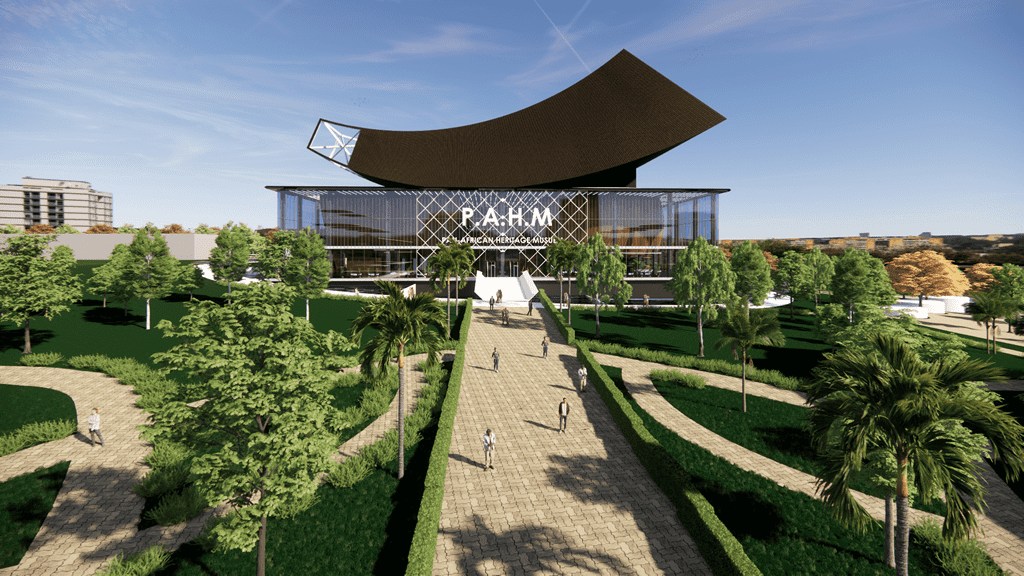

‘The heritage of a people defines them. A story written by a conqueror cannot be the story of the conquered. The story of a hunter will definitely not be the story of the hunted. It is always fair to know both sides of the story. The Pan African Heritage Museum, based in Ghana, Africa, is one more addition to the hundreds of museums across the world; it is distinguished by its mission to create in one site the heritage of a people from the beginning of world civilization to the present’
THURSDAY May 5, history will be made in Ghana as Africa opens what is considered its first digital museum of heritage, named the Pan African Heritage World Museum, PAHM.
Though scheduled to be completed next year, 2023, the launch on May 5 is targeted to coincide with the African World Heritage Day; and is to “give the public a virtual reality experience of what is to come in 2023.”
On the theme, “Presenting Our Unique Pan African Heritage to the World,” the launch will be hybrid, which means while the In-Person event will hold at the TV3 Executive Theatre, Accra, it will also be broadcast via the YouTube and Facebook pages of the Museum.
Stated the promoters of the project: “The Pan African Heritage Museum will create an environment for the people of African descent and all others to unlearn and relearn the true history, culture and civilization of Africa from the origin of mankind to present.”
Expected at the launch will be His Excellency, Diallo Abdourahamane (UNESCO representative in Ghana), Hon. Dr. Ibrahim Mohamed Awal (minister of tourism, culture & creative arts, Ghana), Prof. Kofi Asare Opoku (Chairman, PAHM advisory board), Dr. Joseph Silver ( Chairman, PAHM International Board Of Trustees), Dr. Winani Thebele (Botswana National Museum & member of PAHM Curatorial Board), Prof. Olusola Oyewole (Gen. Sec. AAU, Rep of Diaspora Africa Forum, Rep. of Diplomatic Corps.; All-Africa Student Union; Young African Leaders Forum).

*******
On the project, the founder and chief visioner, Hon. Kojo Yankah, stated:

IT is becoming evident each passing day that more and more information about humanity, about the beginning of world civilization, is unfolding. Each moment, one scientist, one archaeologist, one anthropologist, a historian, an academic, or a journalist, is publishing a researched material that the first Asian, the first Chinese, the Cheddar man, the first European, and many others were all African. Certainly, this raises a number of questions. Why were we told differently? What happened to the ancient Africans and their civilization? Who were the rich and wealthy African kings who straddled this earth? What happened to these African kingdoms littered in history books? What happened to the potency of African herbal plants and spirituality? Was Africa indeed a dark continent? What or who made it a ‘dark continent’?…
And yet, we learn that medicine, science, technology, art, and philosophy existed and still exist very strongly in Africa. What caused the separation of Africans to all corners of the world? Is it an accident that we all suffered from Mis-Education – about ourselves, and about others? It becomes an obligation, indeed a sacred duty, for a mission to be initiated to bring the HIDDEN PAGES of Africa’s history, art, culture, philosophy and ideals out into the open and exhibit them in a space on the continent of Africa. It will be a contribution to the understanding of world history and culture. It will unearth information that will be the subject for creating awareness about a people who know very little about themselves. It will give the youth of the world a reason to question further the environment in which they live.
The heritage of a people defines them. A story written by a conqueror cannot be the story of the conquered. The story of a hunter will definitely not be the story of the hunted. It is always fair to know both sides of the story. The Pan African Heritage Museum, based in Ghana, Africa, is one more addition to the hundreds of museums across the world; it is distinguished by its mission to create in one site the heritage of a people from the beginning of world civilization to the present. It is UNIQUE for its vision, scope, and location on a hill; but even more relevant, it is created to Educate, Heal and Inspire generations to come! It is our contribution to the creation of a better humanity! I welcome you to be a part of this unique journey!
About Kojo Acquah Yankah
BORN August 16, 1945), he is a former Member of Parliament in Ghana; also also served as a Minister of State in the Jerry Rawling’s administration. A former editor of the Daily Graphic, Ghana’s widest circulation newspaper, he is the founder and President of the African University College of Communications.
*******
Restitution… on the PAHM collection
Giving a philosophical background to the engagement of the museum, the Curator, Professor Pashington Obeng, says in an article titled, Restitution:

IN 2019, the University of Aberdeen decided to return the sculpture of the Oba of Benin to Nigeria.
Long before President Macron of France and UNESCO started advocating for the repatriation of African cultural heritage to Africa, the Akan of Ghana have epitomised restitution through their ‘Sankofa’ art pattern, a pictograph of a bird with its feet facing forward while its head is turned backward carrying an egg in its mouth. The Sankofa symbol, which translates into “going back to collect” or “retrieve” inspires, educates, heals, and emboldens Africans and Afro-descendants, and all, to appreciate and reclaim the enduring values of the past to forge a viable future.
The powers of rightful ownership are encapsulated in the Akan Twi saying to the effect that, Dea ode nadee de ne benkum na egye nade which means the rightful owner of any item or property does not need to apologize when they repossess their property. It calls for concerted efforts and participation of various international and national agencies, academics, civil society and non-governmental organisations and African traditional authorities to enhance and facilitate the retrieval of all aspects of the African heritage that have been expropriated.
About the Author:
Professor Pashington Obeng is Director of Culture and Education, Pan African Heritage Museum. He is also a Governing Board member, African University College of Communications, Ghana. Prof. Obeng specializes in Indian Ocean & Transatlantic African Diaspora studies, Anthropology of religion in continental Africa & New World Afro-Atlantic areas, and cultural communication focusing on Black filmic representations.

