

*Winner of £1000 James Currey Prize for African Literature to be unveiled
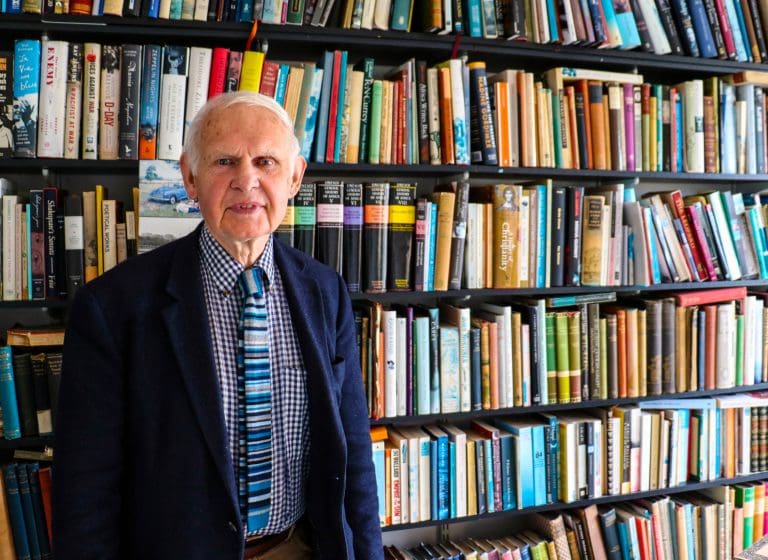
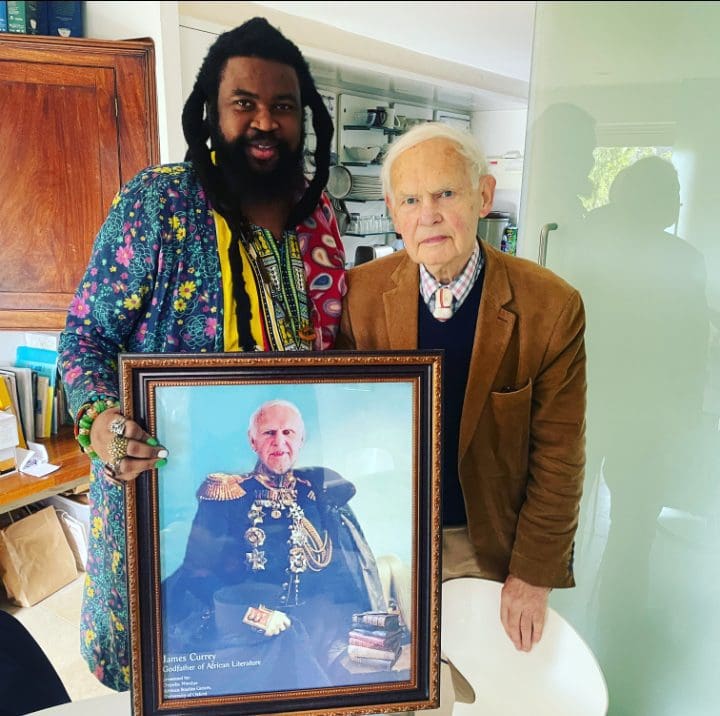
FROM today, September 1 through the 3rd, writers from Nigeria, Africa and other parts of the world, would be doing honour to a great lover of African letters, James Currey, the Octogenarian former co-Editor of the African Writers Series, AWS.
It is the maiden edition of the annual James Currey Literary Festival, and it will be holding at the Sir Victor Blank Lecture Theatre, Weston Library, Broad Street, Oxford, OX1 3BG.
In doing the honour to the 84-year-old Currey, the contributors and participants in the festival, as reflected in the programme outine, will also be dissecting the varying and multi-layered stories of Africa through the lens of Literature.
The 4-day festival is hosted by the James Currey Society, founded by Onyeka Nwelue, himself a prolific writer of about 18 books in diverse genres and forms, and publisher of Abibiman Publishing.
James Currey, from 1962 though early 70s, worked with the late patriarch of Nigerian and African Literature, Chinua Achebe, to produce the first 100 titles of the famous African Writers Series, AWS, which set the tone and texture for contemporary African writing, especially fiction.
“Alexandra Pringle, who heads Bloomsbury, publishers of the Harry Potter books and editor of Nobel laureate, Abdulrazak Gurnah, will headline the festival, alongside Professor Akachi Adimora-Ezeigbo, Mother of Modern Nigerian Literature and Professor James Currey himself,” said a statement from Nwelue, also a filmmaker, who is currently an Academic Fellow at the African Studies department of Oxford University.
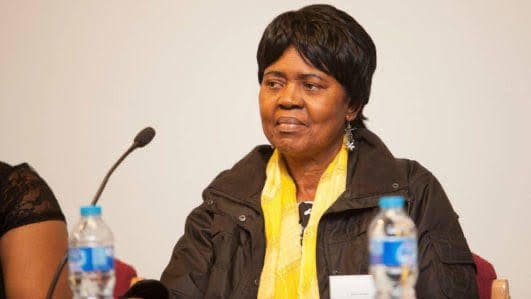
Other speakers expected at the festival, according to Nwelue, include: Margaret Busby, Ikhide Ikheloa, Efe Paul-Azino, Miles Larmer, Stephen Embleton, Ever Obi, Ikenna Okeh, Kadija Sesay, Timi Ovuru, Javier Gutiérrez Lozano, Onyeka Nwelue, Okwiri Oduor, Jahman Anikulapo, Aderemi Adegbite, Suraj Yengde, Pinkie Mekgwe, Derek Bassey, Keith Richards, Shola Adenekan, Sonny Iroche, Lydia Idakula, Dianne Regisford, Uche Anyanwagu, Debbie Edwards, Nky Iweka, Peace Anyiam-Osigwe, Obinna Odenigbo, Ayodele Arigbabu.
Outline of the opening sessions, starting 10.30am, as supplied by the Festival Secretariat, reads:
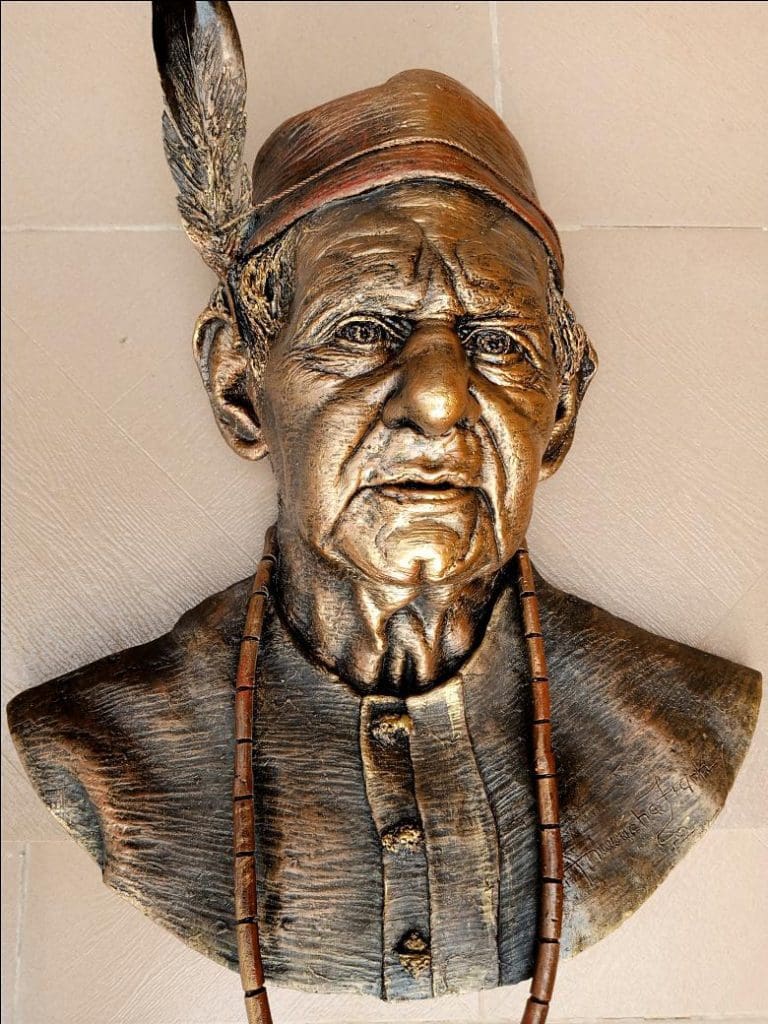
- Unveiling of the James Currey bust. Donated by Onyeka Nwelue. Designed by Frank Anwuacha. Venue: St Cross College – James Currey Collection Room
- Opening Remarks by Samson Onwe, President, James Currey Society
- Special Book Presentation: Outside Weston Library by Onyeka Nwelue and Ikenna Okeh’s Deportee. (Please, see the rest of the Festival programme outline below)
The festival is supported by British Airways, Abibiman Publishing, Future Africa, Daniel Ford International, La Cave Musik, Hattus Books, World Arts Agency, Y!Naija, Open Country Magazine, British Council, Sally Dunsmore, BellaNaija, NaijaTimes, ThisIsLagos.
Follow the festival on: IG: @jamescurreyprize |Tw: @CurreyFor | @JamesCurreyPrize
*****
*Unveiling winner of £1000 James Currey Prize for African Literature
HIGHLIGHT of the festival will be the unveiling of the winner of the £1000 James Currey Prize for African Literature, an annual award for the best unpublished work of fiction written in English by any writer, set in Africa or on Africans in Africa or in Diaspora.
Established in 2020 by the writer, filmmaker and publisher of Hattus Books and Abibiman Publishing, Onyeka Nwelue, the James Currey Prize for Literature is to be awarded annually for the best-unpublished work of fiction written in English, set in Africa, or about Africans in the African continent or diaspora. The winner of the inaugural prize was Ani Kayode Somtochukwu.
The Prize is a project of the James Currey Society, also established by Nwelue, which is also to administer it. The Prize just as the literature festival and the James Currey Fellowship are hosted and in cooperation with African Studies Centre, at the University of Oxford.
******
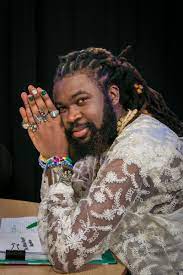
‘We honour the enormous but little-known contributions of James Currey to development of African literature’
WELCOME to the inaugural James Currey Literary Festival!
I thank Professor James Currey for his blessing. For trusting me with his name.
Founding the James Currey Society, and situating it in a city as expensive as Oxford is for a threefold reason. Firstly, to honour James Currey, the eminent African Studies publisher. To develop African politics, studies, cultures and languages. And to create projects that will keep the legacy of James Currey alive.
In all the years to follow, under the auspices of the James Currey Society, we will honour culture and especially honour Mr. James Currey.
This festival honours the enormous but little-known contributions to the development of African literature made by James Currey, co-founder of the famous African Writers Series.
This first edition of the festival will bring together writers from across the African continent such as the Veteran Nigerian novelist, former politician, and former president of the Association of Nigerian Authors, Dr. Wale Okediran, who will talk about his new work. Other novelists such as Ikenna Okeh, Stephen Embleton, Ever Obi, and writers Kadija Sesay, Timi Ovuru, Okwiri Oduor, Suraj Yengde, Keith Richards, Shola Adenekan, Sonny Iroche, Lydia Idakula, Dianne Regisford, Uche Anyanwagu, Nky Iweka, Blessing Uzzi, Chioma Ude, and Ayodele Arigbabu will join in conversations cutting across a range of published works and topics.
In addition, the James Currey Lifetime Achievement Award in Literary Criticism will be awarded to Ikhide Ikheloa, who is well known for his daring reviews of creative works.
Also featuring at the festival will be the announcement of the winner of the 2022 James Currey Prize for African Literature, which I established by at a dinner, organised by Juliet Mabey, publisher of OneWorld Publications.
The British Council is graciously supporting representation of selected authors from Africa at the Festival under their Culture Connects programme. I am delighted to say that Melody Sango, Programme Manager for Culture Connects in Sub-Saharan Africa (SSA) highlighted that our festival provides opportunities for creatives from both SSA and the UK to connect as professionals, to network, and explore opportunities for future collaboration – which is a key part of the work British Council is doing to support the growth of the creative sector.
Our guests include: His Royal Majesty, King Bubaraye Dakolo Agada IV, Ibenanaowei of Ekpetiama kingdom, Bloomsbury publisher, Alexandra Pringle, Britain’s first ‘black’ female book publisher, Margaret Busby, along with Professor Akachi Adimora-Ezeigbo, considered Mother of Modern Nigerian Literature, and eminent British publisher of African Studies, James Currey himself.
I am thankful to the beautiful minds, Farai Ncube and Matt Beavers of British Council. They didn’t fail us at all.
Eternal gratitude to British Airways.
I thank everyone at Abibiman Publishing and the James Currey Society. And I thank all our volunteers!
Thank you, Sally Dunsmore of FT Oxford Literary Festival, Sir Tony Byrne, Stephen Embleton, Ifeanyi Mojekwu, Samson Onwe, Aboyeji Iyinoluwa, Professor Miles Larmer, Dr. Lucy Bayley and Alexandria Franklin of Bodleian Libraries, for all the support.
Enjoy your days in Oxford!
******
Festival Programme Outline
THURSDAY, Sept 1
8am: Unveiling of the Ja8am: mes Currey bust. Donated by Onyeka Nwelue. Designed by Frank Anwuacha. Venue: St Cross College – James Currey Collection Room
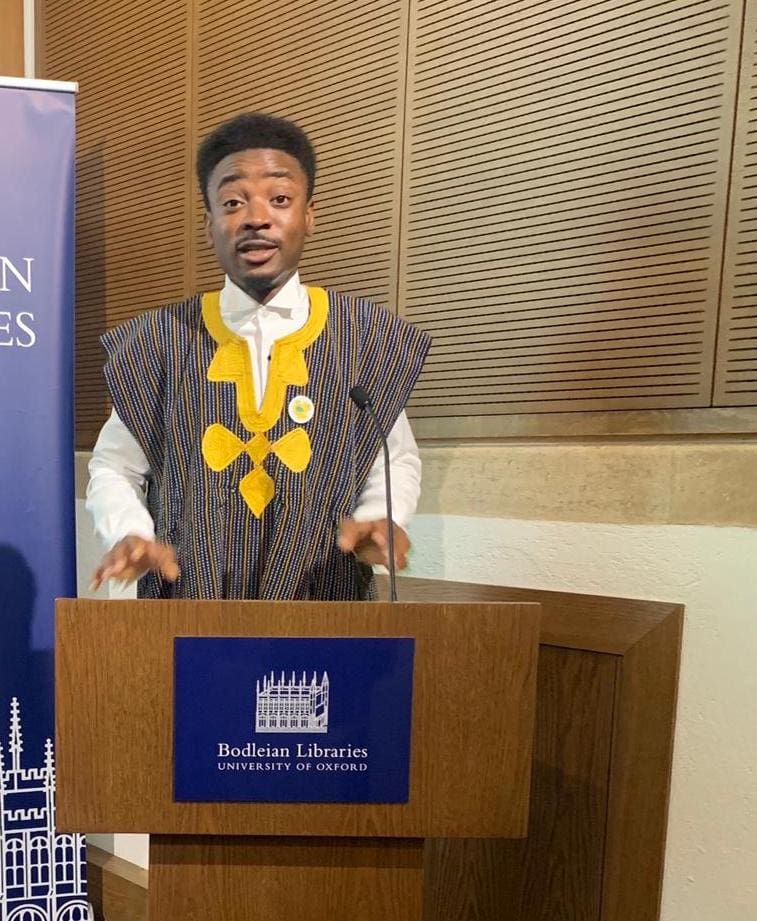
10.30am: Opening Remarks by Samson Onwe, President, James Currey Society
Special Book Presentation: Outside Weston Library by Onyeka Nwelue and Ikenna Okeh’s Deportee.
11am: PANEL 1
The New African Writers Series and the Future of African Publishing
Moderator: Professor Miles Larmer | Panelists: Prof. Akachi Adimora-Ezeigbo, Stephen Embleton, Kadija Sesay, Ikhide Ikheloa, Jaqueline Mitchell, James Currey | Dr. Pinkie Megkwe | Dr. Bronwen Everill
12.15am: PANEL 2
Are Writing Residencies, Book Fairs, Literary Conferences and Festivals important? How can they be funded?
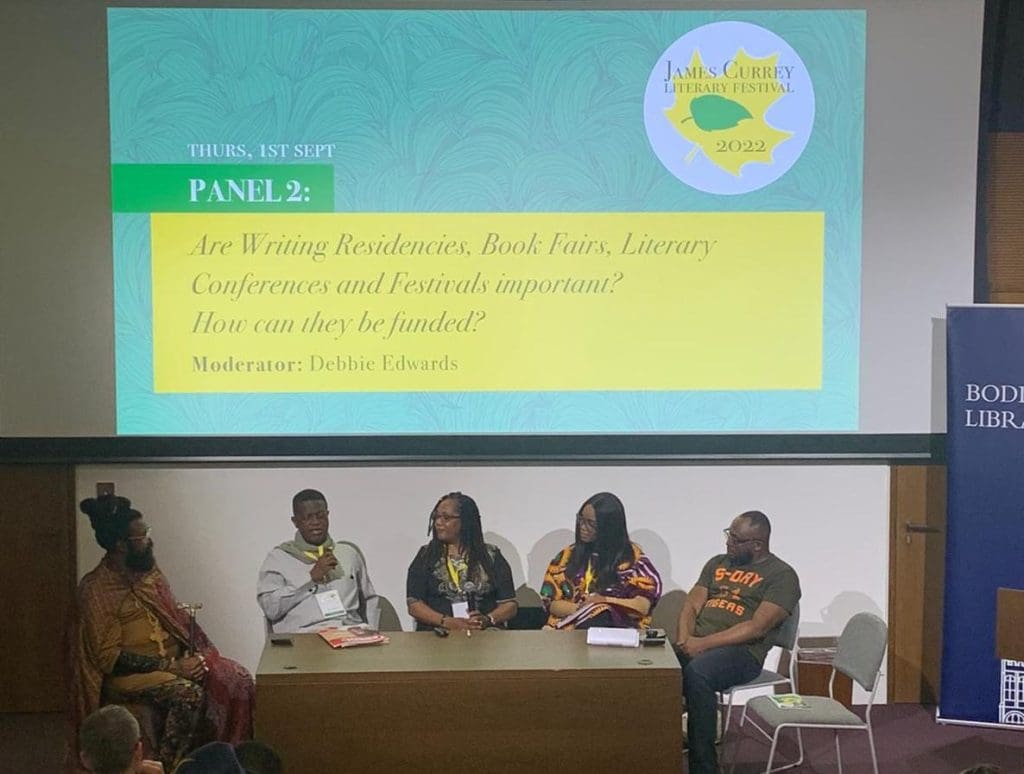
Moderator: Debbie Edwards | Panelists: Jahman Anikulapo | Lerato Mogoatlhe |Timi Ovuru | Sonny Iroche | Dianne Regisford | Keith Richards | Wale Okediran | Ifeoma Ifeanyi-Odinye | Onyeka Nwelue | Efe Azino-Paul
1.15pm: Book signings and exhibitions
2.15pm: PANEL 3
What is the Future of Literary Prizes? Why Are They Important?
Moderator: Jahman Anikulapo | Panelists: Niq Mhlongo | Sarah Ozo-Irabor | Ikhide Ikheloa | Masande Ntshanga | Charmaine Mujeri | Ever Obi | Ifeoma Ifeanyi Odinye
3.30pm: PANEL 4
From Joseph Conrad to VS Naipaul: Are Africans Writing Travelogues? Are We Writing About Our History, Cuisines and Cultures?
Moderator: Collins Nweke | Panelists: Suleiman Ahmed | Akin Alabi | Niq Mhlongo | Lerato Mogoatlhe | Chigozie Ahaiwe | Adaku Agwunobi | Ikenna Okeh | Ayodele Arigbabu | Nky Iweka
******
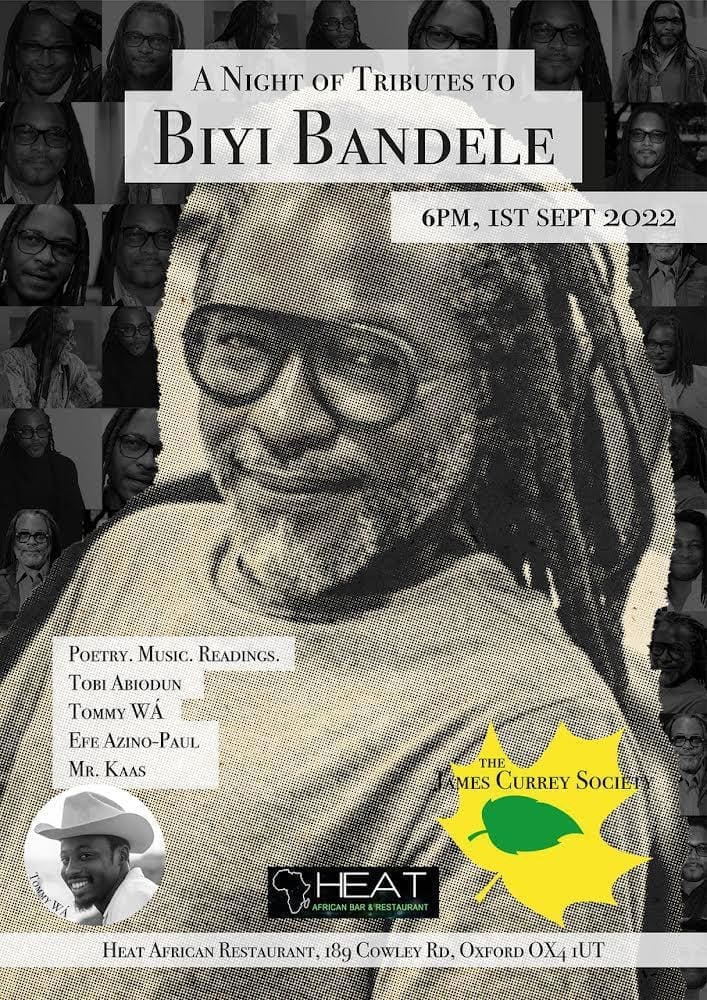
6pm: Evening of Tributes to Biyi Bandele: An evening of tribute, poetry and music to the iconic writer and filmmaker who passed away on August 7th, in Lagos.
Featuring: Tobi Abiodun. Tommy Wa. Efe Azino-Paul. Mr. Kaas.
Venue: Heat African Restaurant, (189 Cowley Rd, Oxford OX4 1UT)| (Register at [email protected])
*******
FRIDAY, Sept 2
10am: Special Book Launch: Madagali by Dr. Wale Okediran; Broken Bodies, Damaged Souls by Professor Akachi Adimora-Ezeigbo; Some Angels Don’t See God by Ever Obi and Onyeka Nwelue: A Troubled Life by Mitterand Okorie
11am: PANEL 1
Are young people reading? Who is translating our books? What is the fate of Sci-fi in Africa?
Moderator: Lydia Idakula | Panelists: Ayodele Arigbabu | Segun Egberongbe | Stephen Embleton | Masande Ntshanga | Leye Adenle | Jan Kotouč | Adaku Agwunobi | Timi Ovuru | Merline Ulysse
12.15pm: PANEL 2
What Can Be Done to Develop the publishing infrastructure in Africa?
Moderator: Debbie Edwards | Panelists: His Royal Majesty King Bubaraye Dakolo Agada IV | Ever Obi | Uche Anyanwagu | Ben Touitou | Suraj Yengde | Jahman Anikulapo | Ahmed Suleiman
2.15pm: What Can We Do for James Currey?
Moderator: Ed Keazor | Panelists: Jahman Anikulapo | Miles Larmer | Professor Akachi Adimora-Ezeigbo | Sonny Iroche | Stephen Embleton | Samson Onwe | Nky Iweka
3.30pm: PANEL 4
Who is Writing Fiction in Africa and Who is Publishing It?
Moderator: Lydia Idakula | Panelists: Professor Akachi Adimora-Ezeigbo | Ever Obi | Ikenna Okeh | Timi Ovuru | Nneoma Otuegbe | Niq Mhlongo
5pm: The James Currey Lecture by Ikhide Ikheloa (Pa Ikhide) &
Film Screening.
Venue: Oxford Martin School, 34 Broad St, Oxford OX1 3BD
******
SATURDAY, Sept 3
10am: Special Book Launch: The James Currey Anthology, edited by Stephen Embleton
11 am: PANEL 1
Reading and Writing for Children
Moderator: Dr. Shola Adenekan | Panelists: Professor Akachi Adimora-Ezeigbo | Ikenna Okeh | Stephen Embleton | Wale Okediran | Teri Sillo | Uchehara Winifred Chinyere
12.10pm: James Currey Prize for African Literature Special Reading
Moderator: Teri Sillo
Readings from shortlisted authors from their works
1.15pm: FREE TIME
2.15pm: PANEL 2
Daughters of Africa: Who is Publishing African Voices? And What Are Africans Writing
Moderator: Emma Shercliff | Panelists: Dr. Margaret Busby | Alexandra Pringle | Okwiri Oduor| Prof. Akachi Adimora-Ezeigbo | Lizzy Attree | Dr. Pinkie Megkwe
3.30pm: PANEL 3
Book to Film: The emergence of book to film. Taking books to the screen and why it is important. Who is funding it?
Moderator: Ed Keazor | Panelists: Chioma Ude | Peace Anyiam-Osigwe | Chigozie Ahaiwe | Stephen Embleton | Jan Kotouč | Ben Touitou | Dorothee Wenner | Chris Ihidero | Blessing Uzzi
7pm: The James Currey Birthday Dinner and Prize Ceremony (Strictly on invitation)
******
About James Currey
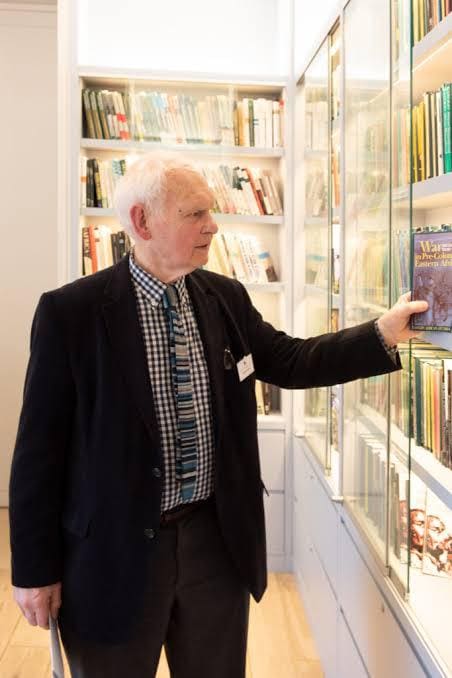
ORIGINALLY from South Africa, James Currey working with Chinua Achebe, spent more than a decade pioneering Heinemann’s African Writers Series (AWS), the set of volumes that was a crucial factor in expanding the reach of African literature after World War II, particularly in English. Currey and Achebe were said to have co-produced the first 100 volumes of the series.
Currey cut his publishing teeth at the Cape Town outpost of Oxford University Press, as well as by spending time moonlighting for The New African, a liberal publication he followed into exile in London when it was stamped on by the Apartheid authorities in 1964.
“We revived The New African in 1965 in London and, in all, published a total of over 50 issues. Thanks to the Congress for Cultural Freedom, we mailed each issue free to the original subscribers in South Africa. In the end, as Pretoria banned each issue, we had every month to invent a new name such as Inkululeko for the South African edition. Each “New African weekend,” I would paste up work by writers with names such as James Ngugi, Bessie Head, Wole Soyinka, Zeke Mphahlele, Dennis Brutus and Chinua Achebe. It was this literary apprenticeship that enabled me to take over running the African Writers Series, with Keith Sambrook, at Heinemann in 1967,” stated Currey in an interview.
Currey later left his position at Heinemann Educational Books to set up an Africa-focused publisher, the James Currey Publishers, which became an imprint of Boydell & Brewer.
A former academic publisher specialising in African Studies which since 2008 has been an imprint of Boydell & Brewer. It is named after its founder who established the company in 1984. It publishes on a full spectrum of topics – including anthropology, archaeology, history, politics, economics, development studies, gender studies, literature, theatre, film studies, and the humanities and social sciences generally – and its authors include leading names such as Bethwell Ogot and Ngũgĩ wa Thiong’o.
In 1986, speaking at a Royal African Society symposium on the state of publishing in Africa, Currey described what he called “an academic book famine”, down in part to the profit-driven reaction of the head offices of the big publishing houses, such as Heinemann and Longman, to negative economic developments on the continent during previous years. Currey spoke with pride of how small publishers like the James Currey imprint were the ones who picked up the slack as best they were able. To ensure high quality and global reach, while maintaining accessibility for African students, he said:
The aim should be to build up a sufficient international print run in three continents so that the book can be available at the correct price for the African market in paper covers and, if possible, in a paper covered edition in Britain and the US so that it can get on the reading lists of students in the rich countries as well. […] Second, publishers can share the printing costs, split the print runs, use local paper, and save foreign exchange. This means that the international print total can be substantial for an academic text.
As will be familiar to readers of its East African Studies series, for example, that James Currey has had just such a long-running three-continent effort shared between itself, Heinemann Kenya, and Ohio University Press. This co-publishing approach has continued since 2008, when James Currey became an imprint of Boydell & Brewer.
The James Currey Collection at the University of Oxford‘s St Cross College was formally opened on March 2, 2019 at an event featuring the launch of Tsehai Berhane-Selassie’s new book on Ethiopian Warriorhood, a lecture by author and Fellow of St Cross, Richard Reid, and a discussion by panellists including key African women publishers Ellah Wakatama Allfrey, Bibi Bakare-Yusuf, Margaret Busby, Nana Ayebia Clarke and Zaahida Nabagereka.
(Adapted from https://en.wikipedia.org/wiki/James_Currey)
********
‘I’m excited modern technology is helping publishing in Africa enormously’ – James Currey
 [Photo: Kuukuwa Manful/Africa Oxford Initiative]
In this episode of the Orders Beyond Borders blog’s interview series, host Lynda Iroulo talks to James Currey, co-founder of the Oxford-based James Currey Publishers…
TODAY we have James Currey with us. He is co-founder of the Oxford-based James Currey Publishers, who previously worked for Heinemann Educational Books and Oxford University Press. Together with Chinua Achebe, under the auspices of Heinemann Publishers, he produced the African Writers Series, a series of books by African writers, in 1962. Let’s get to know you. How long have you been in the publishing business?
All my adult life. I started off in South Africa and the more frustrated I became about apartheid, the more interested I got in Africa to the North, where everybody was becoming independent.
And what influenced you to go into publishing? I read that one of your parents was a poet and the other a playwright. Did they not want you to follow their steps and do what they did?
Well, yes. Growing up, I was used to seeing authors in my parents’ house. They always were professionally involved, as you said, and in fact I think they felt that really the most superior thing was writing. My brother was quite good at writing, but I was less good and got interested in publishing because it seemed to be a very self-indulgent profession where you could enjoy other people’s work and writing, and you could share their excitement and their sadness.
I can imagine you’ve read more than a thousand books. What books have caught your interest and sparked something special in you?
What books? Well, the problem as a publisher is that you skim-read, and in recent years I’ve really made myself read the whole book rather than just go ahead and get it finished. When you ask me about the most recent book I’ve been reading, I think I bought Americanah by Chimamanda Ngozi Adichie when it came out in 2013. I’ve been reading that book with particular fascination because of all these extraordinary complications of people coming into other people’s countries and legal ways of staying and so on and so forth. That’s very much uppermost in my mind at the moment.
So why did you feel it was important to focus on publishing African literature?
Well, publishing is a matter of taking advantages and getting a feeling of the way things are going and what chances there are. To me, it was terribly exciting that I had grown up with this literary background. I was used to people writing books and novels, women as well as men, so it was just marvelous to be able to encourage people. The thing was that once we had started putting out these books with the orange covers and the photograph on the back, people said “Good lord, I can get published!” and they were getting encouraged. When the floodgates were opened there was this enormous rush of manuscripts, and Chinua Achebe, me, and our colleagues were just responding to this enormous surge of self-confidence in independent Africa.
So far, do you think there is still more to be published and more to be written about Africa?
The thing is that there already was quite a lot of publishing going on, but now, it has absolutely taken off. Going back to Americanah, one of the biggest moves has been into the diaspora – the US, Europe, and so on. But the problem still within Africa is trade between the individual countries. It’s not easy to get books published in Nigeria in Nairobi. But modern technology is helping, and publishing has taken off in Africa enormously; and it’s riddled excitement in me.
One question I would like to ask as a PhD student is that we are passionate about the research we do, but at the same time we are afraid that these manuscripts will end up somewhere in the bookshelf in libraries without being read by anyone. As someone who has been in this business for a long time, what would be your advice to PhD students for moving from having a thesis to a book?
We sometimes have published doctorates unchanged, but fairly rarely. When you approach a publisher about your work, always say: “Look, I know you have a lot of work and if you are not able to accept this book, could you suggest other publishers who might help?” I remember that one time, I was at a conference at the School of Oriental and African Studies in London and people suddenly started asking us about books on conflict resolution. Actually it turned out we had done quite a lot of books on conflict resolution, but the important thing is not to say “Oh, they’ve done books on conflict resolution, they won’t be interested in mine.” As far as I’m concerned it’s often very worthwhile and productive to publish clusters of books on something like conflict resolution.
Right now people are kind of skeptical that books may go nonexistent because scholars tend to read the shorter ones like articles in journals, and not books. Do you think that may be a challenge in the future?
Definitely a challenge already I think. I think fiction is in considerable difficulty. But staying with academic books, the market seems to have held up quite comfortably in recent years, even though things tend to change rather quickly. Our new owners just want us to publish more, for example. They say that we are not publishing enough books (laughs). So that’s good news for authors.
You have been in this business for a long time. Do you have any plans of retiring?
Certainly not (laughs). I am very much interested in family history. I have just heavily edited a biography of my grandfather, who in 1964 published six children’s books, which came in the last year with New York Review of Books and are still selling fifty years afterwards. So I am doing that biography. Then I had a very exciting time in South Africa from 1959 to 1964. It was the time of the Sharpeville massacre and when Nelson Mandela was sent off to Robben Island. It was absolutely phenomenal and I was quickly involved in resistance politics. I’ve found all my letters from that period. I’m afraid when I am sitting in conferences, sometimes my mind goes back to the thought “I wish I was out editing my letters and my wife’s letters from South Africa.”
Interesting. So we heard from Mr. Currey that researchers shouldn’t give up and we should take our research as a seed that is going to bloom into a flower, and he’s not going anywhere. It was a pleasure talking to you!
Pleasure talking to you, thank you very much.

