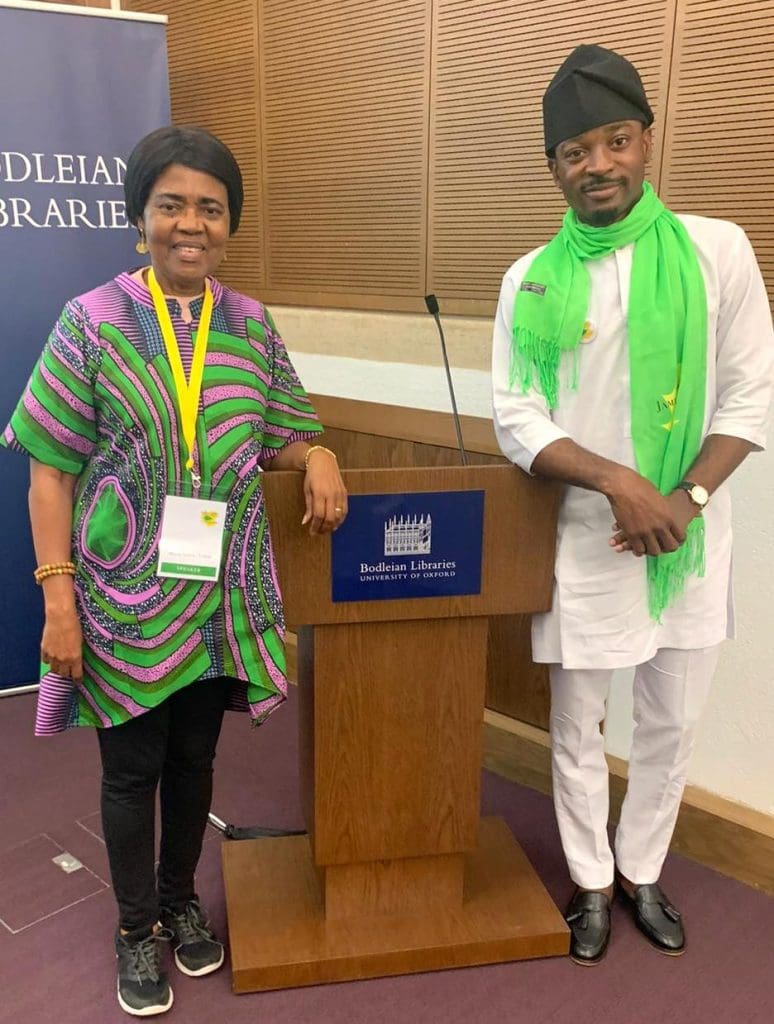

*’James Currey is one of us. He is our kinsman, and we must celebrate him’
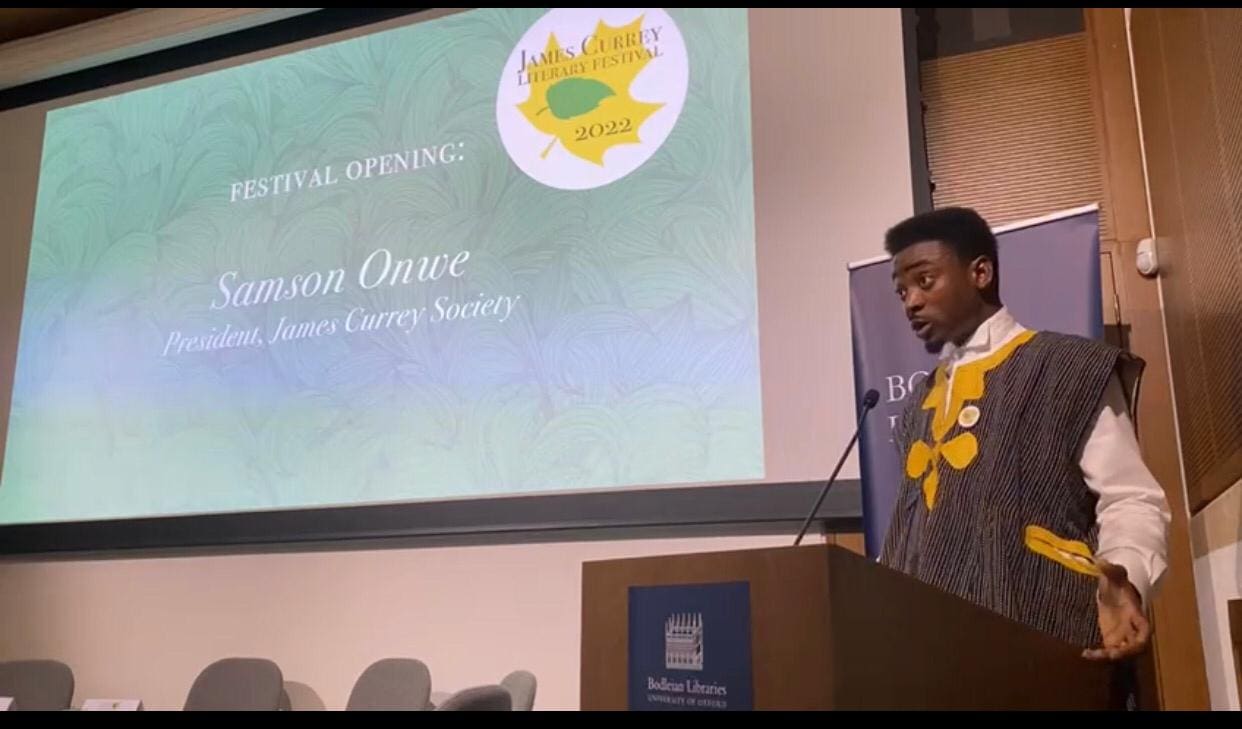
(Being the opening speech of President of the James Currey Society, SAMSON CHINONSO ONWE to flag-off the inaugural James Currey Literature Festival (Sept 1-3), at Oxford University, Thursday Sept 1)
‘As we call out and seek to dismantle the dangerously inimical grip of neocolonialism, and blow it to smithereens, we must also be careful that we do not join in reinforcing the already existing racialism. I have said elsewhere, and permit me to say it again, that the continued delinking of psyches, people, and communities, all in a bid to uphold and conform to racialised classifications, would only generate ill relationships and existential vacuums’
AS president of the James Currey Society, it is with great pleasure that I declare this festival open.
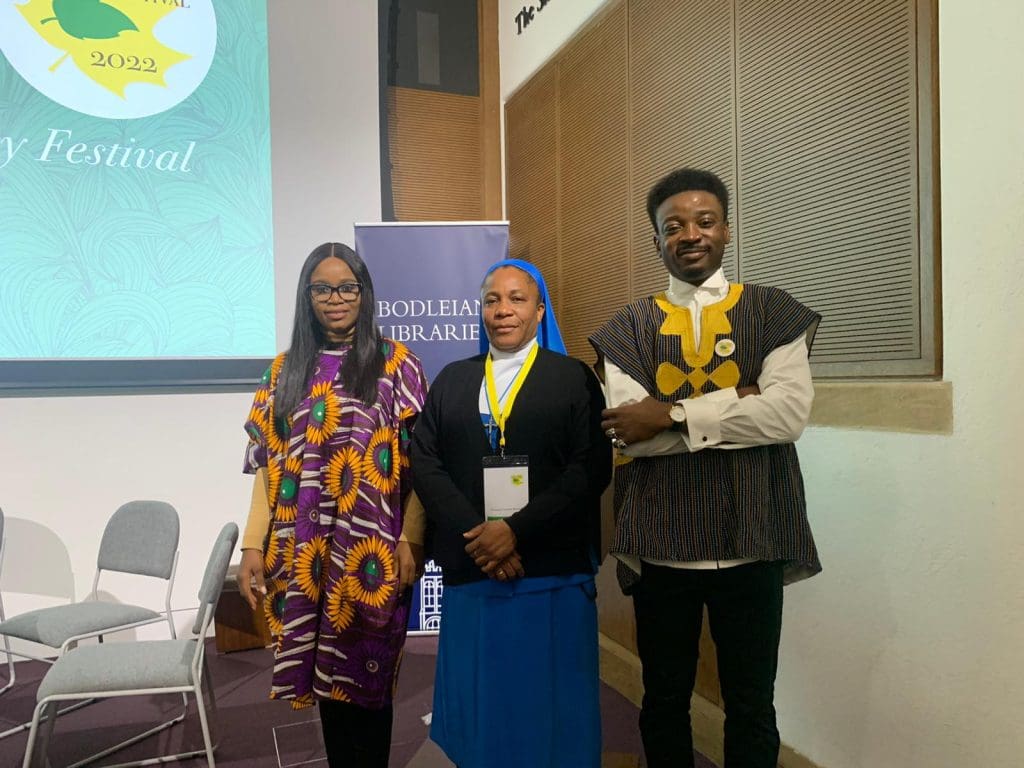
Good morning, ladies, and gentlemen. It’s an honour for me to be standing here tonight and seeing everyone. A lot of people I have met before, and a lot of people I am excitedly meeting in person for the very first time. I would like to welcome you all to the inaugural James Currey Literary Festival.
I would first like to specially recognise the presence of our eponym, in person of James Currey, whose works and achievements, we are all gathered here to appreciate and celebrate. I would also like to recognize the presence of Prof. Miles Lamer, the Director of the African Studies Centre here at the University of Oxford.
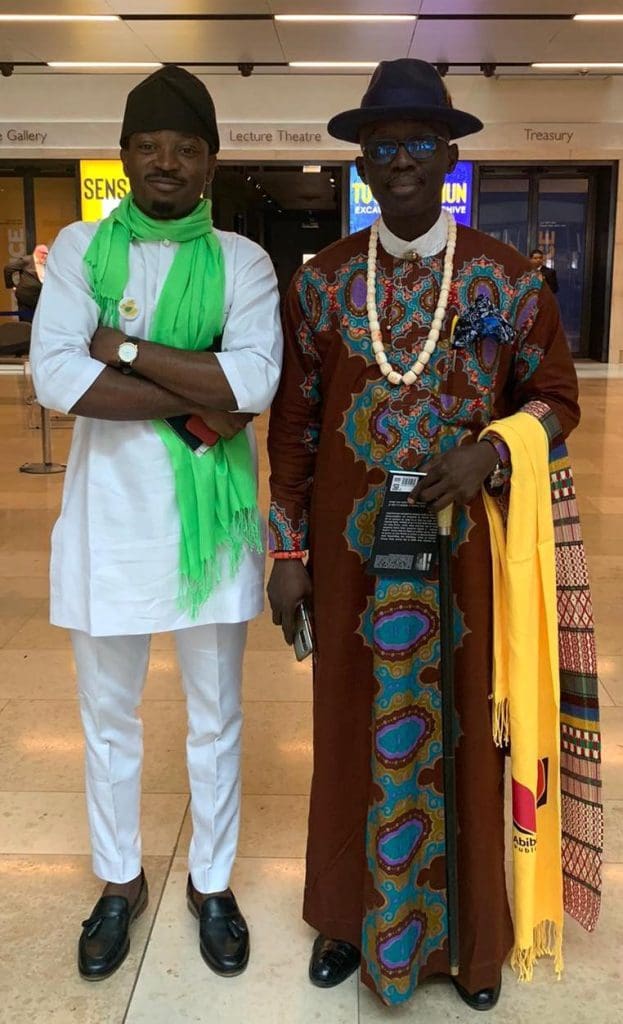
On top of that, I would also like to specially acknowledge the presence of our founder and director, Dr. Onyeka Nwelue, our inaugural James Currey Fellow, Mr Stephen Embleton, our esteemed Prof. Akachi Ezeigbo here present, Pa Ikhide, His Royal Majesty, King Bubaraye Dakolo, representatives of the British Council, South Africa, and a host of other dignitaries, novelists, participants, and all our sponsors, whose names – for the sake of time, I cannot fit into this rather short prefatory.
James Currey’s contribution to African Literature have spanned about four decades. Many of us writers and scholars in the Arts, Humanities and Social Sciences have been re-engaging with the works of James Currey for several years, but it was Dr. Onyeka Nwelue, who in his knowledge and prescience, committed to having him appropriately located and recognised.
Up until 1984, James Currey worked with Heinemann Publishers. While there, he had spent over a decade pioneering the African Writers Series, which as we all know, played a great role in expanding the reach of African literature.
In 1984, James Currey left his position at Heinemann to set up an Africa-focused publishing house. This was motivated by what he described as “an Academic book famine” for African students at the time, partly caused by the profit-driven reaction of big publishing houses to economic downturns in Africa over the years. His publishing house, The James Currey Publishers, picked up the slack and ensured access to African students and the general readership. James Currey’s love for Africa, which is clearly reflected in his choices, actions, and impacts, is deserving of our guarded admiration.
I recall our first encounter, when I visited his home alongside Onyeka, Suraj, and Stephen. On that day, our conversations centered on his reflections to the background of African Literature, and what he thought of it in contemporary times. What that allowed for, was a deep contemplation, of how most of these legendary works are located within James Currey’s oeuvre, their places within the historical context of their birth and production, and the major influences that shaped them.
I wasn’t so fortunate to meet a lot of legendary writers, in the likes of Chinua Achebe, Steve Biko, Ngugi Wa Thiong’o, Sembene Ousmane, and a host of others that have greatly influenced me. But in that moment of discursive raconteur, I felt a connection to them like never before. It was like re-living and loving their works all over again. His narrations formed a spectacular lens for which I was able to explore the past, appreciate how far African literature had come and make some good inference into the future.
Quite unsurprisingly, as a society, we have received several comments and criticisms from interlocutors, most of whom clearly have a problem with the moniker, or may I say the title of ‘Godfather’ for which we have dubbed James Currey. Some of them have argued that it is Literary Neocolonialism. I deduce that the bulk of these criticisms resonate from the overt racialisation of the world. They are primarily from people who are perhaps ignorant or have failed to understand the concept of intersectional identity. Comments like that makes it clear that we ought to be self-conscious. As we call out and seek to dismantle the dangerously inimical grip of neocolonialism, and blow it to smithereens, we must also be careful that we do not join in reinforcing the already existing racialism. I have said elsewhere, and permit me to say it again, that the continued delinking of psyches, people, and communities, all in a bid to uphold and conform to racialised classifications, would only generate ill relationships and existential vacuums.
We therefore pay them no mind. James Currey is one of us. He is our kinsman, and we must celebrate him.
For those of us who have greatly benefitted from the works of James Currey, it is clear why we celebrate. For the new readership, it will become apparent why his works should be considered a continental treasure, which will no doubt, take its rightful place within the history of African education.
An African proverb says, when kinsmen gather under the moonlight, it is not because they cannot individually see the moon from their various compounds. We have all come from various corners of the world to gather here physically today, not because we cannot join online or on zoom, but because we understand the importance of coming together to celebrate, to celebrate our shared cultural identity, our love for African literature, and, by extension, our shared love for Africa,
Once again, I would like to welcome you all to oxford, and I hope everyone has a wonderful experience.
Thank you.