
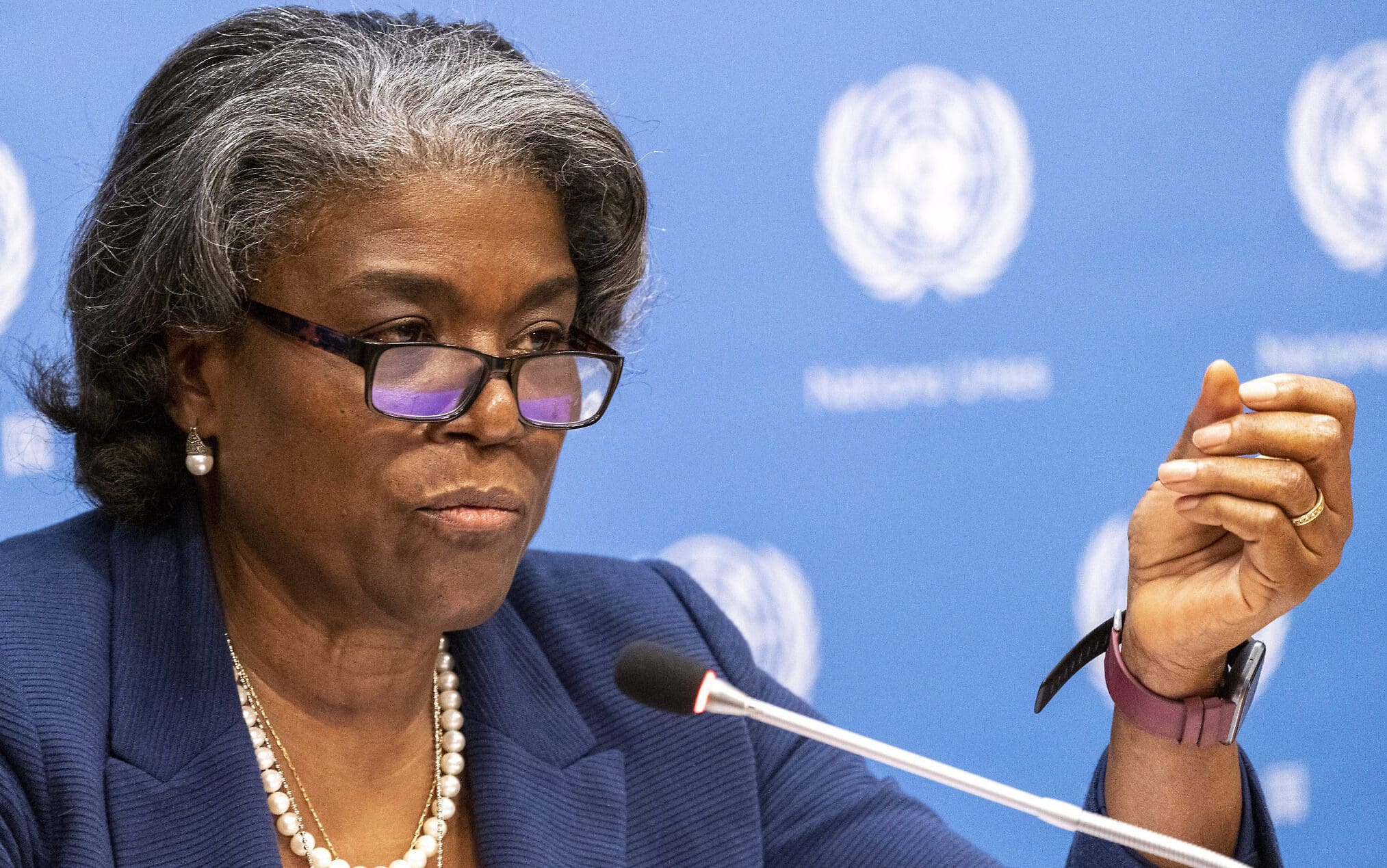

THE United States Representative to the United Nations, Ambassador Linda Thomas-Greenfield, has enumerated the achievements of the Global Action Plan against Covi-19.
The plan was launched seven months ago.
She spoke at the Covid Global Action Plan Ministerial Meeting in New York on Friday.
She listed the achievements to include increased vaccinations across the world, availability of more oxygen masks, reduced infections rate and more.
“Since we launched the Global Action Plan seven months ago, we’ve made significant progress toward our goals. Consider vaccinations: Last September, only 13 percent of the people in lower-middle-income countries were vaccinated against COVID-19. Today, that number has more than quadrupled to 56 percent. For our part, the United States has provided more than 620 million vaccine doses to 116 countries and economies, all with no strings attached. So many of you have helped contribute to the vaccination efforts too, but we still have more work to do to address the equity gap in global vaccinations and protect people at risk of severe illness.
“To close that gap, this pandemic taught us the importance of expanding access to critical medical supplies. We need to shift COVID-19 care from being offered primarily in emergency facilities. That care should be integrated into routine services. That will make vaccines, therapeutics, and diagnostics more accessible. Similarly, we have to close gaps in our global health infrastructure.
“Today, I am proud to announce three new initiatives that will help us close that gap and make more – make care more equitable around the world. First, I am pleased to announce today that USAID with the Global Fund and other partners will launch test-to-treat pilot programs in ten countries.”
The ambassador added that these programmes would help people get screened for COVID-19 when they have symptoms and receive antiviral medications if they test positive. The programmes would also help people avoid severe illness, reduce hospitalisations, and save lives.
“USAID will work with governments, public health experts, and civil society to make this happen. As we implement these programmes, we will track lessons learned with our foreign partners. And we’ll share these lessons with countries around the world, including our providers in the United States,” she said.
Thomas-Greenfield noted that the United States is improving access to medical oxygen because it is critical for treating patients with severe COVID-19.
“Since the pandemic began, oxygen supplies have been put under strain around the world. And even before the pandemic, only roughly half – half – of inpatient facilities in Africa had reliable access to medical oxygen.
“The United States has committed $50 million to tackle this problem. That includes purchasing oxygen, installing storage tanks, and upgrading the physical infrastructure for delivering oxygen, like the piping that brings it to the patients’ bedsides. We’re also helping lower the cost of oxygen for governments across Africa, where prices can be ten times higher than in the United States. We’re starting with nine governments, supporting their negotiations with the private sector to develop market-based approaches. Increasing access to affordable oxygen will also support other global health programs like those that address child and adult pneumonia, safe birth, safe surgery, and new infectious disease outbreaks.”
She said an implementation group would be established to improve global health access to medical supplies and services through the global clearinghouse mechanism.
She said: “Our hope is to make supply chains more resilient, efficient, and equitable. And we’ve seen throughout this pandemic access to these essential supplies can mean the difference between life and death.
“So together with our GAP partners, the public sector, and the private sector, we will set up a new platform. This platform will bring together countries, medical supply manufacturers, critical components producers, and large procurement agencies. Our goal will be clear: to match surpluses in supplies with those who need them when they need them. We’re aiming to launch this platform next year, and we’re hoping other countries will join us. These efforts are only the latest ways we’re combating COVID-19 and building more resilient global health systems. So let’s continue to work together and let’s do everything in our power to make the world safer, to make the world healthier, and free from pandemics for all.”

