
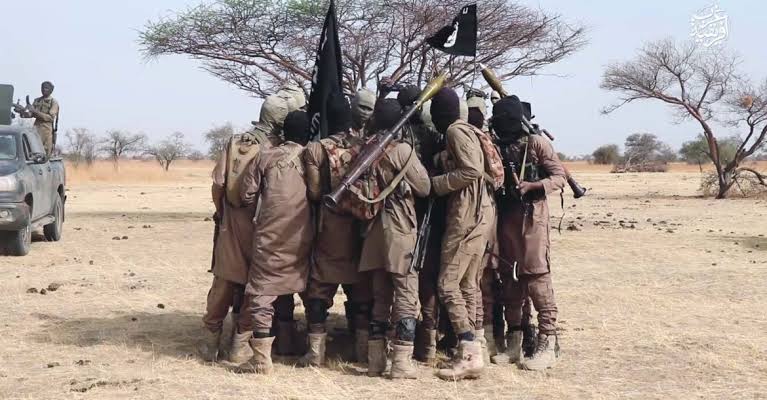

THE Islamic State West Africa Province has been responsible for 1,480 attacks in the nation between July 2009 and August 2022.
Additionally, the attacks has caused 3.2 million Nigerians to be displaced and around 15,111 victims to die.
These were contained in the Agora Policy report, titled, ‘Understanding and tackling insecurity in Nigeria.’
The report read, “According to the Armed Conflict Location & Event Data Project, between July 2009 and August 2022, BH/ISWAP carried out 1,480 attacks, resulting in the estimated deaths of 15,111 people and the displacement of over 3.2 million Nigerians (UNHCR Africa).
“At the peak of their activities, BH/ISWAP controlled 26 local government areas in three states in the Northeast: fourteen, seven, and five local government areas in Borno, Adamawa, and Yobe states, respectively.
“They later extended their activities to parts of Kogi, Nasarawa, Kaduna, Kano, Plateau, Niger, and Sokoto states as well as the FCT where they attacked government installations, worship centres, recreation areas, motor parks and other densely populated areas. “
The study revealed that BH/goal ISWAP’s was to overthrow the existing order and establish their own areas under their rigid interpretation of Islamic law.
The report also stated that the country’s security system is in risk due to the terrorist group’s rapid establishment of cells in numerous regions.
“The rapid spread of ISWAP cells, if untamed, could give the Islamic State an opportunity to turn Nigeria into the new Syria” the report stated.
It further said that an estimated 7,500 lives were lost between 2018 and 2021 to bandit attacks while about one million persons had been displaced.
“The effect of banditry is extensive. In addition to complicating the general insecurity in the country, it has exacerbated forced migration and displacement, food insecurity, cattle rustling, destruction of property, health challenges, humanitarian crises, and death.
“Between 2018 and 2021, an estimated 7,500 lives were lost to the banditry crisis, while nearly one million became internally displaced persons from 798 communities in the affected states. A total of 50,0004 Nigerians were reportedly taking refuge in the Niger Republic at the peak of the conflict “, the report added.
The document also bemoaned the theft of oil from the Niger Delta, noting that the scourge was affecting the nation’s economy.
According to a conclusion by the Nigeria Extractive Industries Transparency Initiative, oil theft and sabotage cost the country $42 billion over a ten-year period.
According to the research, the country’s insufficient criminal justice system is the primary cause of the insecurity there.
It was also stated that an effective criminal justice administration was essential in order to reduce crime in society and ensure long-term solutions to the security issues.
“Unfortunately, however, there are existing inadequacies and human indiscretions that make the system unable to fully rise to the challenge. Corruption in the law enforcement and justice sector aids escape of criminals from the law, which emboldens and imbues them with a sense of impunity and makes the wronged persons take the laws into their own hands for vengeance.
“Extortion and torture in the hands of security agents have been cited by many high-profile criminals as a reason for their indulgence in criminal activities or their extreme show of sadism,” the report further noted.
It added, “There is also insufficient capacity and lack of deliberate effort to take apprehended high-profile criminals through the justice dispensation process. For example, the trial of Boko Haram suspects in Kainji, Niger State, which began in 2017, drew a lot of criticism for lacking sufficient transparency and rigour, and for the fact it had yet to cover a lot of suspects, relative to the number of persons in custody.”

