
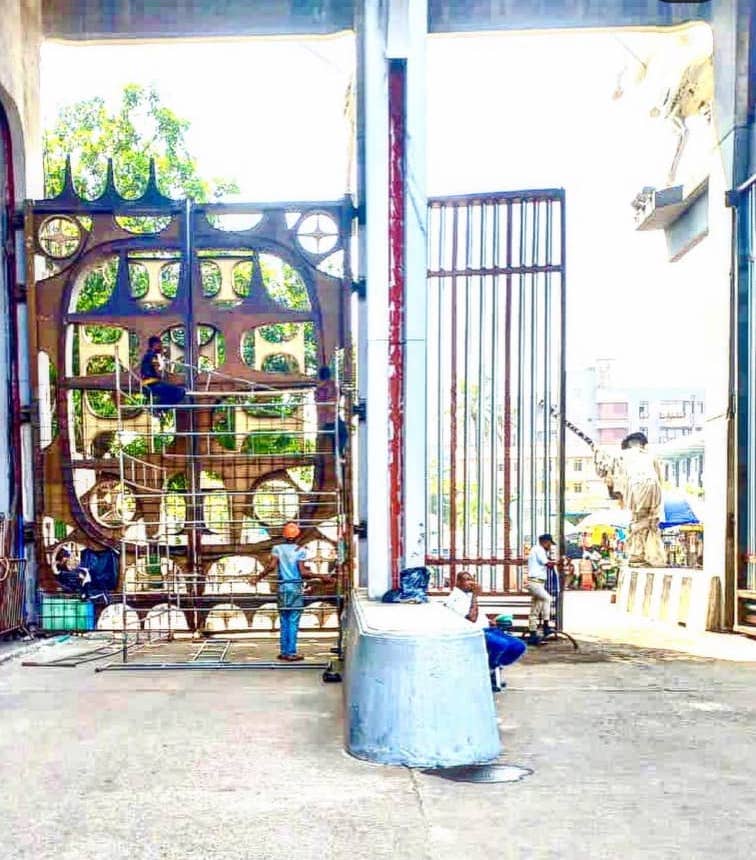

‘This week, we observed the Nigerian Vultures at work again…these once majestic gates. I don’t know the story behind this insane carnage but everything must be done to salvage the parts of these gates for safe keeping and possible restoration on its original site or as a free-standing sculpture somewhere symbolic..as a reminder of the artists we had and the animals we have’
“THEY destroyed paradise to put up a Parking lot..” In the words of Jumoke Alawode-James @oluwaloninyo “.. may Nigeria not happen to you..”.
All too often we come across sad stories of our self-cannibalism, shooting ourselves..not just in the foot, but in the head to boot! Our greed has put commonsense and moral values at bay and the inmates have taken over the asylum.
Tafawa Balewa Square, in itself a bastardisation of the once serene and friendly Racecourse, has over time grown to become an icon of Lagos; a place the military governments of yore designed to celebrate their victories over the civil populace. It however remains an indelible part of our history.
The monument amidst its fascist architectural style employed the works of many great Nigerian artists, perhaps the likes of Emokpae, Onobrakpeya etc.. but who cares right?
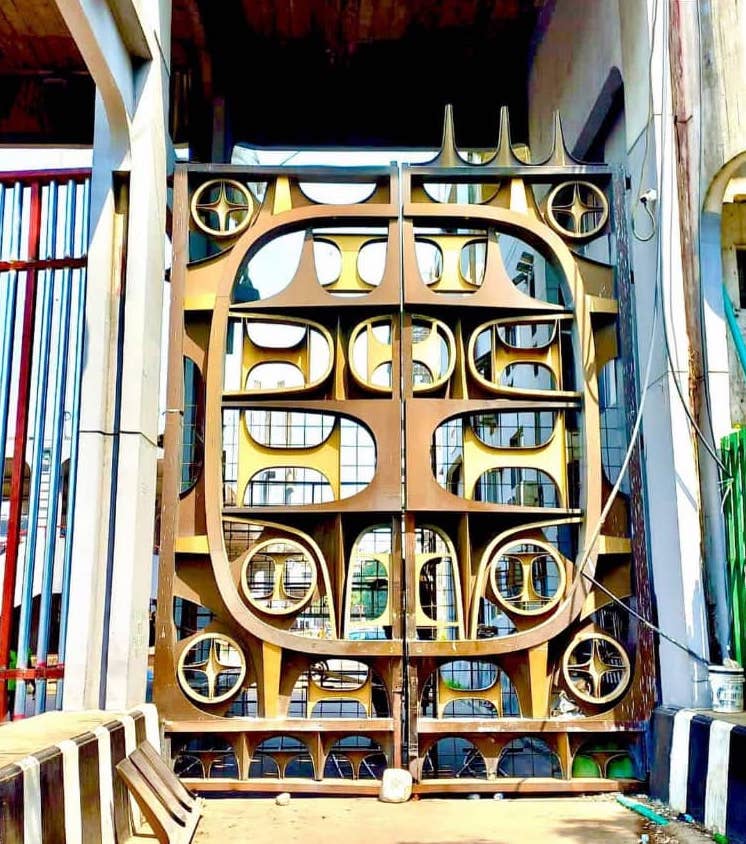
This week, we observed the Nigerian Vultures at work again…these once majestic gates.
I don’t know the story behind this insane carnage but everything must be done to salvage the parts of these gates for safe keeping and possible restoration on its original site or as a free-standing sculpture somewhere symbolic..as a reminder of the artists we had and the animals we have.
#savetbsgates @jahmanoladejo @adukegomez @steveayorinde @lagosislandco @oluwaloninyo @kunleafo @tbs_city @nialagos @niapublicrelations @lagostourism @jidesanwoolu
******
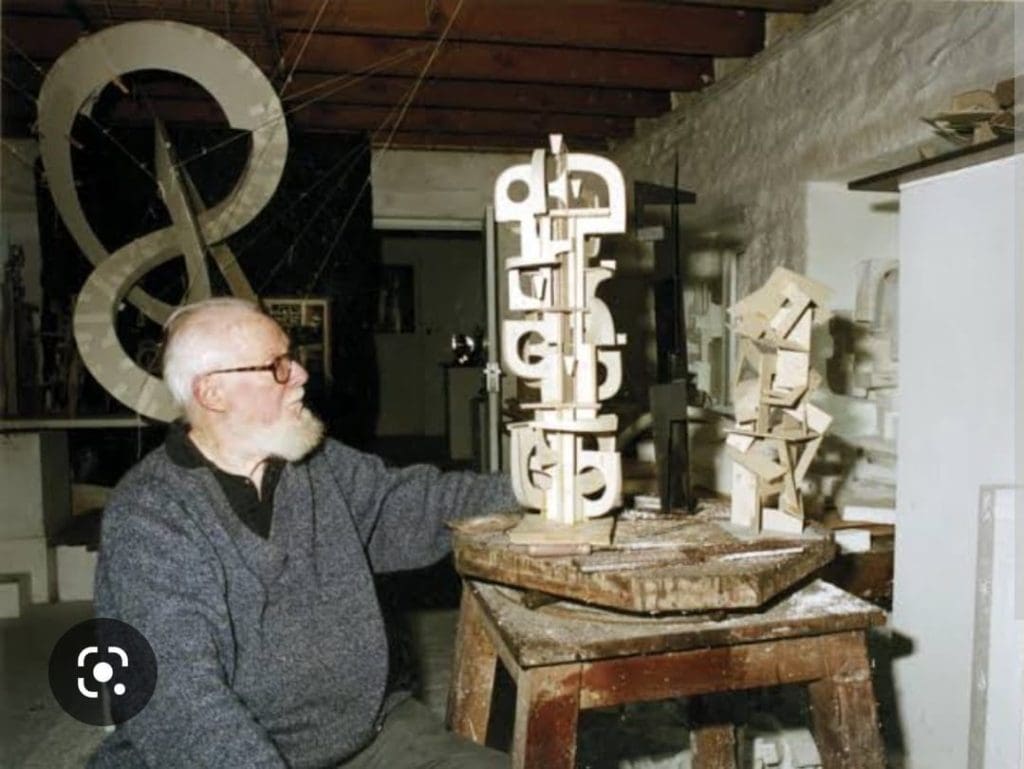
About Paul Mount
About Paul Mount
By Michael Byrd
ON one hand, the sculptures of Paul Mount displayed the cool geometries of classic modernism; on the other, something much less urbane – more like the firm-footed vitality of Yoruba wood-carving. Mount, who has died aged 86, created a distinctive fusion of these qualities. From his large, wood sculptures of the late 1950s through to his prolific series of abstract, cast-iron and bronze works from the 1960s onwards, to the mirror-like pieces in stainless steel he was preparing for exhibition this year, he combined a passion for formal clarity with an instinct for sculptural power and presence.
Mount’s quiet demeanour belied a prodigious creative output. He also produced architectural designs, painted, published novels and was an accomplished pianist. His sculpture was clearly influenced by the structure of Baroque counterpoint. “I like form for its own sake,” he once remarked, “whether it’s in sculpture, design, music, architecture or painting.”
Mount was born in Newton Abbot, Devon, where his parents were schoolteachers. After attending Paignton School of Art, he studied at the Royal College of Art until he was called up for war service in 1941. A lifelong pacifist, he served in the Friends Ambulance Unit in north Africa and then France, where he stayed on after the end of the war to do relief work. Here, too, he had his first, formative encounter with Romanesque sculpture. Mount and Jeanne Martin, a fellow RCA student, married in Paris in 1946. Returning to the Royal College, he painted portraits and urban landscapes. From 1948 he taught at Winchester School of Art.
In 1955 he took a job in Lagos, Nigeria, setting up an art department at Yaba technical institute. Starting with just an empty building, he designed the furniture and equipment, and recruited students. His work at Yaba – one of the achievements of which he was proudest – led to two contacts that shaped his career. To ensure students learned marketable skills, he employed a wood-carver from Benin. Before long he was experimenting with sculpture – smooth, standing forms in iroko or ebony, reminiscent of Barbara Hepworth. His furniture designs, meanwhile, resulted in commissions from an architectural practice. By 1960 Mount was producing large-scale architectural works, such as his screen wall at the Swiss embassy in Lagos.
The need to create surfaces that deflected the heat while allowing air to circulate – the opposite of modern western architecture’s love of glass and light – helped to form Mount’s sculptural idiom. His cast-iron and bronze works often seemed to project a robust shield around their airy, inner spaces. Another possible African legacy was his refusal to waste anything. Many of his works in metal were fabricated from waste from previous sculptures.
In 1962 Mount returned to England, settling at Nancherrow, near St Just-in-Penwith, Cornwall, where he was to spend the rest of his life. Hepworth was still working nearby in St Ives. Like Hepworth and her sometime assistants Denis Mitchell and John Milne, Mount conceived his sculpture in relation to the landscape, in which it is often sited and probably best viewed. His fascination with machinery, however, led him to develop more angular, industrial forms than other Cornish modernists, closer to those of the Basque sculptor Eduardo Chillida, whom he met in France in the 1970s.
After he stopped teaching, Mount made his living entirely from architectural and public commissions, such as his 1968 Spirit of Bristol in Bristol city centre, and sales of work. He learned to weld from a local blacksmith, and, despite the difficult shift from architectural to gallery scale, was soon exhibiting widely. In 1965 he had his first London show at Drian Gallery and in 1975 he had a solo exhibition at Marlborough Fine Art, both in the West End. In 1976 he and Jeanne divorced and Mount married the painter June Miles. In 1998 the couple had a joint exhibition at the Penwith Society of Arts in St Ives.
In later life, Mount continued to be sought by collectors and to exhibit regularly, including a show at Falmouth art gallery in 2001. By now, however, his kind of sculpture was out of critical fashion. He was one of the last sculptors in a tradition stemming from Henry Moore and Hepworth.
He was one of the last, too, of those British artists whose careers were interrupted by the second world war – who, once free to work again, never really lost their sense of a world to be made anew through art. For Mount, sculpture expressed an essential human dignity. “The way that two shapes relate,” he observed, “is as important as the way two people relate.”
An exhibition of his stainless steel sculptures opens later this month at Beaux Arts, Cork Street, London. He is survived by June, and by Martin and Margaret, his son and daughter from his first marriage.
Paul Morrow Mount, sculptor, painter, designer and writer, born 8 June 1922; died 10 January 2009.
https://www.theguardian.com/artanddesign/2009/feb/12/paul-mount-obituary

