
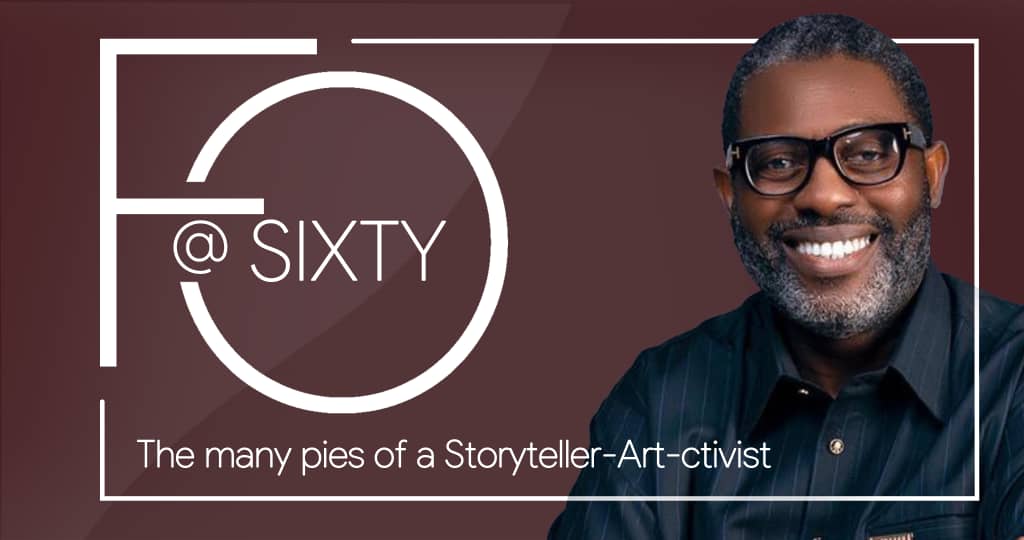

*On-site: Freedom Park, Lagos Island | Virtual: https://meet.google.com/cih-hnto-ayo?hs=224
THE ace storyteller, media content creator, and art activist, Femi Odugbemi was 60 on May 24. To mark the epoch some friends and associates celebrated him on that day in a modest way in a close-knit gathering at his residence.
This was in deference to the nature of the man himself –modest in social scenes, quiet in the public space, even if his creative energies and resourcefulness are robust, and his activist/advocate voice is voluble and voluptuous in service of the arts and cultural essences of the Nigerian nation, Africa and by extension, the entire Black family.
In spite of his kicks and expressed wishes to have a solemn climb to the Diamond phase of his illustrious life, however, some of his “stubborn” friends, associates, and Mentees have decided to “ambush” him with a full celebration of the very essence(s) of his astute professional life, and exemplary life of warm, humanist, and philanthropy.
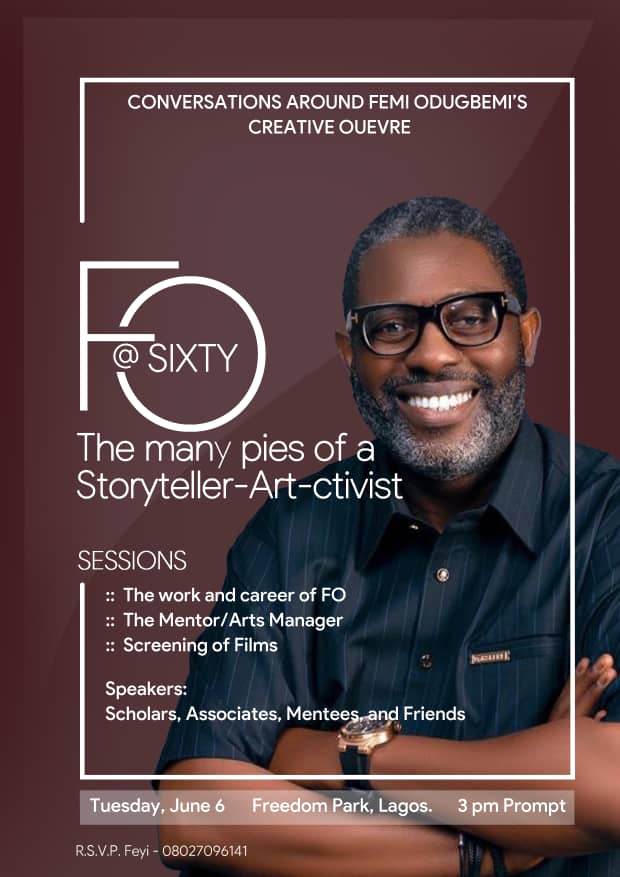
Thus today, June 6, the life, career, and accomplishments of the ace documentary filmmaker, who has also made a huge mark in the vocation of producing some of the most applauded television series on Nigerian and African screens, will be feted to a three-prong event.
Generically titled “Conversation around Femi Odugbemi’s Creative Ouevre”, the event billed to kick off at 3 pm in a hybrid format at the Freedom Park by Broad Street, Lagos, and virtually via Google Meet is themed: “FO@60: The many Pies of a Storyteller/Art-ctivist”. Designed in three parts, the “conversations” will reflect on Odugbemi’s work and career, his mentor/teacher activities, and his consistent art activism and culture advocacy, which spreads even beyond the Nigeria space.
The first part of the “ambush” event will feature a carefully selected group of scholars and researchers in film and the media straddling Canada, the US, the UK and Nigeria. The speakers include Paul Ugor, professor in the Department of English Language and Literature at the University of Waterloo, Ontario, Canada, who is about to publish a major scholarly work on Odugbemi’s work and career and, is thus giving the keynote. Others are Tony Adah, professor of Film Studies at Minnesota State University Moorhead(USA), Okome Onookome, professor of English and African Cinema at the University of Alberta, Edmonton (Canada), Jonathan Haynes, Emeritus Professor of English at Long Island University in Brooklyn, New York (USA), Dr. Samantha Iwowo, Principal Academic at the Bournemouth University (UK), Dr Anulika Agina, an Associate Professor of Media and Cultural Studies at the Pan-Atlantic University Lagos(Nigeria), and Dr. Tunde Onikoyi researcher and lecturer in the Film Department at the University of Regina (Canada). See Profiles below.
The second segment of the conference will have his Mentees at the Multichoice Talent Factory in a brief session of reflection on his time as the pioneer/two-term Academic Director of the project during which over 40 young ones were trained in the entire process of filmmaking. The third segment will have his associates, friends, and co-workers reflecting on his career as a corporate executive in his own outfits, and his public engagements in art activism and culture advocacy, contributing to the activities of key organisations. The various organisations he belongs to such as iREPRESENT International Documentary film Forum, to which he is Executive Director/co-founder, the Committee for Relevant Art, CORA, where he is a Board Member, and the Orange Academy, where he has been Provost for some years.
*******
PROFILES OF SPEAKERS
PAUL UGOR
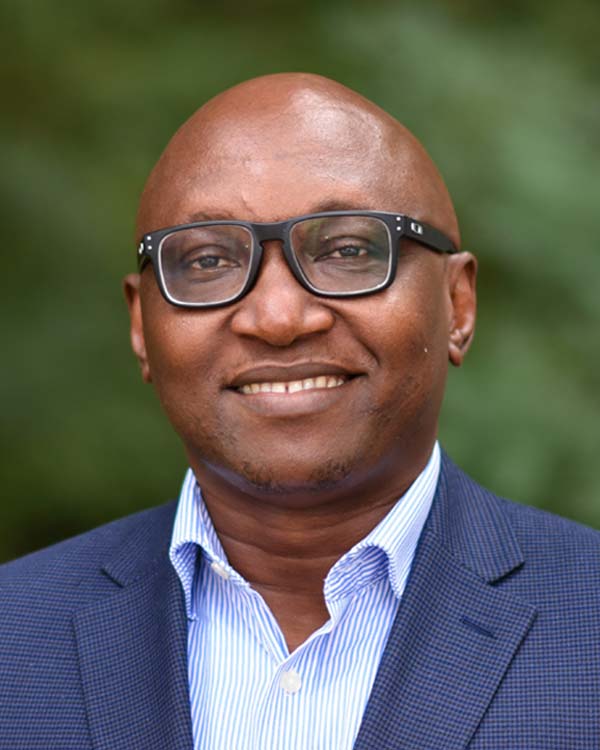
A PROFESSOR in the Department of English Language and Literature at the University of Waterloo, Ontario, Canada, Prof Ugor’s research and teaching interests are in the areas of Modern African Literatures and Cultures, Anglophone Postcolonial World Literatures, Cultural Studies, Global Black Studies, and New Media Cultures in the Global South. He is the author of Nollywood: Popular Culture and Narratives of Youth Struggles in Nigeria (2016) and co-editor of several collections including, Youth and Popular Culture in Africa: Media, Music, and Politics (2021); African Youth Cultures in the Age of Globalization: Challenges, Agency, and Resistance (2017); Special Issue of Postcolonial Text, Vol. 8, No. 3 & 4, 2013; and special issue of Review of Education, Pedagogy and Cultural Studies 31:4 (2009). An Alumnus of the Nation Humanities Centre in NC, US, his latest work, a monograph tentatively entitled Afropolitan Humanism: Popular Cinema and Humanist Advocacy in Nigeria. The latter project examines the humanitarian uses to which Femi Odugbemi, Nollywood’s leading film director and television producer, has put his screen media work as a socially-committed filmmaker.
*******
JONATHAN HAYNES
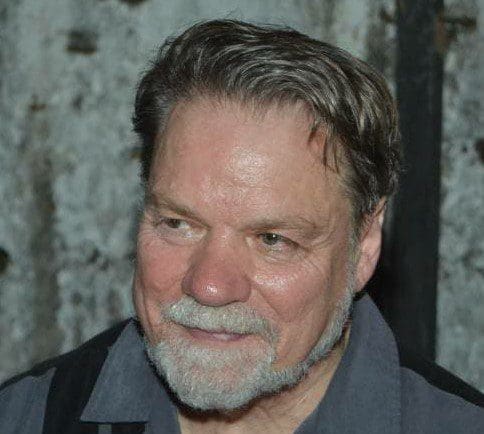
PROFESSOR Emeritus of English at Long Island University in Brooklyn, New York, his latest book is Nollywood: The Creation of Nigerian Film Genres (University of Chicago Press 2016, Ibadan: Bookcraft 2017). He co-authored Cinema and Social Change in West Africa (1995, with Onookome Okome) and edited Nigerian Video Films (1997, 2000). Educated at McGill and Yale, he also published two books on English Renaissance literature. He has been a Guggenheim Fellow and has held Fulbright research and teaching positions in Nigeria at the University of Nigeria-Nsukka, Ahmadu Bello University, the University of Ibadan, and the University of Lagos.
******
ONOOKOME OKOME
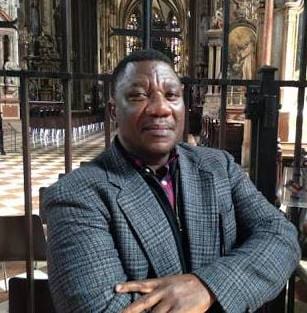
PROFESSOR of English and African cinema and currently teaching at the University of Alberta, Edmonton, Canada, Okome studied at the University of Ibadan, Ibadan. Considered one of the pioneers of Nollywood Studies, he has published widely in the field. He has supervised PhD and MA studies in the field in Europe, the United States of America and Africa. He is both a fellow of the Freiburg Institute of Advanced Studies and the Netherland Institute of Advanced Studies in the Humanities and Social Sciences. His publication profile includes over 40 academic essays on African literature and cinema. His most recent essay on Nollywood is the exhibition entry, “Islam et Cinema en Afrique de l’ouest.”Tresor de Islam en Afrique. Paris: Silvania Editoriale, 2017. He is currently working on a book-length study, “Nollywood: Text, Context, Controversy.”
*****
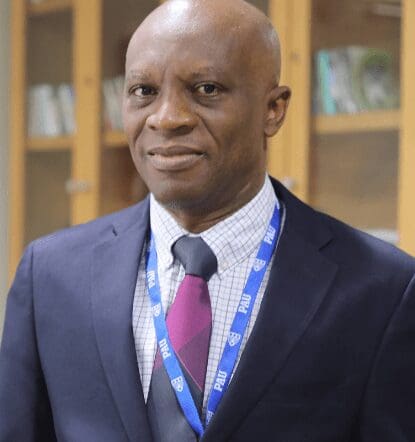
ANTHONY ADAH
PROFESSOR of Film Studies at Minnesota State University Moorhead, USA, Tony’s teaching and research areas are African cinemas and Indigenous filmmaking in Australia, Canada, and Aotearoa/New Zealand. His primary research areas are Indigenous cinemas from settler states, African cinemas, the body and popular culture, and food and identity in film and theatre. His creative work includes performing on stage in the 2000s with AfriCan Theatre Ensemble, Toronto and a feature film, Sleeping Dogs (2006). He’s published in the World Encyclopedia of Contemporary Theatre: Asia/Pacific (2000), PostScript, Film Criticism, Intellectbook’s Journal of Media and Cultural Politics, and has a forthcoming book, Personhood and the Environment in Indigenous Cinemas (2024). In 2021, Tony was a US Fulbright Scholar to Nigeria in the School of Media & Communication at Pan-Atlantic University, Lagos. He is currently a Carnegie African Diaspora Fellow in the Mass Communication Department at Dominican University, Samonda, Ibadan.
******
SAMANTHA IWOWO
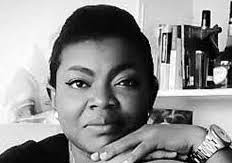
PRINCIPAL Academic at Bournemouth University, UK, Dr Iwowo’s research and praxis, which lie in Postcolonialism with leanings in Transnational-Cinema Studies, support creative industries, cultural heritage and challenge marginalisation. The outputs from these studies reflect a fusion of her industry practice, scholarship and education delivery. Her praxis entails 50 published screenplays, including episodes of Tinsel (2008 – ongoing), Nigeria’s longest-running daily drama series, as well as the internationally celebrated feature Oloibiri (2016). She has also directed five films, including the AHRC-funded film, Articulations of Politics in Nigeria (2022) and crowdfunded drama, Paint Brush (45 mins.,), which explores knife-crime menace in multicultural London. She has co-authored a chapter in the 2nd ed. of the SAGE Handbook of Leadership (publication, 2022), thus, initiating the intersection of Leadership Studies with postcolonial African Cinema. She is currently working on a monograph on decolonising film directing, commissioned by Routledge (Taylor and Francis Group).
*****
AÑULIKA AGINA
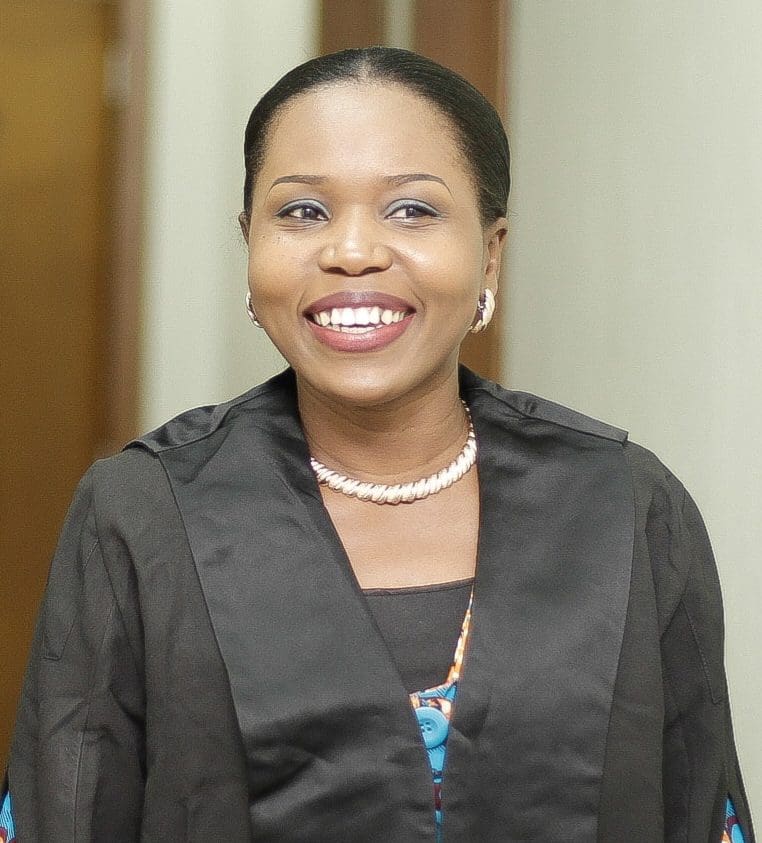
AN Associate Professor of Media and Cultural Studies at the Pan-Atlantic University Lagos, with a research focus on Nigerian film, documentary impact and cinema-going cultures, Dr Agili is also the Programme Director of the MSc Media and Communication at the SMC, where she teaches media theories, film and cultural analysis. Funded by the European Research Council in 2019, she joined the Screen Worlds project at SOAS University of London to investigate Nigerian screen cultures and Creative Industries, which led to the production of a documentary on film exhibition titled Behind my Nollywood Screen (2022) and a forthcoming co-edited book on Contemporary African Screen Worlds by Duke University Press. Her research has been published in Black Camera, Critical African Studies, Journal of African Cultural Studies and other reputable journals.
*****
BABATUNDE ONIKOYI
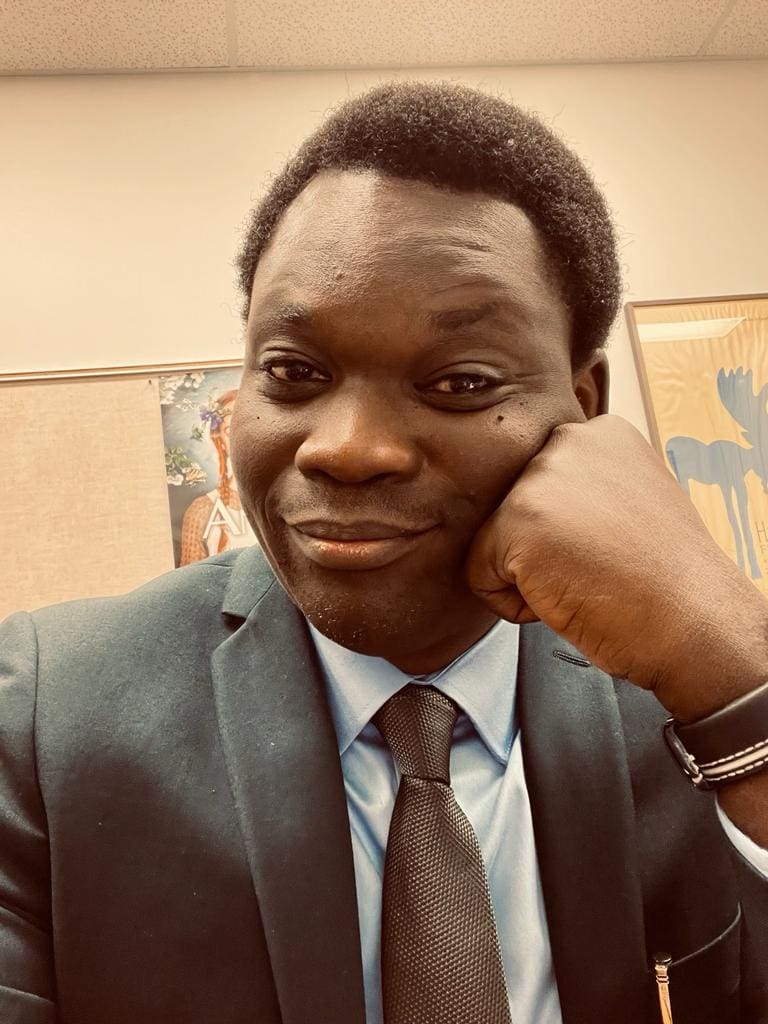
A RESEARCHER and lecturer in the Film Department at the University of Regina in Canada where he is also a member of the board of the Humanities Research Institute, Dr Onikoyi is involved in research program in “Transnational African Screen Media Practices: Safeguarding Cultural Heritage” in Canada. His essays and articles on African cinema have appeared in prestigious journals and book volumes. He is a member of the Editorial Board of African Studies Review -the flagship journal of African Studies. He is co-editor of The Cinema of Tunde Kelani: Aesthetics, Theatricalities and Visual Performance (Cambridge Scholars, 2021). He is currently co-editing another book “The City of Lagos in New Nollywood: Poetics, Culture and Metropolitan Aesthetics” with Olaoluwa Senayan, and a book on the cinema of Bolanle Austen-Peters.

