
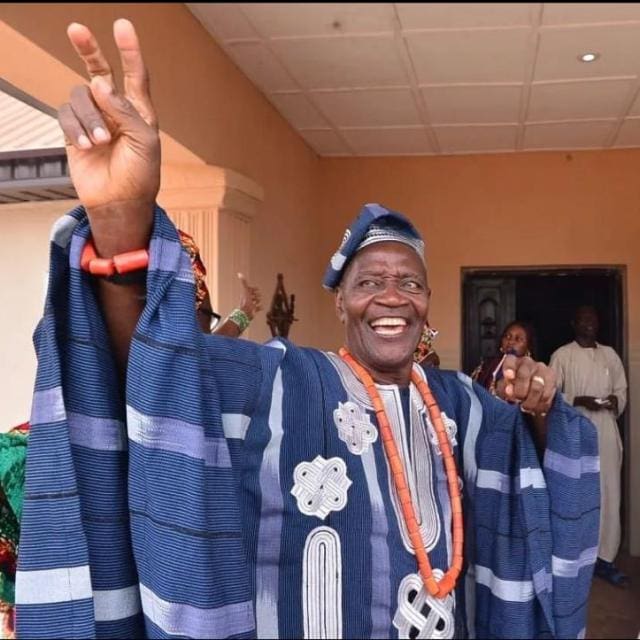

Jimi Solanke, popularly known as Baba Agba, was a prolific artist in many disciplines; he was a musician, an actor, a dancer, a playwright, storyteller and a visual artist rolled into one. His career carried him from Lagos to Ibadan, to Ife, Benin, the United Kingdom, and the United States of America. His voluptuous portfolio and resourceful resume will remain indelible in the hearts of his huge fan base, associates, mentees, and admirers cutting across ages, creeds, and nationalities
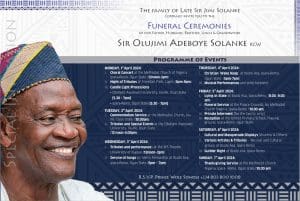
THE final journeys of the multi-faceted artiste and art legend, Jimi Solanke aka “Baba Agba” begins April 1 with a cross-cities tribute session, as designed by the funeral rites committee headed by his cousin, Dr Yemi Ogunbiyi, the theatre academic and media entrepreneur,
It is a weeklong feast of total theatre sort. similar to the 10-day-10-event fiesta staged in July 2022 by the Culture Advocates Caucus, CAC, and partner organisations to commemorate Baba Agba’s 80th birthday anniversary.
Coincidentally, Easter Monday, the tribute session will open at noon with a Choral Concert at the Methodist Church of Nigeria in his hometown, Ipara-Remo in Ogun State. It is solely conceived by his younger associate and project partner, Sir Semoore Badejo, who had staged a similar event nearly two years ago on (July 2022) occasion of Solanke’s 80th birthday anniversary.
Just as that is wrapping up at 3 pm in Ogun State, Freedom Park in Lagos will open to welcome guests to a much more elaborate and multi-modal event that would reflect on virtually all the areas of creative production and expression in which the super performer manifested his prodigious talents and skills – drama, music, dance, visual arts, folklore, and storytelling, and more.
Tagged ”Baba Agba: Last Dance at the Freedom Park”, the organising team led by Theo Lawson, the architect/CEO of the Park, is to give a taste of everything that was Jimi Solanke.
A statement by the Freedom Park organising team, reads: Jimi Solanke, popularly known as Baba Agba, was a prolific artist in many disciplines; he was a musician, an actor, a dancer, a playwright, a story-teller and a visual artist rolled into one. His career carried him from Lagos to Ibadan, to Ife, Benin, United Kingdom and the United States of America.
“His voluptuous portfolio and resourceful resume will remain indelible in the hearts of his huge fan base, associates, mentees, and admirers cutting across age, creed and nationalities.
“Freedom Park has been privileged to host him as an artist, friend, and mentor over the last twelve years and it was a home away from home for Baba Agba.
“For this reason, Freedom Park has been designated by the Jimi Solanke burial committee to host a night of celebration and tributes in his honour.”
Thus the Easter Monday event is expected to be a huge artistic and cultural fiesta featuring top of the bills creative artists and patrons of the arts — most of whom had either shared the stage or patronised Baba Agba’s art while he ruled, especially the live stage, of Lagos, Ife, and other such cities.
And while this is in progress on same Easter Day, a third event will open in Ile Ife, Osun State, which was for years Solanke’s professional base. This would be a “Candle Light Processions” featuring many of his former comrades and colleagues at the Institute of African Studies and the then University of Ife, where he was also an instructor at some point in his resourceful career.
There will also be a reception at his Ibudo Asa, the legacy house of culture, a passion project which he launched in the course of his 80th birthday anniversary, and on which he was still working when he transited to higher service on February 5.
The funeral rites continue on Tuesday, April 2 with a “Commendation Service” starting at 10 am at the Methodist Church in Ile Ife, Osun State. This will be followed by a session of Tributes from 12 noon to 4 pm at the Obafemi Awolowo University Ile Ife.
Wednesday, April 3 will feature another session of “Tributes and Performances” at the Wole Soyinka Theatre at the University of Ibadan, holding from 12 noon through 3 pm.
The Service of Songs holds at 5 pm-7 pm of same Wednesday, April 3 by Men’s Fellowship at his Ibudo Asa, Ipara-Remo.
Thursday, April 4, a “Christian Wake Keep” would be held at Ibudo Asa from 5 pm -7 pm, followed by “Musical Performances and Entertainment.”
On Friday, April 5, the last phase of the final journey takes off 8 am-9 am with the Lying-in-State at his Ibudo Asa in Ipara Remo.
The funeral service will be held thereafter at the Palace Grounds, by the Methodist Church of Nigeria from 10 am. It will followed by the “Private Interment (for the family only)”, and followed by a “Reception” for guests at the United Primary School Playing Ground.
On Saturday, April 6, would be staged “Cultural and Masquerade Displays by Asunmo & Others”, followed by musical and cultural tributes by various artists. Next will be “Guilder Nite” at his Ibudo Asa. This is a recognition of his preferred drink – “Hot Guilder” as he was wont to say in his lifetimes when in a jolly mood.
The week-long rites end on Sunday, April 7 with a “Thanksgiving Service” at the Methodist Church Ipara Remo.
Further information can be obtained from the committee through the secretary, Prince Wole Sowole 0803801008.
**********
INTERVIEW
‘What have l missed? Nothing’
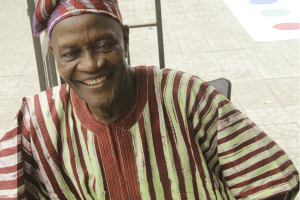
JIMI Solanke is known as a songwriter, actor, performer, visual artist, poet and storyteller extraordinaire. Easily recognized by many over generations, thanks to his unique style of reciting folktales with his booming golden voice backed up with guitars, singing in different tones, using passionate gesticulations and mimicry to drive the message home to his young and not so young listeners.
‘Uncle Jimi’, as he is fondly called by fans and admirers, remains a common feature in major stage plays in Nigeria and around the world. He played lead roles in Death and the King’s Horseman, Kurunmi, Chattering and the Song, Kongi’s Harvest, Ovoramwen Nogbaisi, The Divorce and many more. He starred in several shows on Nigerian Television (NTA) starting from the 1960s to date, including The Bar Beach Show, For Better for Worse, Village Headmaster, Family Scene on Lagos Television (LTV), Children’s Half Hour, Storyland, African Stories on (AIT), Sango – The movie and many others. If you have watched television in Nigeria at any time during the last six decades, you must know Uncle Jimi.
Born 4 July 1942 in Lagos, Jimi Solanke was mentored by Wole Soyinka, Ola Rotimi, Akin Euba, Peggy Harper, Dapo Adelugba and Demas Nwoko. He was one of the first set of graduands of The School of Drama, by the Institute of African Studies, the first in Africa at the University of Ibadan. It later became the Department of Theatre Arts. Solanke joined the Department of Dramatic Arts, University of Ife (now Obafemi Awolowo University OAU) in 1969. He is an Associate fellow of the Institute of Cultural Studies.
Solanke composed Onile Gogoro, Eje ka jo, Jenrokan, Na today you come and he was the lead voice in Ralph MacDonald’s “The Path” recorded in New York 1977 and a consultant for Theatre for Development, UNICEF, UNFPA, Women and Children’s Health.
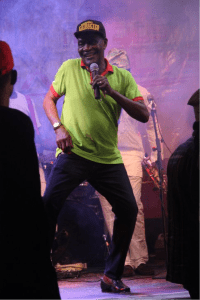
More about his 60-year long career in this exclusive interview with Eyes of Lagos Boy below:
You are 78 this year, is there anything you think you would have done differently?
Yes, 77 going on 78? I am not counting at all, I believe I still have much to do. There was never a step l took that l will not take again if l have the ”chance” to repeat life one more time. You are there already, why regret? I will never sit down to sing dirges of regret over my life.
What have l missed? Nothing. I have great children in whom l am well pleased. I have a house in Ile-lfe where the best of the artistic spirits dwell. If death refuses to come close to you, with all the signs of ageing, have this at the back of your mind, there is still a lot of work you have to do till death comes knocking. “Baoku, ise ko tan” (no death, no idleness). God bless me.
Can you tell us about your big project, the artist village you are building outside Lagos?
I am finishing work on my centre in my hometown lpara-Remo (Ogun state). A wise Yoruba saying states “lle ni abosinmi oko” – you will eventually end up in your place of origin. No matter where you have been, you will come back home. This is exactly what is happening to me. I am about to complete my home theatre, where theatrical performances will take place. The stage is built and but for the lockdown, it would have been completed already. A trip from Lagos to the artist village takes only approximately 30 minutes. Any program we are planning can easily take on the Lagos crowd. We want to start experimenting after COVID-19. Looking forward to seeing you.
Some people say you love hot Gulder beer, could that be one of the secrets of your longevity?
You know what? It’s the taste. Try it any day, a hot Gulder will keep its taste whereas a cold Gulder would have lost its taste due to the time spent in the fridge. All over the world, great connoisseurs of wine will never allow an expensive bottle of wine near a fridge or freezer. The taste would have perished and a good part of our drinking wine would have been eroded. Hot Gulder for life.
Do you remember your first gig?
l have been holding audiences spellbound starting with my school performances during Parents and Teachers’ Day. I was sneaking into Abalabi Nite Club, Olorunsogo to sing with Roy Chicago’s Band. l was able to be on my own in lbadan and l took the opportunity straight without looking back. I joined the School of Drama in 1963, so from 1961 to 1963, l was just enjoying myself singing with any band available, Victor Faulkner’s band, Zen Phillip and the Blue Nine at the Central Hotel. The Eddy Okonta band at Paradise Club in the Gbagi area of lbadan. Finally, I ended up with Chris Ajilo and the Cubanos, we were then at the Gangan Nite Club, an elitist place owned by the Western Region Government in the Apata area of lbadan.
Who were the people that inspired you?
I drew inspiration from all the people l had the opportunity to work with. I was determined. The home front had no prayers nor “wish you well” for me. I was on my own. I had to face the profession squarely. Thanks to Roy Chicago, Baba Akinwande Oshin, Kunle Olasope, Fred Ojudu, Chief MS Sowole. All these people were the foundation members of my development.
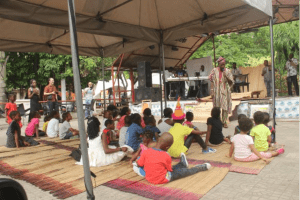
Folktales and storytelling are some of the many arts you are known for. Are they still relevant to kids now that the internet has taken over?
We are talking about children’s entertainment. You should not refer to relevancy. I brought all the experiences as a top theatre artist in this land to the fore, as it is done in Europe, China, Russia and all other places where children are celebrated and entertained. Today, some of our great young men drawing cartoons are warming up to present their products to our children. The most important is to use a language they understand and tell your own story.
When was the time you realized that the messages you stand for are important and people are listening and watching?
As a singer l write songs that the listeners can find a message in or an aspect of our culture. Most importantly l must say here and now, l am a folksinger! I worked on becoming one. Any type of music I play, some cultural seed must be sewn into it. People started complimenting me a long time ago. I respect my audience and l do not want to disappoint them. In cases like us, l mean artists in our genre, we remain in the memory of our fans and friends and that is special. Till tomorrow I must maintain high-quality integrity. Dollars do not make an artist. All aspects of humanity that surround him are important.
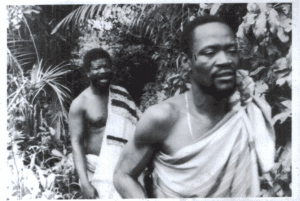
What sets you apart from others?
In all the arts that l have taken as my profession, music, theatre, dance, I make sure that l interpret roles painstakingly. That is the job of an actor. The reason why l am teaching and training stage actors is so they will be able to play with me. We have different schools of acting in Nigeria today. I believe they are rolling out actors in large numbers. We have customized acting in this land and our special acting style has come to stay.
I am grateful for the gift of voice. When l sing, those who recognize me will say ”that is Jimi Solanke.” I select the songs l sing, l choose the roles l play. I am not that interested in counting how many roles one has played. I lived in Hollywood before and you do not count your rating based on how many roles one has played. One first time role can turn your life around. As for dance, this whole body of mine has created dance expressions both at home and abroad. These days my fear with dance is that the bones inside my body are already complaining. Then l dance like an elder, yet l can dance.
What music did you listen to as a young man?
As children we enjoyed the music our parents listened to. In those days of Joe Nez. In those memorable days of Rio Lindo. And of course, all the Juju bands and other social music in the genres of Sakara, Apala, Dundun, Waka and Bembe. In those days lyrics, good ones, were the order of the day. All the musicians were trying to beat each other in making sense and sharing moralistic messages with their listeners. At the same time, in homes like ours, because of the exposure of our parents, we listened to some other types of music from top bands of international repute. Frank Sinatra, Nat King Cole, Duke Ellington, Sarah Vaughan, Bing Crosby and the rest. These were the musicians who poured unforgettable lyrics into our lives. They made me know how to sing the range of songs we termed “classical “. This is when my interest in becoming a good singer was developed. Then the Highlife era took off with E T Mensah. Bobby Benson, Charles lwegbue, Roy Chicago. All of these bandsmen reeled out tunes memorable to date.
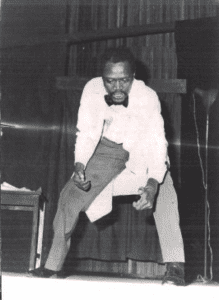
What advice would you give your younger self?
There are so many distractions all over. If a younger person is not serious, he will sink into a quagmire of nothingness. The economy is not on the side of anybody. If the younger me is hardworking, he must apart from his love for the arts, train in some trade that will bring in some money. I have said before that artists, in general, must obtain a practical knowledge of some handwork that you can fall back on for sustenance. I am currently at home spending good time on these collage arts. I know, when the era of death is over l will exhibit and make some small sum. It is better than just being idle.
Be innovative with your mind. There is nothing out of a serious mind that will not have its exposure. We do not know when the COVID-19 pandemic will end. How do you survive if you have no “Plan B”? Chains on your neck, earrings decorating your ears, sagged pants to prove that you have arrived, American ghetto slang in your mouth plus all the drugs to reach the “high point” are not the signs of a true artist. Step down son and see us as we are, it will be best for you, cheers.
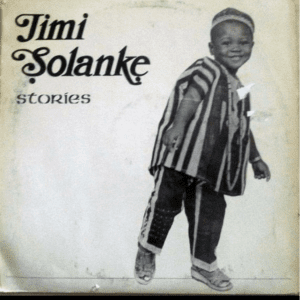
How many albums have you recorded? Which one is the most outstanding one for you?
I have released lots of albums, now just being me, l hate counting these artistic creations. Just like my people, you do not have the right to count my children right under my nose. It is taboo. My albums are; Eke ka jo(Let us Dance), In the beginning, Ase, Storyteller, America has got magic, Orin Orisa, Multiplicity of Praise, Hidden Gold and Once upon a time.
When l was consulting for UNICEF, l wrote a lot of advocacy and they were recorded. I am listening to the tracks now and thinking l should release them to the public. There are series of other collaborative albums made both at home and abroad that really projected me. “The Path” by Ralph MacDonald and others.
Who are the young artists you have worked with?
From a long time ago, l have had an interest in working with young people. The majority of the boys I started with are now leaders of their own bands. Laolu my sakara player has a band in Akure. Gbenga Jnr. has a band in Osogbo. Sunday has one top band in Ogbomoso. I released an album with the singing doctor, Ade Adebajo (Poskii) in 2018. It is like a college without walls.
This has been my joy and what l can count as having achieved something. Till date, if l have the opportunity l will go on stage with the Freedom Five (Freedom Park inhouse band) and sing with them all night. Their energy will carry me through.
In recent days l had time to listen to a small jazz group in the music department of Obafemi Awolowo University (OAU- Ife). I got fascinated by their music and invited them to lpara to perform with me at the Pro Chancellor’s house.
How do you suggest the government assist artists in this coronavirus period that has negatively affected large gatherings?
The appearance of this coronavirus has really proven that the artists of this nation are in big trouble. Very few can truly feed themselves minus lockdown, now see what is happening. Since l am one of them, l know that there has not been any party or occasion. The government has no interest in the arts. Why? Because they do not know the importance of the arts. Go to the state of California, arts used to dominate their IGR. Only a few years ago Silicon Valley started adding its inputs. Let our government put the package for the care of artists on the front burner and they will soon discover that “art is the next best alternative to oil”.
* https://eyesofalagosboy.com/2020/05/19/interview-what-have-l-missed-nothing-jimi-solanke/?fbclid=IwAR2oVAqwiJ6bzahK5QuQydEFvJQ8tVjZ0_xre1wegDUmU6q4huhyI-U-z5c
*******
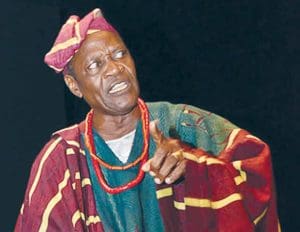
JIMI SOLANKE
I did the first rap in the world
HE says he is 17. But he is an accomplished folk music artist, playwright, and actor.
“You know, I put 1 before the 7, not the 7 before 1, because I’m starting now to count,” he explained jokingly. Actually, Jimi Solanke is a sprightly 71-year-old, with an infectious joy, exuberant personality and a great sense of humour.
Small wonder the man fondly called Uncle Jimi captured the love and adoration of a nation with his heartwarming children’s programmes on Nigerian television stations many years ago – including the very popular ‘Storyland’ – with his master story telling.
In this exclusive interview, Uncle Jimi, who started his singing from the church choir and married the daughter of a reverend, shares some captivating stories of his childhood, as well as his life and times in the arts.
SUI : Back in your days, people in the arts – music, dance, fine arts, drama, amongst others, were not so popular. How have you been able to manage being a stage actor, musician, and an academician (at some point)?
JIMI SOLANKE: Let me confess, I ran away because my acceptance at home was very low then. I had the opportunity of going to the first school of drama, the University of Ibadan, where I got into the academy section of the arts.
I became an actor, a set builder, a dancer, and choreographer, and had been with the university from 1963 till date. My consistency made people to take me seriously. But then some said that my kind of job was not worth it and even went to the point of persuading my uncle, Chief M.S Sowole, then Commissioner for the Western Region, to give me a job.
I took the job but still went to places where I sang all through the night and came back early in the morning. By then, I was not able to even climb a ladder to change a bulb or touch a pipe in the ceiling. I had to run away from that job because if I dozed off on any of those ladders, I could have injured myself and that would have been the end of it.
I enjoyed acting in the university and still do, but singing is my first love. That’s why I stepped back from acting nowadays. I prefer singing than acting. I am first a musician.
SUI : What instruments do you play?
JIMI SOLANKE: I play the guitar and keyboard, at least to accompany me when I sing.
SUI : How many albums have you done?
JIMI SOLANKE: I have done about 18. I’m currently working on another two.
SUI : There was an album you did some time ago with an American artist?
JIMI SOLANKE: Yes, that was ‘The Path’ by late Ralph MacDonald, the Jamaican-American percussionist. A lot of American performers came to Nigeria during FESTAC, like Stevie Wonder and I touched shoulders the night he performed at the National Theatre.
After on of my performances, somebody next to him said, ‘Oh that’s Jimi Solanke o’ and so he gave me his card. When the Festival was over, I decided look at it. The message read, “you need a trip out of the country, a holiday per say.’ So I took a trip afterwards; first to London, then Trinidad and Tobago, and then America towards the end of November. I had already stayed for some few days when someone called me, saying that they had discussed with a lot of people, but wanted me to do a voice-over in Yoruba… So I borrowed my friend’s jacket and went to the studio… and they were all there; Grover Washington, Hugh Masekela, late Miriam Makeba… name them, top names, top brands artists. So they said they wanted to translate this English poem into Yoruba and then do a chant. Would you believe that was the first rap in the whole world? (Laughing)
SUI : So you did the first rap in the whole world?
JIMI SOLANKE: Yes, that was the first rap (Starts singing the poem in Yoruba)…
Ona la, aiye lu jara…
Nobody had ever done that kind of thing. That was in 1977.
SUI : What did FESTAC do for Nigerian and African art, especially as some believe that this was the time that many fetish things in other African countries were brought into Nigeria?
JIMI SOLANKE: I’m very sorry for that negative part of FESTAC. But it’s disappointing that people carry such negative notions about FESTAC, because if you do not know where you are coming from in this new millennium, you will not know exactly where you are going. Let’s be realistic, there was no Satan in the package people brought here through their respective dances and religions, it’s only in the Bible and Quran…
I am a Christian, but maybe my understanding of religion is different… People just have different connotations. Do you know the reason why FESTAC hasn’t been done anywhere again? Because nobody could do it like we did it then.
SUI : Were you involved in the planning?
JIMI SOLANKE: I went around with (late) Anthony Enahoro looking for dancers all over. In Nigeria, I was an actor and an actor trainee in the drama production. I was also an assistant choreographer in the dance section and a folk singer in the music section. FESTAC was an eye opener for me because I interacted with people from different parts of the world. I didn’t just read it from history books. I’m very sure that we will be the one to host another one again.
SUI : Do you think the Federal Government gives enough support to the arts sector in Nigeria?
JIMI SOLANKE: (Olusegun) Obasanjo (then a military ruler) did in those days. In ’76, when the National Theatre was opened, I was the folklorist and rounded up the night singing some traditional Egba songs.
Unfortunately, Nigeria has not made enough money from the arts because of greed and selfishness. Ask the United States of America the amount of money they are making out of their artists. They won’t say it, but we all know about it. And everyone is involved, not just the government. Here in Nigeria, the government is greedy and they don’t even care. I’m familiar with a lot of them in government.
At 71, I am still strong because God has put me in the kind of profession that He wants me to be. I will live as long as He allows me. I don’t care whose ox is gored, but some people are just selfish and they cannot see the beauty of the arts. And when you are an illiterate in your mind, it doesn’t matter whether you are a Ph.D. holder, professor, or have so many certificates in your bags, you are not learned. For people in positions of power not to know the importance of arts, that is illiteracy.
SUI : Where were you born?
JIMI SOLANKE: I was born in Lagos, Lagos Island precisely. I schooled at Olowogbowo Methodist School. Now, I live in Ile-Ife and I’m happy about it.
My parents had built a house in Olorunsogo, in Mushin. But, when I went to Ibadan for a job they got me at Cactus Press, I turned into a singer, singing for different kinds of bands. I never came back to say hello to them, because they never wanted me around in the first place.
SUI : Were they ashamed of you because you were a musician in those days?
JIMI SOLANKE: Yes. I was ostracized by my family back then. I was asked not to even say hello to my friends, but I knew and did what I wanted to do. Things have changed since then. My father died praying for me; because he eventually found out that there was nothing he wanted that Jimi would not give him. I stayed over in Ibadan at the School of Drama between 1960 and 1969. I later moved to Ife and I’ve been there since. I just love Ife. Although I travel out sometimes, I still come back.
SUI : You were born in Lagos. What was it like growing up in Lagos Island at that time?
JIMI SOLANKE: It was fantastic! We could play football on the road because there were few cars then. We could play with the water in the gutter, build small boats from match boxes and race them in gutters, because thin wooden cardboards were used to make match boxes in those days. A lot of good things happened. We had fewer students in the classrooms. I started singing from church choir, at Holy Trinity Church, on the mainland. That foundation has been sustaining me.
SUI : Are your children also artistic in any way?
JIMI SOLANKE: Yes, all of them have the traits of artistry. For instance, one of them who lives in Philadelphia, Kehinde, is a Ph.D. holder in Theatre Arts; Taiwo is a television presenter who now lives in Houston, Texas; and their elder sister, Oyinkan, who lives in England, designs. Seun is a computer freak and another went to study make up and all that.
One of my daughters also sings very well. She can sing in the church and anywhere she finds a band. She is very talented. And the baby of the family is in part four, Dramatic Arts, Obafemi Awolowo University, Ile-Ife. Also, I have children who, although they are not interested in music, have talents.
SUI : Your children seem to have followed your footsteps. Do you think this was as a result of your influence, one way or the other, or that you let them choose their career paths?
JIMI SOLANKE: I left them to be free. How can I now be the chairman and decider of another person’s fate? Although they are your children, you cannot decide their fate; you can only guide them.
SUI : Much has been said about Ulli Beier’s influence on Nigerian art, writers and artists, such as Duro Ladipo, among others. Did he also influence you in any way?
JIMI SOLANKE: Baba Beier! I was one of those who participated in the many workshops he created. I knew him from Mbari. Duro Ladipo met Ulli Beier at Mbari (club), in Ibadan, Oyo State. After they met, he was invited to come perform at various places.
Duro also became interested in the word Mbari, which means ‘open space’ in Igbo language. One evening, at his bar called Popular Bar in Osogbo, he told Beier, who had visited him a lot of times in Osogbo, that ‘this your Mbari is one word we have to use here and I’m going to set up my own centre.’ He later changed his bar to Mbari Mbayo (a Yoruba expression for happiness).
SUI : Obviously, the arts made you famous. Has it also made you rich?
JIMI SOLANKE: Yes, I’m fine. You see, I don’t want to be like the people I (had) talked about, (but) I’m wearing a Movado and they don’t buy it for three pennies. I have my own house and I’m comfortable. My children are very happy. I’m giving one out in marriage soon, which would cost about six million naira.
SUI : To marry out your daughter?
JIMI SOLANKE: Yes
SUI : Only a rich man’s daughter…
JIMI SOLANKE: (Cuts in) We are already buying clothes and paying. I gave him that poor car, that red one. (pointing to a red SUV in rgw parking lot)
SUI : That’s not a poor car, sir…
JIMI SOLANKE: It’s a poor car.
SUI : In Lagos, It’s only rich men who drive such
JIMI SOLANKE: No, richness is from your mind. I wonder why we cannot describe a rich man in Nigeria and not talk about his house in Lekki or another one in Abuja. That’s why they die just like that, unsung. I don’t want materialism to prove my richness, but I want realistic appreciation.
I have a nice wristwatch. Yes it’s material. But when you have money, you buy one of such things, because they last forever. It’s the quality you are buying, not the materialistic grading of such things.

