

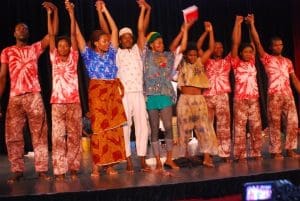
The Crown Troupe of Africa is a Dance-Theatre Company conceptualized on the 1st of June 1996 by a group of young persons who share a common belief in the viability of the arts as a tool for social re-engineering. The group is steeped in the art of creating new works that are relevant, thought provoking and empowering
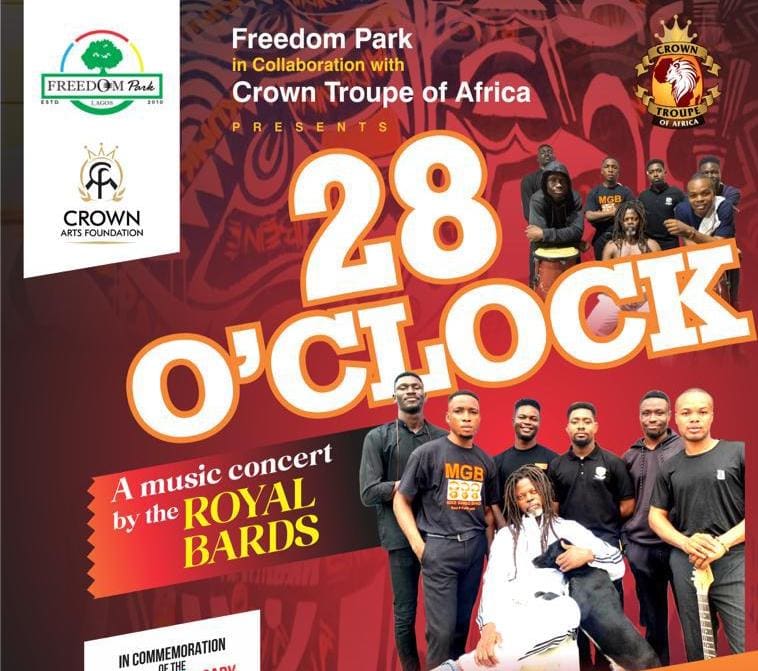
TODAY from 6 pm, the city’s beloved art company, Crown Troupe of Africa celebrates its 28th anniversary with a grand musical and dance concert tagged 28 O’ Clock: A Music /concert by the Royal Bards. The venue for the epoch concert is the equally historical Freedom Park, the oasis of greens and quietude nestled by Broad Street, in the bustling central business district of Lagos.
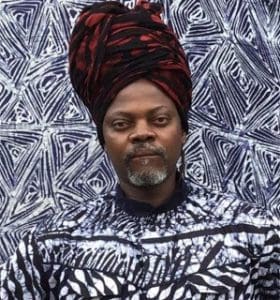
“Join us for an unforgettable evening as we mark 28 glorious years of creativity and cultural excellence! To celebrate this milestone, we are hosting a spectacular music concert featuring our very own band, the Royal Bards,” stated Segun Adefila, chief visioner/founder and artistic director of renowned Troupe, which though located in the rather seedy Bariga section of Lagos, has been consistently running shows on global stage, earning laurels from reputable institutions across continents.
The open invitation to patrons and general public reads further: “Come and experience a night of soulful music, vibrant performances, and rich cultural heritage. Don’t miss this celebration of art, tradition, and the enduring spirit of Crown Troupe of Africa. See you there!” Gate is 1000.
*****
…28 years of riding home, global theatre stage
ESTABLISHED in 1996, Crown Troupe of Africa is the foremost youth theatre company in Nigeria, with over 26 years of experience at creating and delivering memorable and topical theatre and dance drama performances.The Crown Troupe of Africa is a Dance-Theatre Company conceptualized on the 1st of June 1996 by a group of young persons who share a common belief in the viability of the arts as a tool for social re-engineering. The group is steeped in the art of creating new works that are relevant, thought provoking and empowering.
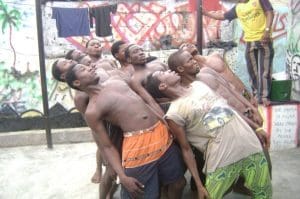
From inception, the company has been involved in various forms of artistic endeavours such as theatrical productions, workshops and seminars organized both locally and internationally. The award winning company has also managed to keep in line with their laid down aims and objectives of:
- Organizing and participating in art workshops and seminars.
- Composing and experimenting with various genres of the arts such as poetry, visual art, dance, drama, and music to create new works.
- Producing and performing new works that are thematically relevant and are socially responsive.
- Engaging in art exchange programmes with local and overseas art companies.
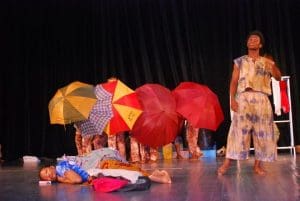
The Crown Troupe of Africa is famous for their dance-theatre creations and has often been commissioned to compose new works around a variety of socially relevant issues as well as to present their works at organized events. Their works have been selected for events such as International Dance Day, International Theatre Day, Refugee Day, AIDS day, Lagos Book and Art Festival and other similar events.
The Crown Troupe has several cultural and contemporary dances in their archives as well as their forte- thematically relevant dance-theatre creations.
*******
…’We started in King Sunny Ade’s house’
Adefila, the multi-talented/skilled artist, in his most recent interview, originally captioned: ‘Crown Troupe: A Tool for Social Engineering’, published in The Nation newspaper of May 29 2024, and reproduced below, recalls the journeys of the Troupe.
WHAT spurred the initiative of Crown troupe 28 years ago?
As a matter of fact, most of us, the founders, met in a group we all belonged to. The name of the group is Black Image. It was there I got my first professional informal training. I left Black Image and was going to say goodbye to theatre in general but the other guys insisted we couldn’t let our talents go to waste. So, engaging our youthful talents and energy was our initial motive because the other options out there were mainly antisocial.
Who were these pioneer initiators?
They were practicsng artists and most of them started before me. But we were all friends and even lovers! Lol. Our number one pull was, however, our love for and belief in the power of arts.
Why the meeting at KSA home in Bariga?
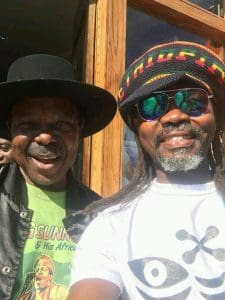
One of the founders, Kunle who was also our 1st choreographer is King Sunny Ade’s son. In fact, our first meeting and rehearsal ground was his mother’s flat in KSA’s house.
How has the music legend helped shape the formation and growth of the troupe?
In various ways. We started in his house like I said earlier on. We had nothing but God and our guts when started out. Our first musical instrument was a gong given to us by a barber called Sir K. Sunny Ade has two houses facing each other on Ajileye Street in Bariga and Sir K’s barbershop was in the other building facing Kunle’s mom’s flat. He came to us one afternoon saying he had been hearing us singing for some time without any musical instruments and offered us a gong. We were exhilarated. Not long after, a friend and senior colleague, Art Osagie also brought a drum without the leather on it and told us to keep it if we can repair it, which we did and were so proud to showcase. These were our first sets of musical instruments. Then one day Kunle and I went to his father’s store to go and steal our first sets of costumes and props! For those who don’t know, King Sunny Ade’s first forte was theatre. He was and still is a fantastic stage and screen actor. So apart from his house being our first base, his family and home were our support system. I lived in his house for a while as well.
What stands crown troupe out among the various performing groups in town?
Well, I can’t really answer this myself but what readily comes to my mind is- Crown Troupe is Crown Troupe.
Recall the journey down the road….troupe’s Highs and lows.
Ha! This will take some years and pages upon pages. To cut it short ehn, it has been the grace of God, sheer determination and support of angels in human forms.
Theatre as a vital advocacy tool for social change. How has this been realised using your troupe as example?
We have since realized the primary role of the arts which is not limited to entertainment alone but also as viable tool for social engineering. We have tried always to apply these core values in all of our artistic engagements. As à repertory group, all our works are replete with thematically relevant messages.
Your messages are not only to entertain audience but as conscience pricking weapons. Has this led to any clash between you and those in authority?
Fortunately, the Felas and Ogundes have borne the brunt of those challenges and may be we are also lucky to be practicing when the consequences for speaking truth to power aren’t as dire as it was in the time of great and brave ones. So, to answer you, comparatively, the system has been kind of fair.
Your major projects to reposition the troupe?
We need a dedicated theatre space where we can perform and also train young ones. That’s the focus.
Your dream of the troupe at 30 and possible anniversary activities?.
To own a theatre and a certificate issuing theatre training academy. To export our arts and talents. To be a leading culture entrepreneur.
https://thenationonlineng.net/crown-troupe-tool-for-social-engineering/
*******
Art influences every culture, civilisation
The co-founder and artistic director of Crown Troupe of Africa, Segun Adefila, tells BLESSING ENENAITE about his career as a theater practitioner
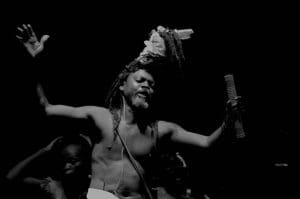
What inspired your love for the arts?
Nothing inspired my love for the arts. I just grew up loving the arts. I did not know what else to do and nothing came to my mind aside from what I am doing now.
Who did you look up to then in the industry?
One has to get into the industry to look up to people in the industry. What attracted me was the fact that I love the arts. I got into it and saw people like Hubert Ogunde, Fela Kuti, Bob Marley. They helped to shape the industry because one did not know what was inside, then one got inside and started to think of the things one needed to thrive in it.
How would you describe your journey so far as a theatre practitioner?
Like every other journey in life, it has been interesting. There have been ups, downs, trials, triumphs, failures and success but overall, we are still grateful to Olodumare (God) because when we started, we did not know where we were going or whether we would get there. We just knew that we wanted to do something and we got in there. Somehow, the people we encountered, new inspiration and new experiences helped to shape what we started doing with it. There have been challenges but if I have to do this again, I will.
As the artistic director of Crown Troupe of Africa, what are your roles?
My role is very simple. It is just to sit down and claim credit (laughs). I am surrounded by great, young and gifted, fresh, creative and passionate people and it is not all the time that they find themselves in such a space. We bring up ideas and do what we have to do and perform. Then, I get the credit as the artistic director.
You are a writer, actor and director. Which would you say is the most challenging?
Writing is the most challenging for me. I don’t like writing at all. In fact, when I write, it is because I want people to call me a writer. It is a big deal to be a writer, and it is not for everybody. Writing is not my favourite (activity) but I love to do it. For the one I love most, it has been directing.
You have been running Crown Troupe since 1996. What are the things you did to get to this level?
First, it is the grace of God. Second, I kept my nose out of the business part of it. That is not to say that people should keep their nose out of the business part of the arts because one would pay for it. Business is all about gains all the time but more focus should be on what lifts one’s soul and what one is passionate about. That has been the main stay (for me) because if I consider the money, it is not all the time that money is in the cards. Things can be so dry on some days. Having the passion for it, not depending on any human being, thinking more about the impact, and how I would feel after a performance are the things that have kept me this far. If one serves the arts, the arts will serve one.
In the past, people who were involved in the arts were not taken too seriously unlike now. What would you say caused a change in the narrative?
Those in the profession then paid the price although people did not say good things about them then. The females were considered as prostitutes in the eyes of society, while the males were seen as lazy people who could not do anything except dancing and the likes. But, those people then kept at what they did. My generation complains of challenges but the previous generation had their challenges too. During their time, there was no social media. Now, everything has a gadget. That notwithstanding, we also have our challenges and it may be overwhelming. Many persons now mention Prof Wole Soyinka, Chinua Achebe, Fela Kuti, Cyprian Ekwensi, Hubert Ogunde, Moses Olaiya (Baba Sala) and Richard Mofe-Damijo as people to be looked up to. If those people did not stand well then, we won’t have a reference point. We are just redefining what they did.
What is the difference in the industry when you initially started and now?
Acceptance is the difference and the democratisation of performance spaces. The performance spaces we have in Nigeria have been up and down. Until the 70s, they were very good. Live theatre was selling and entertainment was good. Then, military interventions started coming in here and there. In my opinion, the height of the arts was in the early 80s. From the mid 80s till 1999, the performance space started dying. But following the return of the country to democracy, the shows became frequent. From January to December, there is always a show happening on weekends.
Back then, we did not have any performance spaces except National Theatre, University of Lagos, Law School and Muson Centre. Those were the only upper echelon spaces. However, there is change today with places like Terra Kulture, and various art practitioners joining the industry. What we need now is finance to make their works into something befitting. We need more of those performance spaces.
You described yourself as the ‘lead masquerade’ of Crown Troupe. Why is that so?
The way we practise our arts is attached to the intellectual tradition of our ancestors. One of those traditions is the masquerade. I grew up in the royal family in a village called Omu Aran in Kwara State. In the king’s palace during every masquerade period, masquerades would come to our compound to pay homage to the king before they leave. That was how I got fascinated with masquerades, and I had my own masquerade as a child. I lost touch with the masquerade life when I was brought to the city until the arts found me again. What the masquerades did then was to perform, entertain, chastise, make corrections and pray for people. That was how we fashioned our performances at Crown Troupe. Our work is entertainment but it should also be therapeutic and healing. We should also talk about the problems of this country and what should be done to solve them. That is the traditional role of the arts. That is why I used the term ‘masquerade’.
What challenges have you experienced in your journey as a theatre practitioner?
I was a science student while in secondary school. I never studied arts until I got into the university. It took me some time to get to where I wanted to be. The challenges are not peculiar to the arts alone. However, there is a way people look at artists, especially dancers. Acceptance was a challenge and it took a lot of time. At times, one would do something and it would crumble in one’s presence, which would make one feel like giving up. It is just like marriage. Some couples would want to divorce because they are experiencing some challenges but when they give themselves some time, they could reconcile.
What impact does the arts have on society?
You hear about the culture of a particular country through TV and in their films. That is soft power. The Nigerian government does not understand this. They do not know the power of the arts on its own. I can represent the country in another country through the arts. It could be in dancing, acting or even singing. And when one gets to that country, the people would identify with people in one’s country saying things like, ‘Oh, you are from Prof Wole Soyinka’s country’, or ‘Or you are from Achebe’s country’, or even Jay Jay Okocha’s country. That is soft power and we are not using enough of that. That is capable of creating jobs for many young people. The talents are out there. All they need is space, including theatres, clubs, music concerts and exhibitions. The government must promote and make sure those things are available and are sustained. This will also help to drive the economy. I have been to one or two festivals across the world. They do not have the content we have. We must make use of soft power to promote the arts.
What makes Crown Troupe different from other theatre houses?
There is nothing really distinct about us; we are all the same. One of the greatest comments I have got in the course of my career was when someone said my performance reminded him of Fela Kuti. I felt so excited that I had arrived.
Were you discouraged when you initially decided to be a theater practitioner?
No, I was not. It was when God began to answer my prayers and things started becoming good that I started being discouraged. I was not discouraged when I initially started but now, I feel like I want to have my private jet (laughs). Sometimes, I feel people that have been in the industry for a long time have said it all. So, why am I repeating what they have said; nobody will listen. I often ask myself why do I need to have a show or performance?
Do you believe the theatre can influence the decision of the government?
If there is an intellectually sound government in place, the arts can influence that. But, if the government is not intellectually sound, the arts cannot do anything. It is what one understands that one reacts to. Art influences every culture and civilisation.
What are your most memorable moments as a theatre practitioner?
They are quite many. Every moment is a memorable one for me. We have also had embarrassing moments. There was a time we had a good performance on stage. After we were done, we decided to go back to flex more muscles. The Master of Ceremonies did not want to offend us so he allowed us. We later messed up and people who were initially clapping for us later stoned us out of that stage (laughs).
How do you balance work and family?
I think I am lucky and I thank God for that. We are good and they (family members) come for my shows once in a while.
What do you consider to be your biggest achievement as a theater practitioner?
The fact that I am still alive and a father are my biggest achievements.
If you were not a theatre practitioner, what would you have become?
I would have become a hairdresser or mechanic.
You often dress in traditional attire. What influences that?
That is what I feel comfortable wearing. I wear jeans a lot too. At times, I wear trainers and shirts. I just feel more comfortable with wearing traditional attire.
What are some of the notable achievements of Crown Troupe?
We have been around despite many odds. We would not have had this interview 25 years ago but we are having it now and that is because we have been around.
What are the downsides of being a theatre practitioner?
We face many struggles all the time. Sometimes, I wish I could just stay in my house and people would come to watch my plays. When it comes to other professions like medicine and law, people go to meet them. But in our profession, it feels like we are going to meet people or they are doing us a favour. That can be a bit discouraging.
Will you encourage any of your children to become full-time theatre practitioners?
Yes, I will. But, I will also advise them to learn something else.
What are your hobbies?
I love to travel to new places in company with friends. I like to be happy. Happiness is my hobby.
https://punchng.com/art-influences-every-culture-civilisation-segun-adefila/
******
A dramatist’s passion for the art
(Interview with Segun Adefila of Crown Troupe by SYLVIA OFILI) (August 14, 2014)
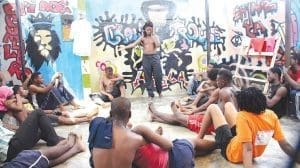
We didn’t know where we were headed back then. The only thing we were certain of was our passion for the arts — Segun Adefila
Writing, the beautiful the about writing, is the creativity and imagination that comes with it. Imagining a character’s voice, hair style, clothing, what he/she might do in certain situations. It is very satisfying. However, nothing beats the pure delight of seeing characters you have imagined for so long come alive.
But, in our small world of writing, we often forget the playwrights, the script writers and other creative writers that also…well…write.
There is a whole other world out there. One does not only have to write fiction, short stories, the never ending novel of our dreams that might take years to finish.
If you have a creative mind and would like to see your characters come to life, saying your words, with the right expression, the right wardrobe…you can always write something for the stage.
If you ever choose to go down that path, there is no one who knows more about writing for the theatre than our very own Chief Masquerade, Segun Adefila.
Interested? eyebrows raised? Well then, you are in luck! Brittle Paper sat down with Segun Adefila, the Chief Masquerade of the Crown Troupe of Africa to learn a little bit more about his world.
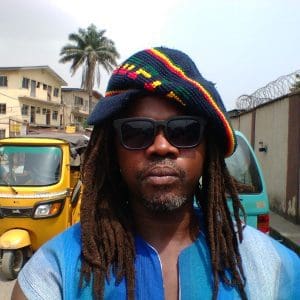
TELL us a bit about your first encounter with the theatre.
Between the ages of 7 and 10, I lived in Omu Aran. Those three years, I believe were vital years because that was the period I encountered traditional African Masquerade for the first time. Odun Eegun (Masquerade Festival) had its pomp and pageantry and here I learnt to dance, sing and ‘play the ancestral role’ the masquerade represents. So for me, my first exposure to theatre was this cherish-able childhood experience. As a matter of fact, my uncle made me my personal masquerade and it was like owning the only Bicycle in the neighbourhood!
I had a ready retinue of friends with whom we would go in performance processions with the Bigger and more ‘serious’ Masquerade- in the classical Alarinjo fashion. It was also in this ancient town that I first experienced Yoruba folklore.
Storytelling, riddles and jokes, moonlight games, folk songs etc were part of growing up in Omu Aran. It was a way of life.
Then I had to go back to the city (Lagos) to continue my elementary education and on to secondary schools in Okene (Kogi State), Esie (Kwara Sate) and finally, Lagos State! There are three things to be observed here. I was a science student all through. I was active in literary activities and I was one of the poorest science student!
When did you first start working professionally in the theatre?
Well, after secondary school, I worked variously as a clerk, cleaner, bar tender, security guard before encountering the arts again in 1995. In 1995, I joined a dance theatre group, based in Bariga, Lagos called Black Image headed by two jolly good friends, Paul Young and Thompson Tabi. Here was where I got my first introduction to professional modern theatre.
In 1996, I co-founded the Crown Troupe of Africa with some friends. We merely met to gist, sing, dance, act and generally have fun with no serious inclination towards making a career out of the arts. Then in 1997, I studied for a Certificate in Drama from the Centre for Cultural Studies (now Department of Creative Arts) , University of Lagos. Here I met and was tutored by great teachers like the late Bode Osanyin ,Prof. Duro Oni, Prof. Laz Ekweme, Dr. Seri Ajasin, Prof. Abayomi Barber, Tunji Sotimirin etc. These people took care of my Gown training. Here, I was re-introduced – in a broader sense- to the tradition and culture that I experienced in my childhood.
The works of the great Fela Anikulapo, Bob Marley, Ogunde etc also began to assume a deeper dimension in my consciousness. In the Town, I also met or observed and got mentorship from great icons like Elder Steve Rhodes, Mrs. Francesca Emanuel, Ben Tomoloju, Felix Okolo, Ahmed Yerima, Muyiwa Osinake, Ojo Bakare, Tunde Kelani etc. The works of these masters were inspirational.
There were days I was sure I took the wrong decision by sticking to the arts but these thoughts quickly vanished with the next prospect of any upcoming performance. There were days even before university days that we would roam the streets with our drums in search of performance opportunities. Gradually, things began to improve and here we are. CT is currently at the minimum, 25 man strong.
What kind of stories do you adapt for the stage and how ?
In Crown Troupe, we produce published works of established and upcoming authors. Apart from plays, we have also adapted novels for the stage. An example is Eko Dialogue by Joy Isi Bewaji. The content and form of our performances are determined by the stories we want to tell, who we want to tell it to and how we want to tell it. For these reasons, the factors considered become varied. We experiment with forms and we don’t shy away from adventures in these explorations. The works in our repertoire are mainly composed on and for the stage.
We mainly go in the reverse order by making our works stage to script as opposed to script to stage. We compose through improvisations too and also attempt to make our works accessible to our audience without outright spoon-feeding.
What’s the future going to be like for the Crown Troupe?
The future? The aim is to go right ahead and never look back except in appraisal and gratitude.
- All Images taken from the artist’s Facebook page.
******

