
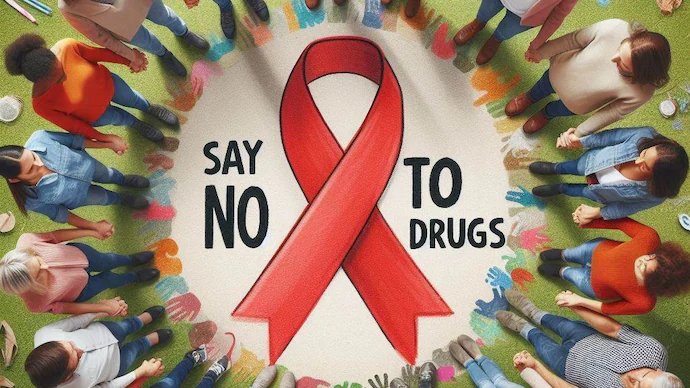

WITH this year’s World Drug Day theme as “The Evidence is Clear: Invest in Prevention”, there is no doubting the fact that globalization is impacting drug trading and drug abuse all over the world, as drug cartels have and continue to facilitate the production, distribution and marketing of illicit drugs globally.
It is against this backdrop that the United Nations Office on Drugs and Crime (UNODC) developed a campaign strategy with this mantra: “Raise awareness: Develop an understanding of the effectiveness and cost-effectiveness of prevention strategies mitigating the harms of drug use.”
In Nigeria, the burden of drug abuse is becoming a public health concern. Hence, the federal government through one of its agencies, the National Drug Law Enforcement Agency (NDLEA) has been launching nationwide enforcement activities to seize drugs of abuse and arrest drug abusers in the community; putting in place sensitization programs, rehabilitation and border patrol to checkmate trafficking of illicit drugs into and from the country.
As one of the epicentres of drug abuse in Africa, and indeed the world, the NDLEA in a 2021 report noted that Nigeria’s drug abuse prevalence rate is alarming, with a 15 per cent prevalence rate, almost tripling the global prevalence rate of 5.5 per cent.
According to the report, the prevalence rate is, however, higher among the youths with about a 20 – 40 per cent high rate. It noted that tobacco, cannabis (Igbo or India hemp), cocaine, amphetamine, heroin, diazepam, codeine, tramadol, cough syrup, and alcohol are among the most commonly abused drugs among Nigerian youths.
NDLEA further noted that cannabis is now packaged in the form of cookies, cakes, sweets and tablets to deceive the general public. It added that there is also the abuse of non-conventional substances such as hydrogen sulfide gas or sewer gas (suck-away), and Premium Motor Spirit (PMS) otherwise known as fuel, which they sniffed to get high.
Findings from epidemiological studies on drug abuse in Nigeria have demonstrated that the burden of drug abuse is still high despite several existing drug laws, policies, and strategies for prevention. The prevalence is higher among the younger population, males, undergraduate and secondary school students, and commercial vehicle drivers.
The studies noted that the most abused drugs included cannabis (Indian hemp or Igbo), amphetamine (ice), codeine, cocaine and heroin. The major sources for the drugs were pharmacies/patent medicine stores, drug hawkers, friends who are abusers and drug pushers.
UN Report
According to the United Nations, across the world, drug abuse has emerged as one of the social problems threatening human collective existence as an estimated 13.2 million people were reported injecting drugs in 2021. This estimate is 18 per cent higher than in 2020 (11.2 million).
The increase is due to newly available estimates in the United States of America and in some other countries. Eastern Europe (1.3 per cent of the adult population) and North America (1.0 per cent) remain the two sub-regions with the highest estimated prevalence of people who inject drugs, and, in absolute terms, North America now has the highest number of individuals that report injecting drugs, ahead of East and South-East Asia.
According to the United Nations Office on Drugs and Crime (UNODC) World Drug Report 2023, drug challenges pose difficult policy dilemmas that cannot be addressed by any one country or region alone. The report highlighted the growing complexity of evolving drug threats.
A special chapter in the report explored how illicit drug economies intersect with crimes that affect the environment and insecurity in the Amazon Basin, with impoverished rural populations and indigenous groups paying the price.
Other sections of the report explore urgent challenges, including drug use in humanitarian settings, drugs in conflict situations and the changing dynamics of synthetic drug markets.
The report also delves into new clinical trials involving psychedelics, medical use of cannabis and innovations in drug treatment and other services. It noted that the menace of drug abuse may be global, but they do not affect the entire world equally.
It averred that in the global south, and underdeveloped and underserved communities in all countries, cities and villages, it is the vulnerable, the poor and the excluded that pay the highest price.
According to the report, in 2021, one in every 17 people aged 15–64 years in the world had used a drug in the past 12 months. The estimated number of users grew from 240 million in 2011 to 296 million in 2021 (5.8 per cent of the global population aged 15–64).
This is a 23 per cent increase, partly due to population growth. It noted that Cannabis continues to be the most used drug, with an estimated 219 million users (4.3 per cent of the global adult population) in 2021.
Use of the drug is increasing and although globally, cannabis users are mostly men (about 70 per cent); the gender divide is reducing in some sub-regions. Women account for 42 per cent of cannabis users in North America.
The report further stated that in the same 2021, an estimated 36 million people had used amphetamines, 22 million had used cocaine and 20 million had used “ecstasy”-type substances in the past year.
The proportion of female users was said to be higher in the case of amphetamine-type stimulants (45 per cent of users are women) and non-medical use of pharmaceuticals (between 45 and 49 per cent of users are women), whereas the highest share of men is found in users of opiates (75 per cent) and cocaine (73 per cent).
According to the report, opioids continue to be the group of substances with the highest contribution to severe drug-related harm, including fatal overdoses. It noted that an estimated 60 million people engaged in non-medical opioid use in 2021. Of this population, 31.5 million used opiates (mainly heroin).
Financial Value and Implications
Due to the clandestine nature of the industry, its complexity and greatly differing assumptions on its operations, estimates of the turnover of the illicit drug industry vary considerably from country to country. The few serious attempts which have been made have resulted in widely varying figures, estimating it from about $100 billion to more than $1 trillion a year. The most frequently found figures in the literature range from $300 billion to $500 billion a year and seem to be the most reasonable estimates.
A United Nations publication of 1998, ‘Economic and Social Consequences of Drug Abuse and Illicit Trafficking’, states that: “With estimates of $100 billion to $110 billion for heroin, $110 billion to $130 billion for cocaine, $75 billion for cannabis and $60 billion for synthetic drugs, the probable global figure for the total illicit drug industry would be approximately $360 billion. Given the conservative bias in some of the estimates for individual substances, a turnover of around $400 billion per annum is considered realistic.”
UNDOC in its report on: ‘Study on Illicit Financial Flows resulting from Drug Trafficking and other Transnational Organized Crime’ noted that the most widely quoted figure for the extent of money laundered has been the International Monetary Fund (IMF) ‘consensus range’ of two per cent to five per cent of global Gross Domestic Product (GDP), made public by the global financial institution in 1998.
According to the report, an analysis of the results from various studies suggests that all criminal proceeds are likely to amount to some 3.6 per cent of global GDP (2.3 per cent – 5.5 per cent), equivalent to about $2.1 trillion as of 2009. The report noted that the best estimate for the amount available for laundering through the financial system would be equivalent to 2.7 per cent of global GDP (2.1 per cent – 4 per cent) or $1.6 trillion in the same period.
In Nigeria, the Chairman of the National Drug Law Enforcement Agency (NDLEA), Brig-Gen Buba Marwa (rtd), informed that over three years, the agency has seized 7,590 tons of illicit drugs and substances valued at N800 billion nationwide.
His words: “In about three years, we have arrested 42,105 drug offenders, including 46 barons. We have seized no fewer than 7,590 tons of drugs and this is worth about N800 billion. 24,400 drug users have been counselled and rehabilitated within the same period.”
The effect of drug abuse can never be over-emphasized because of its harmful effect on users.
Such effects include:
Adverse Health Condition: The use of drugs especially cannabis and other pharmaceutical opioids has affected their health condition such as chronic pain, high blood pressure and chronic heart diseases.
Sexually Transmitted Disease: Studies have revealed that high-risk drug users are prone to have multiple sexual partners after initiation of drug use. An important aspect of sexual risk behaviour among high-risk drug users is the exchange of money and drugs for sex, a situation that exposes them to chronic sexually transmitted diseases such as HIV/AIDS.
Exposure to Criminal Justice: Studies have also shown that many drug addicts are exposed to criminal justice because they are prone to committing crimes. Many have been arrested while in possession of drugs, sex work or engaged in crime due to the influence of drugs. Such crime includes robbery, rape, and terrorism among others.
School Drop Outs: Empirical evidence shows that many drug users are dropouts. 20 million children have dropped out of school due to drug addiction, thus jeopardizing their future and the economy of the state. Studies reveal that overall 31.4 percent of dropouts use illicit drugs compared with 18.2 percent of older teens enrolled in school. The report found 27.3 per cent of dropouts use marijuana, compared with 15.3 per cent of those in school. Among dropouts, 41.6 per cent use alcohol, compared with 35.3 per cent of their peers that are still in school.
Penury: One of the major incidents of drug addiction is poverty. Many children and youths who engage in drug abuse drop out of school thereby truncating their future. Denial of education exposes them to hardship and penury.
Disruption of Family Lives: Men and women who engage in drugs are not likely to have stable marriages. Many of them have disruptive families because they live irresponsible lives.
Prevention and Need for Investment
The UNDOC was apt with this year’s theme of World Drug Day “The Evidence is Clear: Invest in Prevention”. Through this theme, it noted that the global drug problem presents a multifaceted challenge that touches the lives of millions worldwide.
From individuals struggling with substance use disorders to communities grappling with the consequences of drug trafficking and organised crime, the impact of drugs is far-reaching and complex. Central to addressing this challenge is the imperative to adopt a scientific evidence-based approach that prioritizes prevention and treatment.
According to the UNDOC, this year’s World Drug Day campaign recognises that effective drug policies must be rooted in science, research, full respect for human rights, compassion, and a deep understanding of the social, economic, and health implications of drug use.
“Together, let us amplify our efforts to combat the global drug problem, guided by the principles of science, compassion, and solidarity. Through collective action and a commitment to evidence-based solutions, we can create a world where individuals are empowered to lead healthy, fulfilling lives,” the agency said in a statement released to commemorate the event.
A behavioural psychologist, Professor Jayeoba Foluso Ilesanmi, a professor at the Department of Industrial Relations and Personnel Management (I.R.P.M), Lagos State University, Ojo, stated that the frequent reasons for indulging in drug abuse were to improve physical performance, drive pleasure, desire to sleep, experiment/curiosity motives, and to keep awake.
According to him, factors such as poor socioeconomic status, peer-group pressure, family problems and poor academic performance are commonly associated with drug abuse in Nigeria.
He said, “Drug abuse has been a cause of many debilitating conditions such as schizophrenia and psychosis, leading to psychiatric admissions. It triggers physical and mental health challenges in the abusers; distorts family peace, unity and cohesiveness and destabilizes the social fabric of the society.
“Drug abuse escalates other social vices such as insecurity, violence against women and teenage pregnancy. According to the UNODC 2017 World Drug Report, it fuels corruption, terrorism, organised crime, and illicit financial flows on a global scale.
“Stringent measures and sustainable interventions are urgently needed to curb the increasing burden of drug abuse in Nigeria. Measures to reduce the burden should involve the government, community, and religious bodies. Preventive measures should target the youths, the students, and identified sources of the drugs, reasons and risk factors associated with drug abuse in the country,” he added.
UNDOC 2024 World Drug Day Call:
Raise awareness: Increase understanding of the effectiveness and cost-effectiveness of evidence-based prevention strategies, emphasizing their impact on mitigating the harms of drug use.
Advocate for investment: Encourage greater investment in prevention efforts by governments, policymakers, and law enforcement professionals, highlighting the long-term benefits of early intervention and prevention.
Empower communities: Equip communities with the tools and resources to implement evidence-based prevention initiatives, fostering resilience against drug use and promoting community-led solutions.
Facilitate dialogue and collaboration: Promote dialogue and collaboration between stakeholders to enhance evidence-based prevention practices and policies, fostering a supportive environment for knowledge sharing and innovation.
Promote evidence-based policymaking: Advocate for evidence-based policymaking at the national and international levels, ensuring that drug policies are grounded in scientific research and informed by best practices.
Engage communities: Raise awareness about the importance of community engagement and participation in designing and implementing effective drug prevention programs, empowering communities to take ownership of prevention efforts.
Empower youth: Provide youth with the knowledge, skills, and resources to become agents of change in their communities, advocating for drug prevention initiatives and amplifying their voices in the conversation.
Promote international cooperation: Foster international cooperation and collaboration among governments, organizations, and communities to develop and implement evidence-based strategies for combating drug trafficking and organized crime, recognizing the global nature of the drug problem and the need for coordinated action.

