


(Dedicated to Tunde Akingbade)
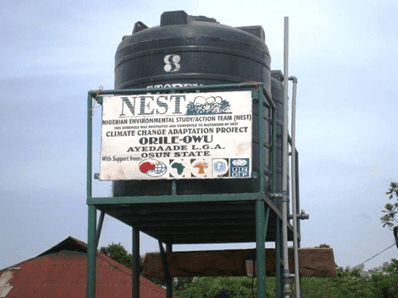
IN a few days’ time one of the men who made a great impression on me when I worked at the Nigerian Environmental Studies/Action Team (NEST), Ibadan, Ọyọ State, would have turned 74 years this year but death had another plan.
Ademola Salau (Prof ) was born in Nigeria on 21 December 1946 but passed on 28 August 2011 at the age of 64. He was at one time the Vice Chancellor at the University of Port Harcourt, Rivers State. He taught Geography and was very interested in Development issues too.
I have so much to say about this ‘ọmọ Eko’ who stood up for me a number of occasions when a fellow insisted I had to be sacked so that he could stamp his authority on the organisation funded by his country.
Professor Salau, how can I forget you and your moral support for me even when I resigned my position to set off on my own. It was always a pleasure in your company. I still tell others about that Sunday you were passing by Ibadan to Port Harcourt and you told your wife I would be in the office… on a Sunday! She did not think any young man would sacrifice his Sunday afternoon to be in the office. You called out to my name as if we both had agreed I would be there, lo and behold I was and I heard you say to your wife, “did I not tell you?” and you gave that belly laugh that only you can give. This week I take on one of the issues close to your heart; the environment:

I WILL try to capture a part of my experience working with these dedicated Nigerians. But wait a minute, if you mention the name of Professor David Uke Ukiwe Okali I am not certain how many Young Nigerians can thump their chest to say they know about him or what he and his fellow University professors did in the 90s. Their main concern was about Nigeria’s Threatened Environment. Our column this week is about those who took the bull by the balls to warn Nigerians about the danger of Climate change and about pollution in general. Environmental issues are not just about sanitation but those unseen issues/challenges that confront a postcolonial state like Nigeria.
Let us focus on the institution before the pillars of the association are called upon. “The Nigerian Environmental Study Action Team (NEST) was founded on 17th July, 1987, as a spontaneous response of participants at a workshop, convened by the Canadian University Service Overseas (CUSO), at the Conference Centre, University of Ibadan, to expose how other countries are dealing with environmental challenges.” I was not there when this happened but I met the professors from different Universities across Nigeria attending meetings, strategizing how to raise the awareness of Nigerians about the dangers in our waters, air and soil. The website of the organization has a comprehensive list of workshops;
“Since 1989, NEST has held an annual workshop each year except in 2000. Up until 1999, the Friedrich Ebert Foundation, Lagos, sponsored the annual workshops. The annual workshops have addressed issues of deep concern to NEST and have been held in various agro-ecological zones of the country: thus
The Nigerian Environment: Non-Governmental Action (Lagos, 1989), Sustainable Development in Nigeria’s Dry Belt (Kano, 1990),
Sustainable Development in Nigeria’s Rain Forest Region (Owerri, 1991),
Women, Children and the Environment (Jos, 1992),
The Structural Adjustment Programme (SAP) and the Environment (Benin City, 1993),
Waste Generation and Disposal in Nigeria (Ibadan, 1994), Promoting Environmental Education (Calabar, 1995),
Making the Transition to Sustainable Energy Use in Nigeria (Minna, 1996),
Appropriate Technology and the Environment (Ibadan, 1997),
The Informal Sector and the Environment (Aba, 1998),
NGOs, Popular Participation and Environmental Management (Kaduna, 1999),
Rural-Urban Linkages and Sustainable Livelihoods (Umuahia, 2001),
Nigeria Adjusting to Climate Change (New Bussa, 2002),
Energy Systems and Climate Change (Bauchi, 2003),
Biodiversity and Climate Change (Asaba, 2004),
The Nigerian Environment: Non-Governmental Action II (Ibadan , 2012),
Nigerian Environment Centenary symposium (Ibadan, 2014).
MY involvement with NEST started around 1991 when I saw an advert in one of the Nigerian newspapers. The little known organization was in search of a program coordinator to help promote the environment using culture as fulcrum. I went for an interview and the panel made up of CUSO country staff thought I had what it takes to be given a three-month probation trial. The goal of the organization was co-terminus with mine. Therefore, my first task was how to call the attention of the media to environmental challenges around the city of Lagos and surrounding. As a low budget event, I planned a bus tour of environmental trouble spots in and around Lagos and titled it “What we are talking about.” The tour had people like Professor Tade Akin-Aina, then of the University of Lagos, Dr. Ayodele Edwards an Ecologist at of the same university. The list of participants included Tunde Kelani, Patience Akpan (then of Punch newspapers, now a professor in the United States of America), Emmanuel Efeni (then of the Guardian), and so many reporters I cannot recall now. We all met in front of the National Theater and drove around Lagos until we got to the Ewekoro Cement factory. At each environmentally interesting point, the experts traveling with us took turns to explain the implication of the nature of pollution and pollutants to the journalists. It was such an educative time for all who attended. The reports in the various newspapers might have convinced those who hired me I was worth their investment.
As mentioned at the beginning of this article, if we must talk about individuals, Professor Adetokunbo Salau, (who was the Deputy Vice Chancellor at the University of Port Harcourt) deserves a whole paragraph for the way he managed the affairs of his fellow academics. I still recall the many visits to the executive meetings by Frank Hicks of Ford Foundation, and the questions he asked about how programs and projects Ford Foundation planned to fund. When it was time to eat at the favorite joints of one of the CUSO staff, Frank joined us and enjoyed the locally prepared meals with the team.
Professor Salau understood human nature and he was culturally grounded. As a devoted Muslim, never did he allow his religious beliefs to interfere in the running of a secular organization. He gave his all until he moved on to work for one of the United Nation agencies.
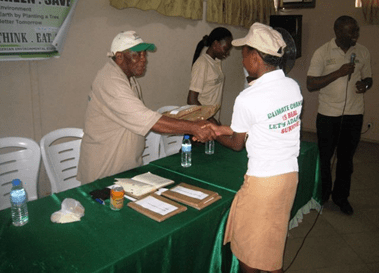
If Professor Salau was the moving spirit of the Team, then Professor David Okali (now Emeritus) must be the pillar that holds both material and cerebral matters together. As a world acclaimed Forest Ecologist and former President of the Nigerian Academy of Science, you were sure the Team was always on track. His major research works is in rain forest regeneration and agroforestry. I need not re-invent the wheel I should let the Internet provide the rest “he authored Climate Change and Nigeria: Guide for Policy Makers, 2004 and co-edited Climate Change and African Forest and Wildlife Resources, 2011. Under his watch, NEST successfully executed the Canada-Nigeria Climate Change Capacity Development Project (CN-CCCDP)(2001 – 2004)) and the Building Nigeria’s Response to Climate Change (BNRCC) Project (2007 -2012). His experience and network are invaluable.” If that is what Sustainable Agricultural Intervention Network & Terminal (SAINT) has to say let the words of an award winning creative writer support theirs. Lawyer Tade Ipadeola says “I have to say Professor Okali is the moving spirit of environmental advocacy in this neck of the woods [Ibadan]. He’s much too modest to say so but he inspired a crop of us younger people to take up the cause. We did that mainly through Àyíká, the magazine and then through comics and finally through occasional poetry performances in schools – environmental poems if you will.”
As you know all things bright and beautiful, one nation that shall remain nameless kills them all. The project Lawyer Ipadeola talked about went into comatose and I asked him what on God’s earth could wake the dream up. His response almost broke my heart but it gave me hope in a future yet to arrive.
“We need a publicly funded science education template and a proper academy of art and science. Something like what the French have in College de France. At the moment, awareness of the environment is probably the last issue on the minds of many Nigerians. Insecurity promoted by people who overtly attack education and educational institutions has ensured that a generation is growing up here totally unaware of how fragile things are.”
The story of NEST cannot be completed without listing the giants who made the project a reality. Professor Kingsley Owoniyi Ologe, a geographer of repute. “[Ologe has been a] member, Association of Geoscientists for International Development since 1976; President, Nigerian Geographical Association, 1983-84; President, Nigerian National Committee of the International Geographical Union, 1987-91.” For the very brief time I worked with him I could not penetrate into what makes him Ologe. He contributed ideas and gave directions on how to solve practical questions.
If Ologe brought in local wisdom, Professor Mathias Uzo Igbozurike is a Nigerian every citizen should look forward to working with. If you say a man is practical, then you are most likely talking about him. His eagled eyes can spot and error from a tome. He was the Team’s general editor.
Professor Ugbourike has served in “several State Government Task Forces, Consultancies on Soil Erosion, Forestry, Population and Development Planning.” His publications include “Agriculture at the Crossroads, University of Ife Press. Ile-Ife, 1977; Land Use and Conservation in Nigeria, University of Nigeria Press, Nsukka, 1981 Rural Nigeria: Development and quality of Life, ARMTI, Ilorin, 1983 So/7 Erosion Advection and Control Manual, Lagos/Ibadan, 1993.
The man who brought the humanities into the mix was Dr. Tade Akin Aina (now Professor, a very brief man in all materials particular). At any point in time, he was involved with as many foreign sponsored projects as his twenty-four hours could accommodate. He was (and still is) the toast of the International communities. The Internet has this to say “He served as Deputy Executive Secretary (publications) at CODESRIA, Dakar, Senegal from 1993 to 1998, and worked with the Ford Foundation in the Nairobi office from 1998 to 2008. He has also served as Consultant for many agencies including UNDP, UNICEF, UN-HABITAT, United Nations University and The World Bank on a wide range of development issues such as urban poverty, higher education reform, governance, environment and development. He currently serves on the boards of Winrock International, Seeding Labs, the King Baudouin Foundation, and the Kenya Human Rights Commission among others. Tade Akin Aina has authored and co-edited more than ten books/monographs and numerous chapters in books, articles in journals and learned publications, and several conference papers and addresses. “
The last but not the least member on the Team was the quite but effective Dr. Emmanuel Oladipo. If you ask him about Climate Change in his dream, you are likely to receive a comprehensive talk about how Africa’s climate has changed over time. In one of his public interventions he wrote“[a]bout 20,000 years ago, the continent [of Africa] was almost a desert, but a rainy period ensued between 7,000 and 14,000 years ago. It lead to the eradication of most arid areas and enabled the development of agriculture and cattle breeding in the present day Western Sahara. The existence of a gigantic Lake Chad, which covered over 340,000 km2 (the size of Côte d’Ivoire today) and with a maximum depth of 160m, about 6,000 years ago attests to these historical fluctuations. This implies that much of the current dry region of the northeastern part of Nigeria was very wet about 6000 years ago.”
Before we draw the curtain on this part one of our crawling the web in search of ideas buried and ideas forgotten, let me bring in another NEST collaborator who worked silently using his art works as the basis of advocacy. Tunde Olanipekun at my prompting brought works of Art to the NEST offices at Bodija with the hope of linking matters of facts with matters of concern. His story below speaks to how a man grew to merge ecology with theology.
“My passion and love for nature dates back to my growing up years at the environmental friendly Christ’s School, Ado Ekiti in the early 70s, where the paths and roads are lined with trees and flowers. One of my favorite topics in the art class then was landscape painting and this continued to the early 80s as a student in the famous Yaba College of Technology Art School. These experiences largely endeared me to the painting of and about the Nigerian ecological and aquatic environment even after graduation. The global degradation of the environment and danger of its mismanagement of the living space which we all have a duty to protect, prompted me to use the power of visual art to create an environmental awareness amongst art teachers and students toward issues like air and water pollution, bush burnings, solid waste disposal, deforestation. Others are soil erosion, raw sewage disposal challenges, desertification and what an ideal environment will look like.
It was also at this stage that phenomenological awareness blossomed in my creative focus. Nature became paramount, the environment turned into my daily concern: preserving the eco-system was the gospel I preached; art became my working tool to achieve this aim ” The big trees have gone” “the “Garbage Monster” was all over our cities without efficient disposal. Our sins against the environment are many and should stop was my focus. I was fortunate to have a good friend who did not only work for an environmental agency but was equally passionate about the environment. He wasted no time in linking me with some of the local environmental agencies and some foreign cultural agencies that supported my vision. This enabled me to organise several group exhibitions and workshops/seminars on how school teachers and pupils can creatively assist in the combat of ecological degradation. Discourse on the “Greenhouse effect” was prevalent at the peak of the 1990s through the new millennium period. I keyed into it and began to reconcile my visual and literary presentations with this global circumstance.
Among many exhibitions/seminars/workshops I have organized on the Art and Environment are:
-Unity of Art and Environment Expressed NEST Ibadan 1992
-Living Space, Friedrich Ebert Foundation Lagos, 1992
-Trends and Themes in Environment: Implication on the Art and the Art Teacher. F.E.F. Lagos 1993
-Living Space II. Art Exhibition F.E.F. Lagos 1994.
-Beauty from waste-seminar/workshop and exhibition F.E.F. Lagos 1994
-Covenant Treasures – Children Art Exhibition, Covenant School, Lagos 1993
-Art intervention in the environment by Baffles art Gallery in collaboration with Odutola Foundation @ the Lagos State Council for Art and Culture 200-
-Yearly Seminar/ Workshop for Art teachers/ students in collaboration with Lagos state teaching Service Post Primary Schools’ Climate Change Clubs.
-Muse from the mountains, an exhibition of paintings by Ayodele Ojo, National Museum, June 23rd – 29th, 2018.
Art Workshop/Seminar for Youth at RCCG Lagos Province 60.
Conclusion:
In the second part of advocates of the environment, we shall focus on other groups and individuals who were stars in the firmament. The focus will move on to Friends of the Environment, Nigerian Conservation Foundation (NCF) and journalists like Tunde Akingbade, Seun Ogunseitan, Emmanuel Efeni and others.


6 comments
… [Trackback]
[…] Information on that Topic: naijatimes.ng/the-nigerian-environmental-movement-advocates-from-the-past/ […]
… [Trackback]
[…] Find More Info here to that Topic: naijatimes.ng/the-nigerian-environmental-movement-advocates-from-the-past/ […]
… [Trackback]
[…] Find More here to that Topic: naijatimes.ng/the-nigerian-environmental-movement-advocates-from-the-past/ […]
… [Trackback]
[…] Find More to that Topic: naijatimes.ng/the-nigerian-environmental-movement-advocates-from-the-past/ […]
… [Trackback]
[…] Read More Information here on that Topic: naijatimes.ng/the-nigerian-environmental-movement-advocates-from-the-past/ […]
… [Trackback]
[…] Read More here on that Topic: naijatimes.ng/the-nigerian-environmental-movement-advocates-from-the-past/ […]
Comments are closed.