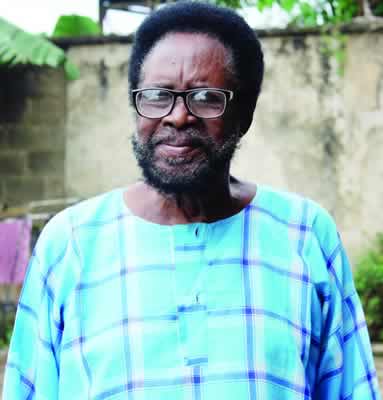

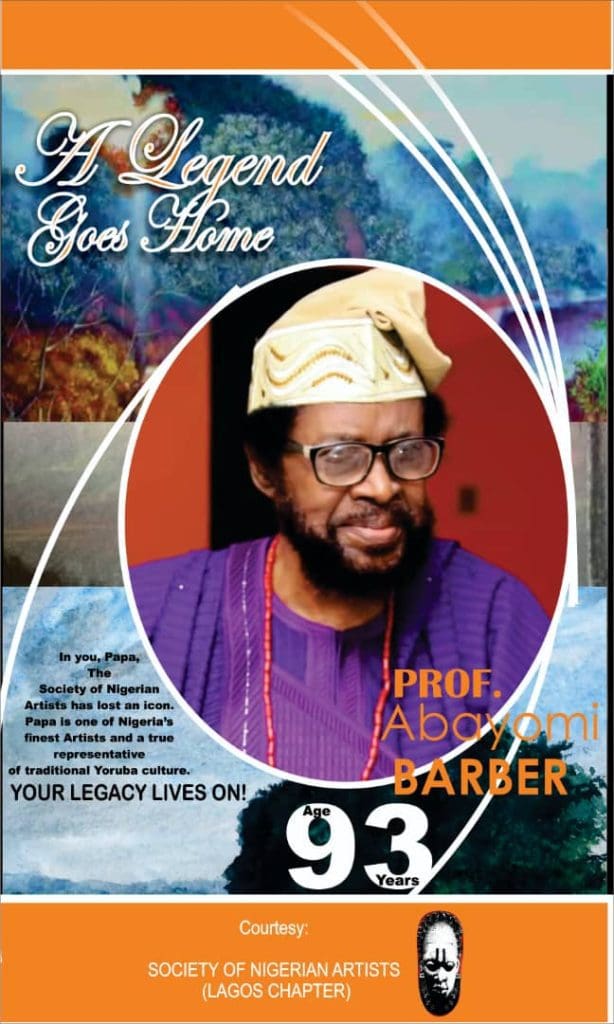
THE passing of the eminent painter ad visual arts teacher ad mentor, Professor Abayomi Barber has been announced by the Society of Nigerian Artists, SNA.
Professor Barber was born in 1928, and died at 93 early today, according to a statement by the SNA Lagos Chairman, Olojo-Kosoko Kolawole.
The statement reads:
“In gratitude to God Almighty for a life well spent, the Society of Nigerian Artists (Lagos State Chapter) affectionately announces the glorious translocation of one of Nigeria’s most famous visual artists, Professor Abayomi Barber.
P”rofessor Abayomi Barber was the progenitor of the Abayomi Barber Art School. He is a national treasure who got duly celebrated for his artistic genius and impacts by the Federal Government of Nigeria through the National Gallery of Art in May 2021.
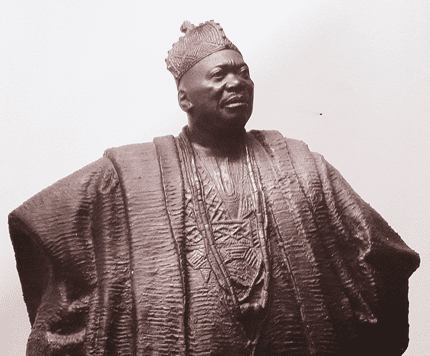
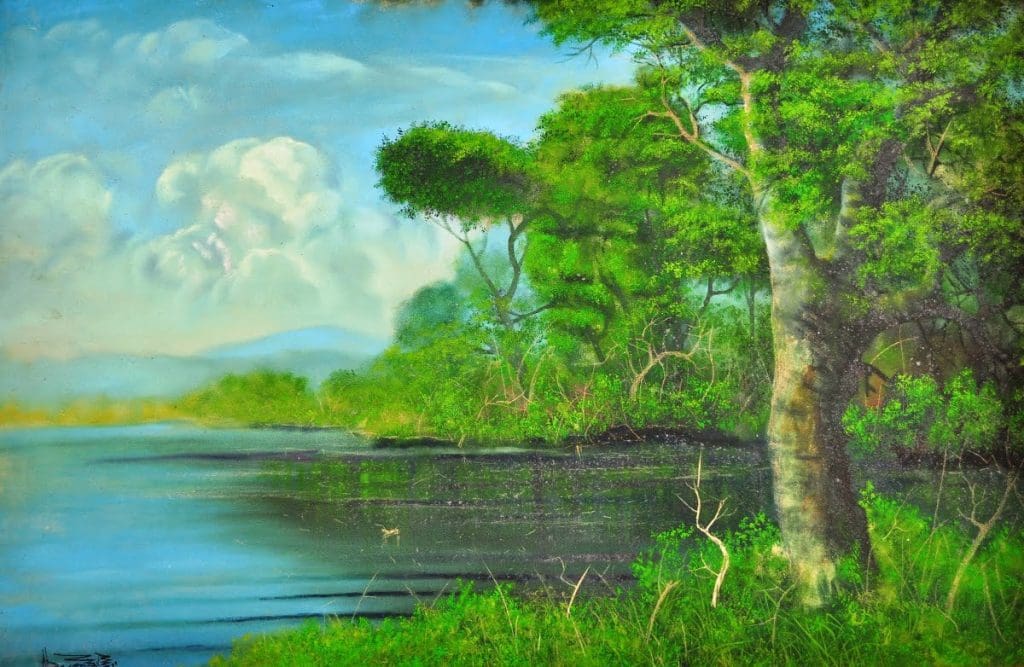
“Pa Barber was a renowned Surrealist painter and naturalistic sculptor. His oeuvre also cuts across numerous art genres, techniques, styles, mediums and subject matters.
“He is survived by wife, children, grandchildren, great grandchildren, disciples and the Nigerian art community as a whole.
“May his creative soul rest in eternal peace.”
********
(On occasion of his 92nd birthday last year’s September, NaijaTimes.com’s Maja Fawole, did a reflection on his contribution to the development of the visual arts in Nigeria)
Abayomi Barber: Living legend of art at 92
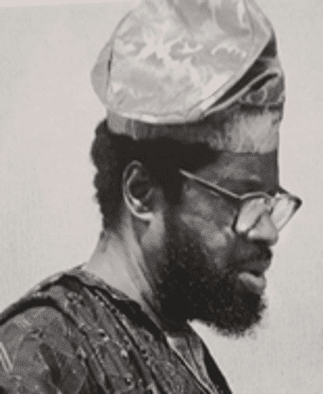
AS Nigeria prepares for her 60th independence anniversary, it’s time to celebrate her legends of Art who have never relented in igniting aesthetic sparkles that continue to enliven contemporary art in Nigeria and beyond. One of such giants is Abayomi Barber who will be 92 years in October.
Abayomi Adebayo Alade Barber is a force of cultural revolution and artistic evolution in contemporary Nigeria. With his return from England and immediate entry into art practice in Nigeria in 1971, a new standard was set as one of the bars to measure the quality of art in Nigeria.
Although Barber belongs to the pre-independence era of Nigeria based on his training and subsequent practice in the United Kingdom, he would soon align with Nigeria’s young masters of the post-independence era. He only returned to Nigeria about 10 years after Nigeria’s independence from colonial rule and quickly set up his thriving studio in the University of Lagos. The studio began to produce artists whose body of work, in tandem with consistent practice, metamorphosed into what Frank Aig-Imoukhuede, one of Nigeria’s culture experts, had described in 1984 as a school of thought.
Having an independence of mind was a determining factor in the development of Abayomi Barber’s art. That he enrolled at the Yaba Technical Institute (now Yaba College of Technology) in 1953 and willingly abandoned the programme because it “was not offering anything new” attests to such independence. Earlier before the admission saga, he was offered civil service employment by Ben Enwonwu who was then Government Adviser on Art, but he turned down the offer and chose instead to join the publisher of Aworerin, a Yoruba comic magazine, as a graphic artist. This afforded him a platform to illustrate many contents of the various editions of the magazine.
Invariably, Abayomi Barber emerged into the scene with the status of a pseudo-renaissance artist whose skill cut across virtually all specializations of the arts. With internship at the Saint James’ Palace Studio, London, from 1968 to 1971, he fertilized his formalist approach to art. He became a Realist in sculpture, painting and scenic design. His equal strength and skill in painting and sculpture is simply unquestionable. By extension, he is a songwriter, singer, and saxophonist. He met it all with amazing skill and mastery. Delightfully, he remained in active art practice in England until he returned to Nigeria in 1971.
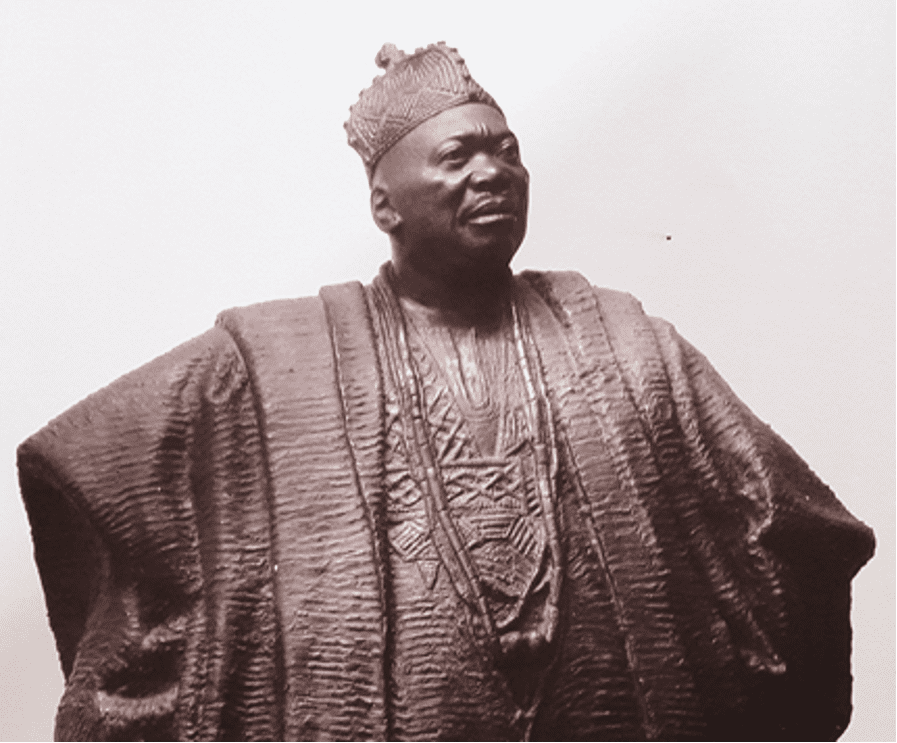
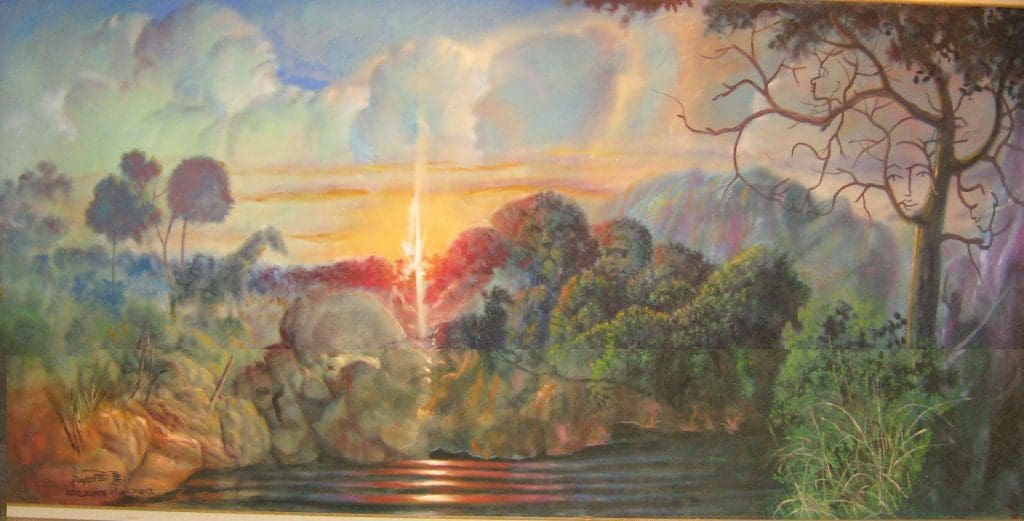
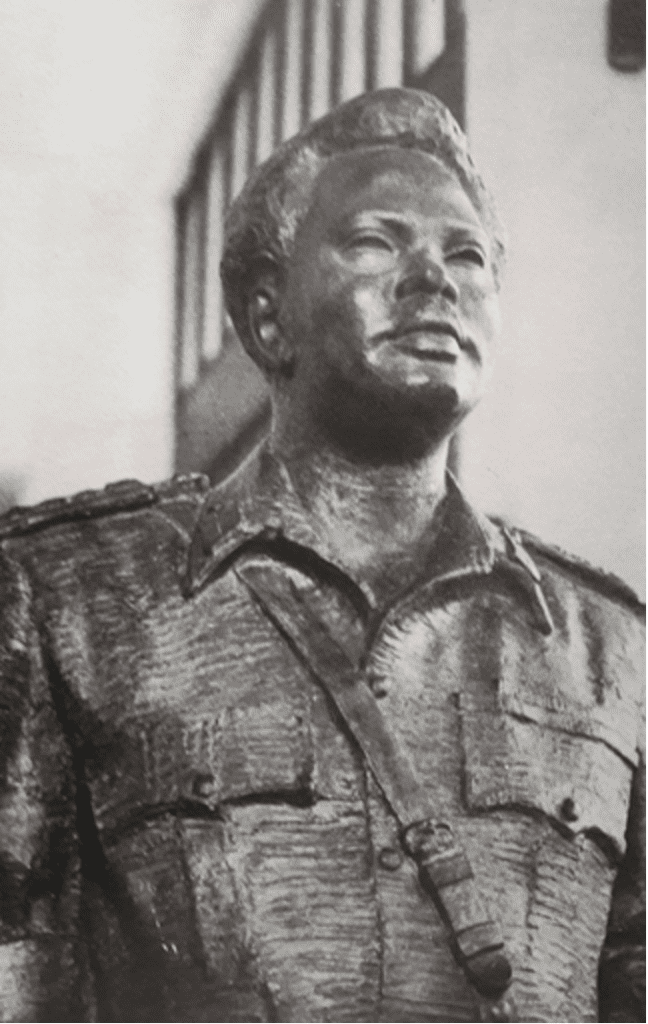
Emergence of Abayomi Barber Studio
WHEN Abayomi Barber returned to Nigeria in 1971, his first port of call was the Ori Olokun domain at the University of Ife (now Obafemi Awolowo University), Ile-Ife, where he had planned to unleash his creative energy. Unfortunately, the slow response to his absolute interest became frustrating to the point of self-rejection from Ile-Ife. He had to return to Lagos as he would soon become a cornerstone at the University of Lagos where he was employed as a Senior Technician in 1971 and seconded to the School of African and Asian Studies. There, he produced monologues, illustrations, posters, and other graphic requirements. In fact, he would have been employed as a lecturer, but he was more at home with studio practice; hence, his acceptance of the post of Senior Technician.
Barber was subsumed in a stagnating impediment of the time as the School of African and Asian Studies had no studio for art practice whereas Barber, the only artist in the employment of the school, could not do without one. The first three-month contemplative period was an administrative and artistic stagnating era in the life of the artist who just resumed work, did nothing, but received his salary at the end of each month. There was a lull in artistic activities and he didn’t seem happy with the situation. Incidentally, and much to Barber’s satisfaction, the School of African and Asian Studies ran out of its usefulness and a replacement was established. It was called Centre for Cultural Studies. Unexpectedly, the school authority did not see Barber’s usefulness in a new Centre established to accommodate Research, Performing Arts and Music.
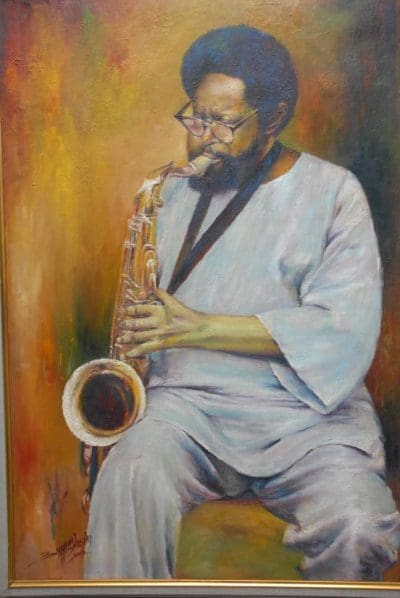
Unknown to the UNILAG authority, Barber was grounded in Music. He had been part of a professional musical band in his early days. This he revealed to the school and followed up with a tenable argument that no performing art could function well without visual art. He convinced the school authorities about the need for backdrops (large background scenic paintings executed on baft fabric) to create reality for drama presentations. The idea was wholesomely bought and Barber’s retention as a staffer of the Centre was sustained. He constantly produced paintings and scenic effects on backdrops for many of the drama and musical productions by the Centre – whether they were staged in or outside Nigeria.
INDEED, Abayomi Barber had birthed the idea of a practical workshop space called art studio as soon as he joined the School of African and Asian Studies in 1971. For an artist who preferred studio practice to academic teaching, he refused to resume work until the school was able to build him an art studio where he produced many works for the Centre for Cultural Studies. He had complained to the then Vice Chancellor, Prof. Saburi Biobaku about lack of studio space to facilitate his productivity, thus serving as an impediment to art development in the school. Barber was instantly tasked to design a befitting studio for the Centre. His initial design, studded with facilities of his dream, was considered to be bogus, unrealistic and expensive to build. It was later modified to accommodate an artist and his assistants. Despite the fact that art and artists were despised at the time, Barber’s vision was clear. Art was his life and he would go out of his way to protect and preserve it. As philosophically envisioned in his sayings and deeds, “Art is like a cup of honey besieged by flies.” He was so sure that once artistic activities took off in the studio, people would be naturally attracted to the place; and that was exactly what happened.
Between 1971 when he took up Muri Adejimi as his first student and 1996 when he retired from the University of Lagos and relocated to his home studio at Ijoko-Otta in Ogun State, more than 100 students (now masters in their own right) had been trained while many others still seek him out for training and influence.
*********
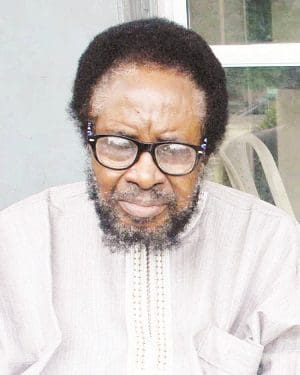
‘I want to enjoy life more, I don’t think there’s afterlife’
(Excerpts from a 2017 interview with Punch on occasion of his 88th birthday anniversary)
Where were you born?
I was born in September 1928 in Ile-Ife, Osun State. My father was the African representative of GB Olivant, a merchandise company owned by Europeans. I have four other siblings. I am the first child of my father.
Tell us more about yourself.
My grandmother, Mama Adekunbi, was the mother of the late Ooni of Ife, Oba Adesoji Aderemi, who served as the Governor of Western Region between 1960 and 1962. Oba Aderemi was my mother’s elder brother. My life found meaning in drawing, painting, and sculpturing. People say I am one of Nigeria’s greatest artists. I don’t know whether they are right or wrong. All I know is that produced some fantastic art works. I dabbled into music too. In my childhood days, I played the tenor saxophone. I was one of the best tenor saxophonists in colonial Lagos at the time. I was the highest paid saxophonist because of my skills.
How did you discover your gifts?
Then in Ile-Ife, there was a whole week was for history education in primary schools. During that week, schoolchildren were taken to shrines in Ile-Ife, where we beheld sculptures made by the ancient Ife artists. I was one of the children who visited the shrines. The instructors showed us the deities and their names. This was where I took interest in sculpture. I practically taught myself how to make sculptures.
In no time, I had established myself as a full-fledged artist because of my drawing skills. I used to draw the image of my late uncle, Ooni Aderemi, and present the images to him whenever he visited our house in those days. Anytime that Oba Aderemi came by, I always had art work of him to present to him. He never took them away but he would praise me and give me some money. He would tell me that I needed the art works more than he did, especially to showcase to the world. I was doing well in Ile-Ife until my uncle said I was getting too complacent. He suggested I should leave my mother and live on my own. He then took me to Ilesa, in Osun State.
Tell us one of your most memorable moments in life.
When I was at Ilesa, my uncle helped me to secure a warehouse which became my first studio. I became popular in no time because I made sculptures of big people in the town. At Ilesa, there was this beautiful girl who frequented my studio to behold my art works and marvel. Over time, I got closer to the girl. Her admiration for my work also led to an admiration for me. We became close friends and we fell in love. But the girl had a terrible father, an influential chief in Ilesa. The father didn’t like me. He hated that I was dating his daughter. In those days, chiefs were highly influential. They wanted their daughters to marry other influential chiefs in town. He came to our house one day and saw another uncle of mine. He said to him, “I am going to get you out of this town. You either leave this town for us or tell your boy to leave my daughter alone.” My uncle was afraid so he told me to go back to Ile-Ife.
Rather than go back to Ile Ife, I decided to go to Lagos. Prior to the encounter, I had been travelling to Lagos to see art exhibitions so I knew Lagos was where things were happening. The girl could not resist her father. That plunged me into great sorrow as we parted ways. She regularly came to Lagos thereafter to see me because the mother did not object to our union. But she later got married to an influential chief as her father wished. Her father was happy but the girl did not enjoy the marriage. That was how our love fizzled out.
How was life in Lagos as a young man?
When I got to Lagos, I enlisted in a sculptor programme at Yaba College of Technology, under the direction of the popular British sculptor, Paul Mount. On my first day in school, Mount asked us to bring our portfolios so he could ascertain our aptitude. I showed him my self-portrait in oil colour and another piece of sculptures which I had cast in paper pulp (paper mixed with starch which looks like clay).
He looked at my portfolio and shook his head. He then said, “Abayomi, do you know that in all my years, I never succeeded in making my own portrait as good as yours. Despite my education and teaching experience, I have not been able to do what you have done.” He then shook my hand.
For a young man to get such a compliment from a popular English teacher, who was highly regarded then, it was the height of joy. That compliment gave me a “swollen head” as the Yoruba would literally say. With the compliments, I became “swollen headed.” I never stayed there for too long because I kept his words in my mind. I was the best in the class. Mount’s compliment also got into my head that I felt I didn’t really need to be in school to achieve my dreams.
Also, my parents were not so well to do. My father passed on and my mother was the one fending for the family. I needed to help my mother. I left school but I continued to buy books to read. I reasoned that if I continued schooling, it would be books and books. I then bought books on my own, ranging from comic magazines to novels and books on philosophy that would broaden my knowledge. I was able to concentrate on my art works after leaving the school.
What was it like playing saxophone in Lagos at the time?
I found out about a band, headed by one Mr. Dele Bamgbose in Lagos. I went to Bamgbose to be part of the band. I was already playing cornet in primary school. My friend, Kunle Sijuade, and I approached the band leaders to teach us music. My choice was tenor saxophone because already I could play the cornet. I asked my friend to learn the trumpet because it has the same pitch as the cornet.
My friend was not getting on with his instrument. But in exactly three weeks of learning, maybe because of my previous knowledge of cornet, I was already playing beautiful tunes. Then I joined the band fully. That period was another interesting part of my life. I became so engrossed in music that I abandoned my work as an artist.
When did you have your major breakthrough as a visual artist?
My friend, Sijuade and I were always thinking about the future and what to do. I was enthralled by the lifestyle of the English people. I wanted to find out why they seemed to succeed faster than blacks. Sijuade and I were desperate to go to England but there was nobody to sponsor us so we thought of helping ourselves. In those days on the Marina, we could see seamen when the ship had berthed in Lagos. We became friends with them. We told them about our aspirations and that we would like to follow them to England. One of them said he would take us to England if we could find some money. We were excited so we started saving towards that. The arrangement was that if we could save a certain amount of money, he would hide us in the ship as stowaways. When we finally got the money, he told us to go and get ready and that in three days’ time, we would travel to England.
I quickly went to Ile-Ife to share the good news with my mother. When she heard the news, she started dancing and singing, “My son is going to Oyinbo people’s country. This is wonderful. My brother (Ooni Aderemi) must hear this and celebrate with me.” She quickly dressed up and went to tell the late Oba Aderemi. Oba Aderemi told my mother to bring me to him so he could discuss the journey with me. We both thought that the Oba wanted to help me with some money. When I got to his palace, he said, “Congratulations! You want to go to England? That is good.” I was happy too. The door to his room was ajar. He would go in and come back several times, saying, “Congratulations! The boy that wants to go to England!” Then the third time, he asked me, “By the way, have you got the passport to go to England?” I quickly brought out my passport from my pocket and handed it over to him. He looked at it. He went inside and came back, encircled me and went back in. Then the third time, he came out without the passport. Then his countenance changed.
He said, “You want to go to England? Who is sending you? You have allowed the seamen, who will throw you into the sea and feed you to the fish, to deceive you. You know I am one of the big guns in Action Group. You know Obafemi Awolowo is my friend and I can easily tell him to help you. Have you known any of my family going abroad as a stowaway? You now want to rubbish my image.” I was dumbfounded. I later got to know my mum had disclosed my plans to him.
Then the Ooni called my elder brother, Ladepo, who was living in the palace and declared, “Ladepo, make sure that your brother does not leave this palace. For another five years, ensure that he does not get out of this palace.”
How did you feel when he said that?
I almost died of sorrow. That was how I started living in the palace. My friends too didn’t embark on the trip because of me. The year ended with me doing nothing. There was no music to play and no art work to make because I could not go out to buy artist materials. I was there until September of same year, about two and half months.
You mentioned that meeting Awolowo marked a turning point in our life. When did you meet him?
When I couldn’t cope with the boredom in the palace, I secretly plotted to abscond. But something happened that changed my life. There was this festival held to mark the Ooni’s coronation anniversary. I knew that Awolowo would attend the event. I did a portrait of Awolowo and that of the then minister of education in the defunct western region, Stephen Awokoya. I gave the portraits to the Ooni. When Awolowo got the gift, he requested to see me. The Ooni then handed me to Awolowo. He told Awolowo I was eager to have more knowledge on arts. He said, “This is my nephew. You should do whatever you like with him.”
Through Awolowo, I got a scholarship from the regional government to study at the Central School of Arts and Crafts, London. While I was in England, I studied casting and moulding at Mancini and Tozer studios, and also served as an assistant at an art studio owned by Edward Delaney and later at Oscar Nemon’s studio in St. James Studio in London. In England, I realised we were just punishing ourselves in Nigeria. I discovered that what they do that makes them better is what we don’t do. The whites make things easy for themselves.
At 88 going to 89, how do you feel with your accomplishments in life?
I love God and thank him for giving me good health. I say my prayers daily to thank him. I marvel at the greatness of God a lot because his creations are beautiful. God is great. Life has taught time to do my best all the time. That is the best way to get on. These days, I still play the saxophone and enjoy music but I have to stay indoors most time.
What is the secret of your good health?
That can only be answered by the Almighty God. I don’t nurse any sickness at my age and I have always been healthy. I eat whatever comes my way as long as it tastes well. The only problem I have is a failed memory as I advance in age.
What is your prayer?
I pray that God should not take my life now. My prayer is that God should extend my life beyond 100, if possible. I am still enjoying life. I don’t want to die now (laughs). Life is sweet. If Mr. Death comes now, I will tell him, “Please, go back and come back another time.” I still have many things I want to achieve in life that I have not. One of my children is still studying for his PhD. I will like to hold his certificate and celebrate with him. I still want to see what will become of my grandchildren. I don’t think there is an afterlife so life must be enjoyed to the fullest. I used to believe that there is a paradise after earth but I don’t think it exists. The paradise is here on earth. You make your own paradise here. I completely share the view of an American alto saxophonist, who said, “You have got to live but once for when you are dead you are gone. Let the good time roll. Everybody, let’s have some fun.”