
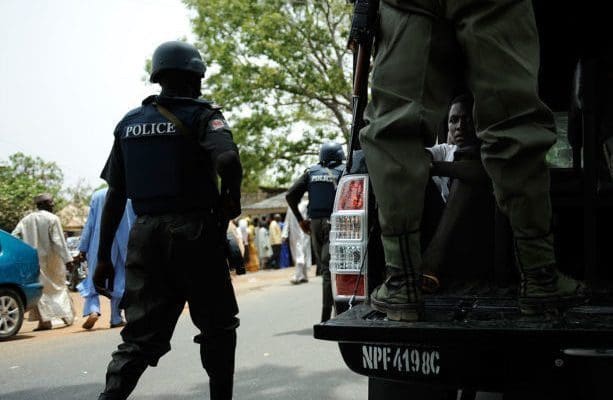

It is regrettable that two weeks after the #EndSARS protests by the youths and the subsequent violence and mindless looting by hoodlums, the streets of some major cities where extensive destruction occurred are still without policemen and police patrol. This situation is most glaring in Lagos and Benin City. Police checkpoints have disappeared on the expressways, particularly the Lagos/Ibadan/Ile-Ife; the Sagamu/Benin, the Port Harcourt/Mbiama/Yenagoa roads and some other major trade routes in the Southern and North Central axis of the country. Commuters are expressing serious fears as criminals have returned to the roads and are operating with impunity.
Despite some deep-rooted fundamental malaise in the country, the prime target of the protests was the Special Anti-Robbery Squad (SARS) of the Nigeria Police Force whose lawless activities, including indiscriminate arrests and extra-judicial killings had raised serious concerns in different quarters. Perhaps, due to the lack of structured leadership, the #EndSARS protests were hijacked by vested interests and criminal elements who unleashed mayhem, including vandalisation and indiscriminate looting of public and private property, as well as burning down police facilities in some parts of the country.
As could be seen in the magnitude of destruction and looting of police formations, stations and even barracks, it was obvious that the criminal elements who hijacked the initial #EndSARS protests were targeting the police establishment for ulterior motives. In the process, many policemen were killed and their armoury looted. Some correctional facilities were also invaded and inmates set free by angry mobs.
According to a release from the office of the Inspector General of Police (IGP), Mohammed Adamu, 73 Nigerians died during the protests, 22 of whom were police officers. Also, 205 police stations were vandalised while hoodlums set hundreds of crime suspects free. In the melee orchestrated by violent mobs, 71 public warehouses and 248 private stores including supermarkets were looted. Added to this was the seemingly blanket tar-brushing of the police force by some organisations and members of the public. This level of irresponsible plundering, anomie and wrong labelling was enough to dampen the morale of policemen and lower their self-esteem.
It was as though the Nigerian society had turned against its police force because of the atrocities committed largely by a unit of the police establishment. The aforementioned, among others, forced the police, especially the rank and file, to withdraw from their duty posts across the country. There are no concrete indications that there was a directive from the leadership of the police force for officers to withdraw from their duty posts; but rather it was clearly based on the feeling of lack of appreciation of their service by the society, even with all the attendant risks. So, they decided to protect themselves from the bad elements in the society by deserting their duty posts; more so as their stations have been vandalised and their weapons carted away.
However plausible as the reasoning may sound, it runs against the grain of the requirement of their statutory responsibility. The protection of lives and property is the first and basic constitutional role of government anywhere in the world; and the police have a primary and critical responsibility when it comes to internal security. It is indeed a tragic irony that those charged with the responsibility of protecting the lives and property of citizens are themselves seeking to be protected from the very people they are paid to protect. Yes, policemen need protection and this must be guaranteed by way of enhanced welfare packages, proper training as well as provision of adequate facilities including protective gadgets, modern crime detecting and fighting equipment and insurance provisions, which were some of the issues, also raised by the #EndSARS protesters.
The federal government has made some commitments towards looking into these requirements. In addition, President Muhammadu Buhari has approved a new salary structure for members of the Force. The challenge however has been the widespread corruption within the Force itself which is reportedly systemic and prevents government’s intervention measures from reaching the rank and file. Also, in September this year, President Buhari signed into law a new Police Act 2020 aimed at improving certain aspects of police operations. The Act however suffered a major set-back as the Appeal Court recently nullified it on the grounds that certain sections are in conflict with the Constitution as it relates to the powers of the Police Service Commission (PSC).
While the various investigative panels and judicial commissions of inquiry set up by the IGP and some state governors respectively are looking into the immediate and remote causes of the protests and also trying to deal with the mayhem inflicted on the country by the mobs, the police should return to their duty posts and carry out their assigned responsibilities. Nigeria as a nation cannot afford to operate without a functional policing system. If there is a complete absence of the police to protect civil society, it would lead to a breakdown of law and order, and prevent development as progress is often seen in the dividing line between savagery and barbarism as stronger individuals would certainly prey on the weak with little or no effort.
Such a society would soon relapse into the state of nature where life is short, brutish and nasty; and living becomes a game of survival of the fittest. In the last two weeks, these kinds of scenario have been rearing their ugly heads in many communities or settlements in the country, as armed robbers and the scum of society also known as “Area Boys” and cultists have capitalised on the inactivity of security agents to terrorise other Nigerians. Also, habitually lawless road users are causing chaos and needless traffic jams in most of our major cities, especially in Lagos.
Following the recent directives of both the IGP and the PSC, there has been some police presence on the streets in the cities but the highways are yet to witness an appreciable presence of checkpoints or security patrols. Given the recent operational guidelines handed over to them, some police officers still feel unsafe to operate under such conditions in the face of the level of lawlessness and impunity within the system. They fear that operating without reasonable use of force would expose them as sitting ducks to hoodlums and criminal elements. With the current situation, many Nigerians are afraid of travelling along major highways on which police checkpoints have been dismantled as robbers and hoodlums are now having a field day, terrorising everyone in sight.
While commending the IGP for advising his officers and men to be more civil and professional in their respective operations, we urge the police authorities to embark on proper education of officers on how they should relate professionally with the public. The protests that erupted in October were indeed a dissipation of bottled up anger, frustration and bitter emotions accumulated over a period of time spanning decades of police brutality, and, on a larger scale, poor governance issues which have led to massive unemployment, poverty and hunger.
The youths who triggered the October protests had, among other things, complained about the serious challenge of acquiring quality education and gainful employment; freedom of movement without undue police harassment and provocation, police brutality, baseless accusations, extortions and acute hunger. The unrestrained lavish lifestyle of our politicians with unearned public money in the face of massive poverty and hunger was enough to trigger a revolt.
It is therefore absolutely necessary for government to be sensitive to the plight of the people at all times and be proactive in dealing with distress calls by the governed. For instance, whereas the ugly activities of SARS have been lingering for a long time, several complaints were made to government to address the menace, all to no avail. In 2017, the protests started online and in 2019, the federal government set up a panel of inquiry to investigate the alleged atrocities committed by members of the squad. The report was submitted in June 2019; yet, nothing tangible, it appeared, was done to treat the issues complained about until the bubble burst in October 2020 – the massive protests signalled a wakeup call to the government.
It is therefore imperative for government to protect the police by preventing such volatile situations that would endanger the establishment and its officers to occur in the first place. Government should enlist the teaching of human relations, sociology, psychology, accountability and civic responsibility in the curriculum of police colleges, and also ensure that there is accountability in the operations of the Force to stem the marginalisation of the rank and file by the officers’ corps.
This is the time to consider reviewing the standard of personnel recruited into the police force by raising the entry qualification to at least the Ordinary National Diploma (OND) or its equivalent. Government should also begin to tinker with the idea of a possible decentralisation of the policing system in Nigeria. A country this large with a population of over 200 million people cannot afford to continue with an over-centralised policing system.
Just like in every other sector of the Nigerian society, there are bad eggs in the Police Force and they must be flushed out. However, we should not use the actions of some recalcitrant elements within the Force to paint the entire police establishment in horrible colours. Apart from the fact that some Nigerian policemen and women have distinguished themselves in international peace keeping operations, there are ample examples around the country of some officers who have acquitted themselves professionally.
We condemn any form of attack on the facilities and members of the Nigeria Police Force. Such attacks should be viewed seriously and the perpetrators brought to justice. We therefore join the IGP, PSC and well-meaning Nigerians to urge the officers and men of the Nigeria Police Force to return fully to their duty posts while the relevant tiers of government and agencies sort out the inadequacies precipitated by the #EndSARS protests.


3 comments
… [Trackback]
[…] Read More to that Topic: naijatimes.ng/let-the-police-return-to-duty/ […]
… [Trackback]
[…] Here you can find 55030 more Info on that Topic: naijatimes.ng/let-the-police-return-to-duty/ […]
… [Trackback]
[…] Read More to that Topic: naijatimes.ng/let-the-police-return-to-duty/ […]
Comments are closed.