
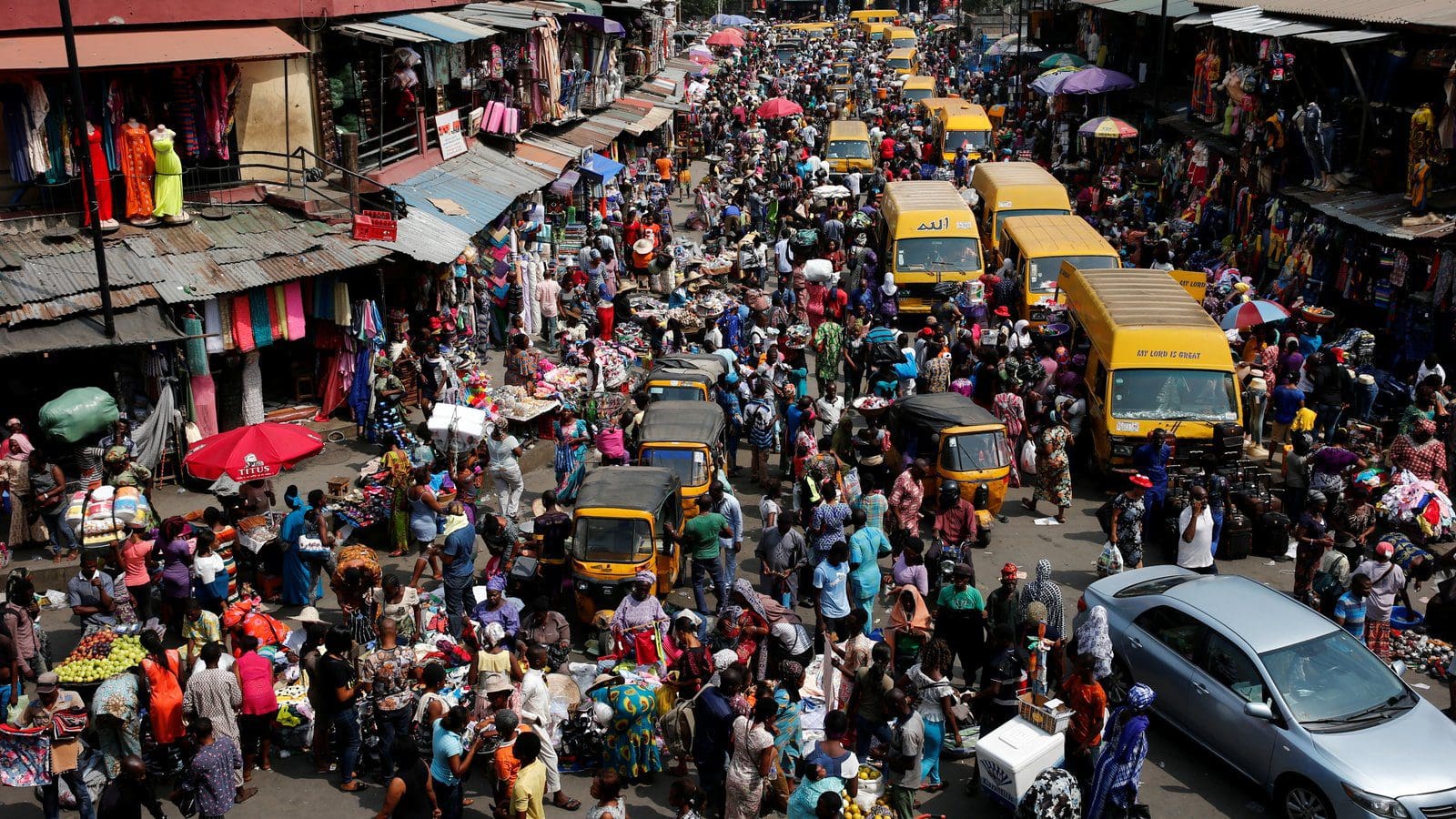

ONE fact that cannot be easily disputed is that Nigeria does not have a verifiable population figure. Nigerians have been living with the misfortune of not knowing exactly how many they are for many years, despite its serious economic implications. Demographic data is critical for economic development planning, destination marketing, investment and trade expansion decisions as well as private and public economic forecasts.
Neither the government nor other stakeholders, as at now, seem to know the true demographic status of the country. Yet, for fourteen straight years, the country has not organised a single population census. What we have from the National Population Commission (NPoC) and other sundry statistics agencies are projected figures whereas UNFPA (United Nations Fund for Population Activities) requires all countries to have a head count at least once every ten years.
It was bad enough that for more than three years, until November 2020, the Commission did not have a substantive chairman, a development which may have contributed to its not having any meaningful plans for effective population management and national census.
About a month ago, it was announced that Nigeria’s population is now estimated at 206 million people, the highest in Africa. Our population is growing at an average of 3% a year while economic growth on the average is a little above 1%. At that rate, the United States Census Bureau estimates that Nigeria’s population will hit 402 million by 2050. We are already experiencing a crippling population situation and with our lethargic disposition towards issues of grave national concern coupled with the tendency to politicise critical issues, we are already in a serious dilemma.
There are three major accelerators of population explosion: early marriages, high birth rates and lack of family planning; but there are also some fundamental causes of population explosion. Poverty is believed to be the leading cause of the menace. Very poor families in Africa do not have what it takes to embrace effective birth control. Another is ignorance. As far as they are concerned, family planning is a foreign idea. Many in Nigeria do not even know that having more children than they can cater for creates social and economic problems for the country.
Another cause is the rising phenomenon of religious beliefs in the context of procreation. Almost all the major religions share the doctrine that children are the heritage of God and man has no right to curtail the number of children one should give birth to. “Go ye into the world and multiply”, so proclaims God Himself in the Holy Bible. This biblical command emboldens Christians to challenge whoever admonishes them to control the number of children a family should have. Muslims also have a similar belief in the unquestionability of God’s dictate on this issue. It is one area such people agree irrespective of religion or tribe.
On a diplomatic scale, migration also plays a disturbing role. Given the country’s Afro-centric policy thrust as a Big Brother in the sub-region, the country’s borders are always open to other nationals who migrate at will. This has always caused serious population issues for the country. This is particularly so in the northern part of the country where there are language similarities as well as religious and cultural affinities. It is therefore difficult to distinguish between Nigerians and other nationals who throng our communities unrestricted.
The situation might become worse with the impact of the African Continental Free Trade Area (AfCTA) agreement which envisages free movement of persons, goods and services among signatory/ratifying nations. Nigeria is a signatory and has already ratified the treaty.
Closely related to the issue of free and unrestricted movements is the tendency for politicians to play politics with population figures. It is indeed a major reason why it has been difficult to have accurate statistics of the country’s exploding population. Politicians manipulate figures for cheap political gains. Not only do they use it for elections, there also use it in the delineation of council areas and revenue sharing from the Federation Account.
Population censuses were conducted in Nigeria by the colonialists even before the amalgamation in 1914. There was census in 1886, 1871, 1896, 1901, 1911, 1921 and 1952. Yet, since then, there have been squabbles over population figures. We believe that with the advancement in technology, Nigeria can afford to organise less contentious head counts, especially now that population growth is becoming a worrisome global phenomenon.
To overcome this worry in our country, we must embark on massive education and intensive public enlightenment, working with the relevant groups. Religious adherents who insist on the divine right to procreate must be made to understand that it comes with some primary responsibilities which they cannot outsource nor transfer to the society when it eventually becomes a burden on them. They should be prepared to feed and educate as many children as they wish to sire.
Breeding children without a care on how to cater for them is an act of irresponsibility which eventually creates serious challenges for the society. Those children subsequently end up creating more problems for the society. Apart from creating additional challenges for the already overburdened economy, they become ready hands to be recruited for thuggery, armed robbery, kidnapping, militancy, banditry, piracy and terrorism. It explains why Government must, as a matter of urgent national importance, move to contain the current exponential growth, as further explosion would worsen the already bad situation.
It would be recalled that during the military administration of President Ibrahim Babangida in 1988, there was a move by the government towards birth control and managing the burgeoning population growth levels. The major thrust of that policy, as explained by the then attorney general and minister of justice, Prince Bola Ajibola, was that every woman was expected to give birth to not more than four children.
Since the number of children a man should have was not expressly indicated in the proposed policy, it generated so much heat from the womenfolk who felt it was a deliberate ploy to encourage men to marry as many women as would give them the number of desired children. Some religious bodies were also up in arms as they felt it ran contrary to their scriptural admonitions. The controversy consequently buried the policy.
Given the obvious implications of not doing the needful now, government must work out a deliberate plan to control population growth in the country or risk serious economic and security challenges in the near future. Government must work with religious and civil society groups to educate and enlighten the people about the implications of uncontrolled population growth.
Religious leaders should not only be seen complaining about the growing poverty rate in the country, they must also help in addressing the root causes. They should not only justify the essence of procreation but must also admonish their adherents on the responsibility to those they bring forth. Encouraging people to have more children and neglecting emphasis on the part of responsibility would be the height of hypocrisy.
Civil society groups also have a responsibility of not just educating the people about their civic rights as individuals; they must also make it very clear that rights go with responsibilities. That no matter how personal the decision to have a large family is, it goes with concurrent responsibility of providing for them. The issue of welfare should not be seen as a right, as it can only apply where the system or society can afford such luxury. It should not be taken for granted.
No country can sustain a population whose growth rate is between 2% and 3% while the GDP is just about 1%, amidst growing need for infrastructure provision and other recurrent spending. In the first quarter of 2020, Nigeria’s GDP growth rate was just 1.87% whereas average population growth rate was put at 3%. There cannot be any development in such a situation – it is a signal for greater poverty.
There is an urgent need for a review of the current National Policy on Population Management for Sustainable Development to align with policy targets in the UN Agenda 2030 (UN SDGs), AU Agenda 2063 (The Africa We Want) and Nigeria’s Agenda 2050.
It must be noted that the result of uncontrolled population growth is economic underdevelopment and massive insecurity. No matter how sound the economic policies of a country are, it would be difficult for such to cater for an over-bloated population with low productivity. This is the time for the federal government to have a deliberate plan for population control for the sake of tomorrow.


3 comments
… [Trackback]
[…] Read More to that Topic: naijatimes.ng/managing-nigerias-population-explosion/ […]
… [Trackback]
[…] Read More Information here to that Topic: naijatimes.ng/managing-nigerias-population-explosion/ […]
… [Trackback]
[…] Info to that Topic: naijatimes.ng/managing-nigerias-population-explosion/ […]
Comments are closed.