
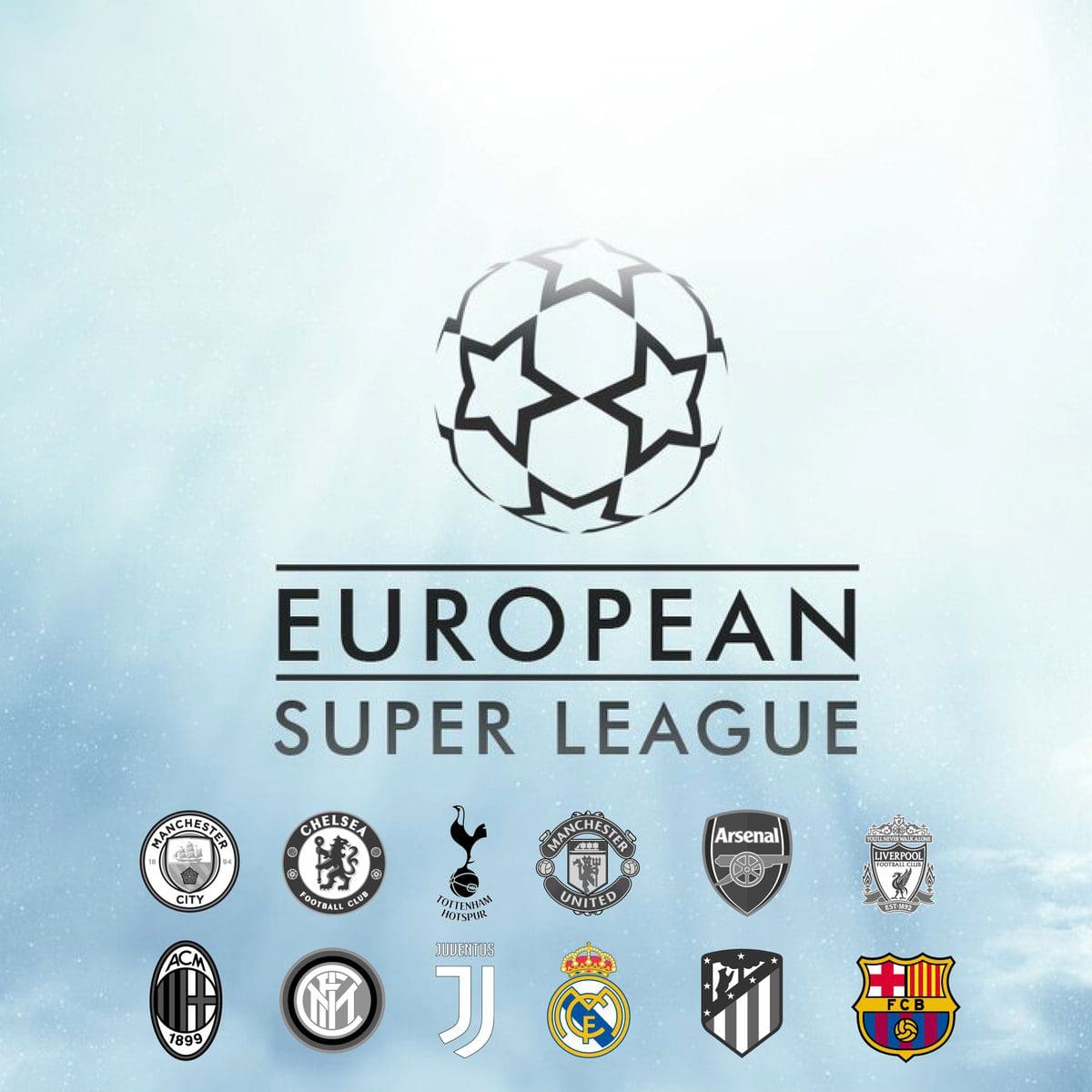

AFTER a barrage of criticisms, protests and righteous indignation, the European Super League became the shortest football competition in human history: born on Sunday, April 18; dead on April 20, 2021.
The brains behind the breakaway competition would have expected some resistance because it was a disruptive concept and human beings are naturally averse to change.
However, they did not anticipate the monumental scale of push back that met its announcement. A vast majority of the football world vehemently protested the idea when it was announced on Sunday night.
To football lovers and those that run the game, the change the European Super League was bringing was so far-reaching it could end the beautiful game as we know it.
Although on the surface, the premise of the Super League looked simple, it was far more complex than that. The big idea was to make more money by providing more entertainment through more ‘big matches’.
Its proponents say it will help ‘save’ football,
its opponents insist it will ‘kill’ the sport. So, how was the European Super League supposed to work?
It was designed to rival the UEFA Champions League, currently the highest-profile and most lucrative club football competition in the world. The Super League has 12 founding members from three of Europe’s top leagues: six from the English Premier League: Arsenal, Chelsea, Liverpool, Manchester City, Manchester United and Tottenham Hotspur; three from the Spanish LaLiga: Barcelona, Real Madrid and Atletico Madrid; and three from the Italian Serie A: Juventus, AC Milan and Inter Milan.
The ultimate plan was that these 12 clubs would be joined by three more clubs, and all 15 would become permanent members of the Super League, meaning they would never be removed regardless of their performances and results. To complete the 20-team format, five clubs were to be added to the 15 annually through a qualification system, and their fixtures were to be played midweek just like the Champions League.
To start the Super League, €3.5 billion had been sourced, mostly from American bank JP Morgan, and each participating club was guaranteed €300m from the onset. The whole idea sounds simple, straightforward and money-spinning, yet so many people involved in football are against it.
From FIFA to UEFA to football associations across Europe, administrators, politicians, fans, pundits and even players themselves, there was widespread resistance and condemnation of the Super League. UEFA President, Alexander Ceferin, called the men behind the breakaway league ‘snakes’ and threatened to ban players from the participating clubs from featuring in the European Championship for their national teams.
The Super League was purely motivated by greed and fuelled by arrogance. The commercial venture was against everything football stands for — it was mostly against the spirit and competitiveness of the game.
Football thrives on the reward and punishment system: you get promoted for good results and get relegated if you fail. In the Super League, the founding members would have been insulated from punishment: their income and places in the league would be intact year in, year out; results would not really matter. They could lose every match for the whole season and they would be back the following season.
Football fuels dreams provoke emotions and offer hope. One of the greatest attractions of the sport is that small teams can dream big and cause an occasional upset.
For instance, FC Porto winning the UEFA Champions League and Greece triumphing at the European Championship in 2004 were unexpected. Leicester City winning their one and only English Premier League title in 2016 defied all logic, and Denmark surpassed all expectations by winning the European Championship in 1992 after having been initially unable to qualify but got a spot because of the civil war in Yugoslavia.
If these competitions had followed the Super League model, none of the teams that caused these major upsets would have been given access to the competitions they eventually won.
Curiously too, many of the 12 teams that signed on to the Super League are anything but ‘super’ at the moment. Liverpool, Tottenham Hotspur, Arsenal and Chelsea are currently outside the top four places in the English Premier League, while Juventus are just clinging to fourth place in Serie A.
Most of the 12 have not been part of the European elite for years, relying mostly on past glories. Manchester United last won the Premier League title under Sir Alex Ferguson who resigned in 2013. AC Milan has not qualified for the Champions League since 2014, while Inter Milan have qualified for the Champions League only four times in the last 10 years.
Arsenal has not taken part in the Champions League for five years neither has the North London club won the Premier League title since 2004 and their neighbours, Tottenham Hotspur, last won any kind of trophy in 2009!
Financially, more than half of these ‘super’ clubs have been in serious debt for years owing to mismanagement of the hundreds of millions of Euros they have made these past few years of exponential growth of football. Yet they want to make more by creating an exclusive league.
The Super League is modelled after American sport where the same teams remain in the same leagues for eternity, with no demotion or promotion. The only change in the American system is when an ‘expansion franchise’ joins the league and increases the number, or when a franchise changes to the base.
The American owners of Manchester United, Liverpool and Arsenal, as well as European football’s obsession with cracking the American market, have certainly influenced the creation of the Super League. But football is simply different from basketball, baseball or American football.
Football fans are used to seeing their teams sink or swim, regardless of the club’s size. That is why Arsenal fans were worried about relegation earlier in the season when their team was close to the bottom of the league table. That is why West Ham and Leicester City fans (inspired by Nigerian stars Kelechi Iheanacho and Wilfred Ndidi) can hope for a top-four finish and qualification for the Champions League as well as an FA Cup triumph.
Another major complaint about the Super League is the confusing message. These teams, according to the Chairman of the Super League, Florentino Perez, want to play in high-profile matches every week, where Manchester United for instance will not have to face Istanbul Basaksehir or Real Madrid will not battle Shakhtar Donetsk.
Interestingly, the ‘smaller teams won twice in the four matches involving these aforementioned sides in the Champions League this season.
Still, these teams want to remain in their domestic leagues where Manchester United would have to play against Crystal Palace and Real Madrid against Cadiz. Where is the consistency? Do they want to have their cake and eat it?
Thankfully, the Super League was not allowed to go ahead, as it would have essentially sucked most of the excitement out of the game. First, there will be a glut of big fixtures, so much so that the attraction for huge games like Juventus versus Barcelona or Chelsea against Arsenal will dwindle.
Nobody wants to watch heavyweights going at each other every week. What makes these big matches special is the build-up, anticipation, the pre-and post-match analysis and the action itself. Fans want to watch El Clasico or the Manchester Derby twice or thrice in a year. When it happens six, seven times in a season, it surely loses its lustre — it becomes watered down.
Also, with European football guaranteed for the big sides, there will be no need to fight to qualify for the Champions League and Europa League as Liverpool, Chelsea and Tottenham are currently doing in England.
Once the Super League clubs realise the domestic title is out of reach, they will simply lose interest and field weakened teams in domestic league matches, devaluing the competition.
They will not be participating in the Champions League and Europa League anyway, so there would be no need to battle for a top-four or top-six finish.
Essentially, domestic football would be devalued on the altar of greed and avarice. If the Super League had succeeded, the rich clubs would probably have got even richer as most of the broadcast revenue would go to them, leaving the smaller clubs gasping for air when the television rights spending on the domestic league would have dropped drastically.
The Super League might be good for a select few, but it will hurt the sport in general, not save it as Perez claimed. Unlike the famed Robin Hood who stole from the rich to help the poor, Perez and his gang are plotting to rob the poor to sustain the affluent.
But they did not bargain for the powerful resistance that ended their greedy and arrogantly exclusive venture before it could take off. UEFA, that is not entirely innocent but still preferable to Perez and his gang, started the fight and push back. Coaches, pundits and the other clubs took up the fight and applied more pressure.
By the time football fans took the fight to the streets and held up Chelsea’s bus as they wanted to drive into Stamford Bridge for Tuesday night’s Premier League fixture against Brighton, the battle was over. Football won.
The English clubs were the first to cave in on Tuesday night, all six of them issuing official statements overnight of their intent to withdraw from the Super League.
By mid-day, Wednesday, Inter Milan and AC Milan had joined the withdrawal parade. Juventus chief, Andrea Agnelli, one of the breakaway competition’s founders, admitted on Wednesday that the Super League was no longer tenable.
The Super League released a statement that promised a ‘reshape’ of the project. They did not clearly concede, but everyone in football knew it was over.


2 comments
… [Trackback]
[…] Read More Info here on that Topic: naijatimes.ng/european-super-league-dead-on-arrival/ […]
… [Trackback]
[…] Read More Info here to that Topic: naijatimes.ng/european-super-league-dead-on-arrival/ […]
Comments are closed.