
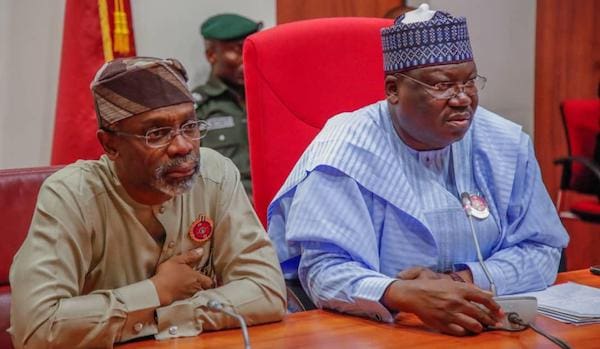

IN the last two weeks, both chambers of the National Assembly, the Senate and the House of Representatives, have been crisscrossing the country for public hearings. Sitting in centres across the six geo-political zones, federal legislators have been holding sessions to collate the views, ideas and opinions of a broad spectrum of Nigerians.
The crux of these activities revolves around the age-long quest for a workable, effective and acceptable national constitution. Ironically, this is not the first time effort is being made to alter critical sections of the 1999 constitution. The first, second and third alterations to the 1999 constitution were effected and signed into law during the tenure of the sixth National Assembly between 2007 and 2011. The seventh National Assembly, which sat from 2011 to 2015, undertook a long-winding review, which ended in futility despite the huge amount of funds spent.
The amendments were vetoed by President Goodluck Jonathan, who later dragged the National Assembly to the Supreme Court when the lawmakers began moves to override the veto.
Taking a cue from its predecessors, the eighth Assembly which held sway from 2015 to 2019 decided to adopt a piece meal approach to the review process by setting up two separate committees — one for the House of Representatives and another for the Senate.
Instead of encapsulating all the amendments into a single bill like their predecessors, the strategy of the eighth Assembly was anchored around avoiding the pitfalls of the past. They therefore adopted a piecemeal approach. Nonetheless, the amendments had not gone to the State Houses of Assembly for concurrence of two-third majority before the tenure of the 8th Assembly lapsed. Notwithstanding these efforts and the monies, which have been sunk into the process, there remains a groundswell of critical voices clamouring for a people-driven grundnorm.
Consequently, the 1999 Constitution has remained a grotesque document, which has alienated many ethnic nationalities, just as it has been indicted as one of the major reasons for Nigeria’s failure to realise its full potentials. As it stands, the Constitution has been clearly and derisively rejected by the socio-cultural groups, especially those representing various ethnic groups within the polity.
With a vast majority of Nigerians continuing to clamour for fresh people-driven template to propel democracy and good governance, it is apparent that even the efforts being put into the current review process would not be far-reaching enough to gain the legitimacy and backing, which can be given if citizens are happy about the content of the document. At the public hearings by the Senate Committee for instance, citizens who were given the opportunity to make presentations on the substance of their memorandum could only do so for three minutes.
Worse still, the body language of a good number of the members of the Committee in some of the centres observed, gave the impression that they have already made up their minds on the areas they are inclined to tweak in the document.
In terms of participation also, there were clearly no attempts to strategically communicate the review process in the local languages. The drivers of the process were mostly men, with no attempt to make the process gender-friendly and socially inclusive. At the venue of the public hearings, there were no sign language interpreters, meaning that many people with disabilities were unwittingly excluded from the deliberations. For the non-English speaking audiences too, it was definitely a struggle catching up with the key details of the review. This was apparent in most of the centres as there were no efforts made to translate the proceedings to audiences, which are not very adept in English language. These are just some of the observable gaps, which point to the lack of depth in terms of citizens’ participation and inclusion.
Apart from the fact that the review process has presented some space for citizens to ventilate and make recommendations at a very troubling time for the country, there is very little to indicate that the outcomes of the review process would radically alter the current drift in the polity. Without sounding pessimistic, the entire review process, like the efforts before it, has mainly come across as a talk shop for the political elite, with a thin veneer of popular participation.
Actross the country, the popular sentiment is that the process is yet another jamboree, and that it lacks the rigour to birth a document, which will address the popular demands for true federalism and devolution of powers from the current bloated and outsized federal bureaucracy.
Importantly too, there remains a lot of anger in the polity over the historic lie told in the preamble of the 1999 constitution, which has in effect for two decades conveyed the very false impression that “we the people” of Nigeria came together to deliberate on the document and collectively approved it as the nation’s constitution.
The reality is that no amount of incremental whitewashing would address the falsehood in the preamble of the 1999 constitution, which wrongly claims collective national action in producing, endorsing and operating the document. It is therefore not particularly surprising that Nigerians have continued to agitate for a new constitution, which derives its legitimacy from citizens. This falsehood in the opening clause of the constitution is apparently the reason why leading figures in academia, civil society, labour unions, ethnic, professional and cultural groups, have been persistent in making calls for a constitution reflecting the diversity and complex character of the Nigerian society.
Unfortunately, since the advent of the current democratic dispensation in 1999, these calls and the laudable motivations driving them have been largely ignored by the political class. In the light of the flaws, and the defects in the 1999 constitution, Nigeria’s best option is to adhere to the admonitions of well-meaning Nigerians who have called for an urgent national dialogue to douse the tension in the land, and a chart a road map for the unity, stability and orderly governance of the country. To derive the legitimacy of the people at the grassroots, the proceedings and agreed points from such a confab should be presented clause by clause for the Nigerian people to vote on in a referendum. That way, the constitution from such a process would be widely accepted and would bear the true stamp of “we the people.”


4 comments
It is an obvious fact that a lot of citizens are being excluded by omission or intentional commission. This questions the intention of the exercise which like many others, appear to be adorned with formalities with no true substance
… [Trackback]
[…] Information on that Topic: naijatimes.ng/constitution-review-fashioning-a-document-to-foster-national-unity/ […]
… [Trackback]
[…] Read More here to that Topic: naijatimes.ng/constitution-review-fashioning-a-document-to-foster-national-unity/ […]
… [Trackback]
[…] Find More Information here on that Topic: naijatimes.ng/constitution-review-fashioning-a-document-to-foster-national-unity/ […]
Comments are closed.