

THE other day, an alarm was raised by the Federal Capital Territory (FCT) chapter of the Real Estate Developers Association of Nigeria (REDAN) to the effect that drug barons, money launderers and other elements of the underworld have been using the sector as haven to hide proceeds of their crimes. REDAN subsequently took a laudable step by setting up a 10-member disciplinary committee to “sanitise” the real estate sector.
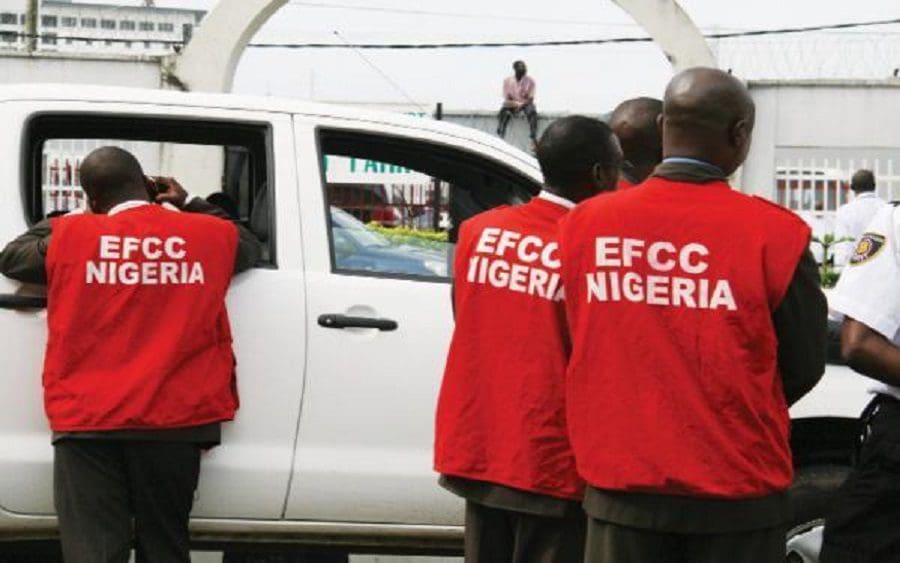
The revelation from the body of real estate developers came on the heels of a similar announcement by the Economic and Financial Crimes Commission (EFCC) to the effect that the anti-graft agency was on the trail of several real estate developers in Abuja, Lagos and Port Harcourt. The EFCC Chairman, Abdulrasheed Bawa, reportedly lamented that 90 to 100 percent of the proceeds of corruption was being funneled into real estate development.
Anti-corruption agencies appear to have reached the conclusion that there is a nexus between illicit monies and the proliferation of housing estates across Nigeria’s major cities. Against the background of an economy in dire straits, as reflected in rising inflation, worsening inequality and poverty across the land, it is worth the while to know where the monies funding the conspicuous property development in Nigeria’s major urban centres are coming from.
Are these funds from Foreign Direct Investments targeting the property sector or are they proceeds of criminal activities, which undermine the peace, stability and orderly governance of Nigeria? Finding answers to this question makes it critical for the authorities to keep a close watch of activities in the sector.
Nonetheless, the most compelling rationale for a closer scrutiny of financial inflows to the sector is national security. Nigerian authorities have to take deeper interest in identifying the sources of the funds being used to develop swathes of housing estates in big cities. This task is of utmost importance because once illicit monies cross into legitimate activities like real estate development without being detected, the implication is that criminals would have successfully laundered their proceeds of crime.
This possibility is not good for a country grappling with the multiple manifestations of insecurity, including terrorism, militancy, armed banditry, kidnapping, herdsmen attacks and other forms of violent crimes. Successfully laundered monies could then be reused by criminals to fund further cycles of violence and criminality. The consequence is that society would fall into a cycle of perpetual instability and criminality.
The effect of illicit monies and proceeds of crimes on the economy are similarly devastating. Monies earned by elements of the underworld such as drug dealers, kidnappers and terrorists, are not from organic economic activities. As such, such monies distort the economy by entering into the economic system with corresponding activity of value. Criminals who get monies from the sale of illicit drugs or from ransoms paid to them as kidnappers can disrupt pricing mechanisms for goods and services because they did not do legitimate work to earn such monies.
The distortions caused by the influence of proceeds of crimes in the system can result in arbitrary changes in prices, causing inflation, thereby making goods and services unaffordable for those earning legitimate income. Critically too, tax revenues, which should have helped fund government programmes cannot be generated from illicit monies, which have been successfully laundered.
While it is laudable that there are patriotic associations like REDAN, which fully understand the threat posed by the use of the sector as haven for ill-gotten wealth, the buck remains on the table of the government. Although, professional associations can help in enlightenment, information sharing and whistle blowing, it is only the law enforcement institutions that have the mandate to investigate, prosecute and hold the criminal elements accountable. The EFCC, and the National Drug Law Enforcement Agency (NDLEA), the Police and other security agencies have a critical role to play in ensuring the space is not comfortable for criminals who want to use real estate as a haven for hiding their proceeds of crime.
The law enforcement institutions must understand that their mandate in this area is to protect the rest of society from the harmful effects of illicit wealth being laundered through real estate. However, it is pertinent to state that the law enforcement agencies alone cannot achieve the goal of smashing criminals hiding funds in the housing and property sector. To rid the nation’s real estate sector of these elements, there has to be synergy within a broad spectrum of stakeholders. Among these stakeholders are the banks, the financial intelligence units of the government, tax bodies, and estate surveyors.
From such initial processes as the registration of building plans to the payment of sundry fees, the government should be able to collect information on the individuals and companies involved in the sector. This implies a real need for a comprehensive database, which would serve as a repository of information on property development.
The timely sharing of data among the law enforcement and regulatory institutions will help the authorities quickly figure out who is doing what in the sector. It will also pin point beneficial owners of massive properties, and ultimately the sources of the monies they are bringing into the sector. This kind of system involving a diverse group of government stakeholders cannot function well in the absence of mandatory collaboration. Government should therefore put in place a framework, which would mandate collaboration between the various agencies to ensure results are achieved.
An important observation to make is that the desperation of criminals to hide ill-gotten wealth is a sign of some progress in terms of making the financial system less receptive to the proceeds of crime. In the past, criminals could comfortable keep their loots in the banking system without the authorities raising an eyebrow. The raft of reforms, which have made the tightening of the noose possible, must be commended and deepened.
In the end, while it is critical to closely watch how monies are flowing into the real estate sector, the authorities have to strike a balance between stopping illicit flows and encouraging investments in the sector. As at 2018, Nigeria’s housing deficit was put at 20 million houses. Government alone has not been able to meet this demand, especially for low cost housing. Private investment is therefore a good alternative insofar as the sources of the funds are not from corruption, terrorism and illicit drugs.


4 comments
… [Trackback]
[…] Read More on on that Topic: naijatimes.ng/preventing-use-of-real-estate-as-haven-for-proceeds-of-crime/ […]
… [Trackback]
[…] There you can find 73046 more Info on that Topic: naijatimes.ng/preventing-use-of-real-estate-as-haven-for-proceeds-of-crime/ […]
… [Trackback]
[…] Read More here on that Topic: naijatimes.ng/preventing-use-of-real-estate-as-haven-for-proceeds-of-crime/ […]
… [Trackback]
[…] Read More Information here to that Topic: naijatimes.ng/preventing-use-of-real-estate-as-haven-for-proceeds-of-crime/ […]
Comments are closed.