
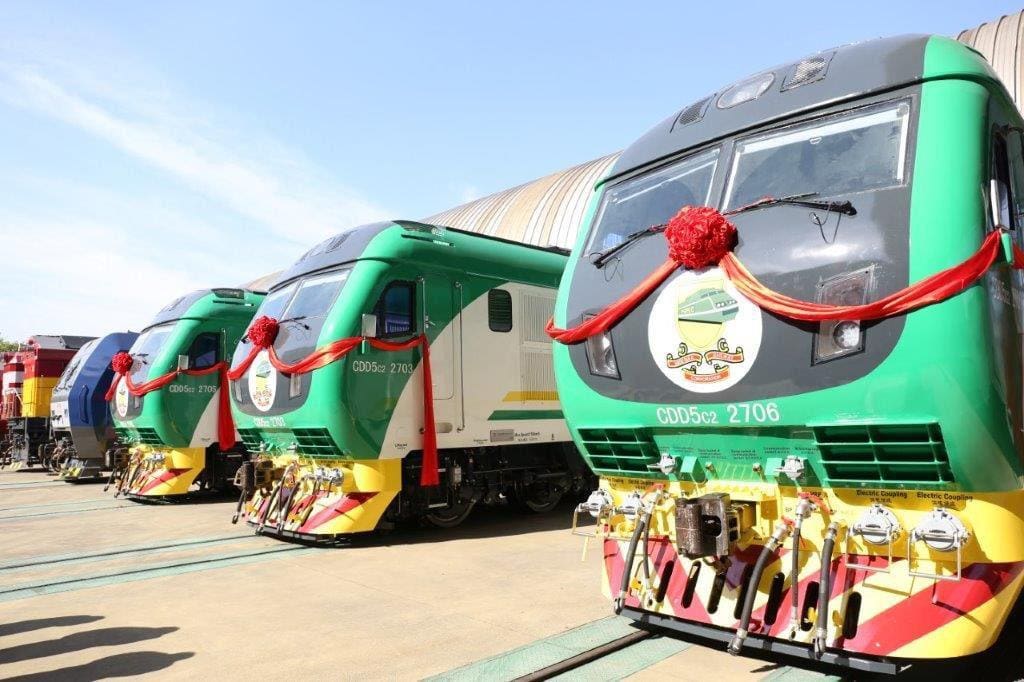

ON Thursday October 21, 2021, Nigerians woke up to another dimension to the troubling security situation in the country, as there were reports that a portion of the busy Abuja–Kaduna rail line had been attacked by suspected terrorists the previous night.
It was an addition to the horrors that Nigerians have been buffeted almost on a daily basis from different angles. When Nigerians gather these days to discuss, the topic is most likely to be on the economy or the challenging security situation in the country. As the country struggles through all manner of attacks by criminal elements and insurgents of different classifications, an attack on a critical infrastructure such as the railway line introduces another very disturbing angle to the whole situation. Everyone is worried.
The question now is: where next? After attacking the busy railway line between Abuja and Kaduna, concerns are naturally expressed as to the next target of the insurgents. It is becoming very worrisome that with the increasing boldness of criminals, insurgents and terrorists, no place seems safe anymore. Could the transportation sector be the next target after threatening the oil and gas sector and crippling the agriculture sector with very telling effect on food security and the manufacturing sector?
As the Abuja–Kaduna expressway became a very dangerous link road to the northern part of the country, commuters saw the Abuja–Kaduna–Kano rail route as a safer alternative. It had served that purpose conveniently until recent threats that eventually resulted in the Wednesday night explosion on a section of the line between Dutse and Rijana in Chikun Local Government Area of Kaduna State, a development which disrupted rail operations for some days.
Although the incident on its own has heightened the spectre of insecurity in the country, more troubling has been the issue of the willingness or otherwise of security agencies to confront such threats before they are actually carried out with tragic consequnces. It was variously reported that there was an intelligence report about the impending attack on the rail line, but we cannot be too sure if anything was done about the report since the incident happened as reportedly indicated on the advance intelligence signal.
We are not oblivious of the fact that the widespread occurrence of violent insurrections across the country has stretched the capacity of security operatives to act decisively; but we are concerned, if the reports are anything to go by, that credible intelligence on such matters was neglected, leading to such a monumental disaster. When it is perceived that the response mechanism is either not there or ineffective, it becomes more worrisome.
Concerns are variously being expressed in several quarters about the brazen way criminals of different hues are operating with impunity. Some assume it is the kid-glove treatment given to some categories of violent insurgents that has led to the brazen nature of violence entrepreneurs and the seeming inability of the security agencies to deal decisively with the situation. There is the fear that if nothing decisive is done about the attack on the railway, other means of mass transportation might be targeted, given the level of sophistication of some of the insurgent groups.
It might be necessary to draw the attention of the authorities to the fact that the terrorists have to get it right just once to make a profound statement; but government has to get it right always to deter them from inflicting pain of unimaginable proportion on the society. It is worthy of note that terrorists, insurgents and bandits have different levels of sophistication and all they need to do is just get it right once and that gives them the confidence and leverage to do more.
It would be uncharitable to put all the blame on the federal government or to suggest that the security agencies have not been trying their best, but security issues go beyond trying; it requires a more encompassing and co-ordinated approach to decisively deal with the situation. Everyone and every unit must be involved to make the approach total and the action successful. The people, communities, local and state governments must all be involved in the process of intelligence gathering and making information available to the relevant agencies to carry out prompt action. The issue might not necessarily be a failure of intelligence but a question of response to available intelligence.
The agencies involved must be ready to act promptly on available intelligence to nip an impending catastrophe in the bud. Often, intelligence agencies, whistle-blowers and informants are frustrated when the information supplied is not acted upon, or compromised. When compromised, informants become endangered. Some instances have been recorded in Kaduna, Zamfara and Imo States where suspected informants were dragged out and killed by criminal elements.
Although state governors claim they are not in control of security agencies and have little authority over issues of security, it is well known that the same security operatives they claim not to have authority over are deployed by them whenever it suits them especially during periods of elections, to intimidate their opponents. It is a matter of priority. They collect security votes that are diverted to other uses. The Governor of Borno State, Professor Babagana Zulum, has been working with security agencies in his state to great effect.
Also, the attitude of the people to the issue of security is not helping matters. Apart from the complacent nature of the communities in dealing with or exposing criminal elements in their midst and spreading fear instead of confronting the lesser criminals who graduate into more deadly species, some people are more fixated with the characterisation of criminals, as if any grade of criminals is beneficial to the society. The people have abandoned the initial responsibility of securing their own immediate environments. They create situations that encourage criminality and indulge insurgents only to complain and lay blames when they become targets. We must emphasise that security is a matter for everyone.
Although there was a loud cry, not too long ago, about allowing security chiefs to remain on seat for too long, it is our considered opinion that it is also not helpful changing them too frequently, particularly the Inspector General of Police, as this does not allow for proper strategic planning and consolidation of the tactical orientation of the policing architecture. Each new IG comes with his own ideas which may not necessarily tally with those of his predecessor(s). Whatever was built is either dismantled and adjusted or completely abandoned for a new one; and this does not help in consolidation of operational capacity.
At the stage the country is today, we cannot afford to continue experimenting with personal ideas, we need a comprehensive overhaul of the entire security system to build enough capacity to deal with the present level of insecurity in the country. If left unchecked, the criminal elements parading the entire spectrum of the country under whatever names may collectively grow into a monster of unimaginable proportion. It is therefore important that we tackle them as quickly as possible. The relevant authorities must increase their intelligence network and improve on-sight security. We are in a mess already; we need to get out of it immediately.

