

*Conference marks 60th anniversary of maiden African Literature and Writers Conference held in Makerere, Kampala
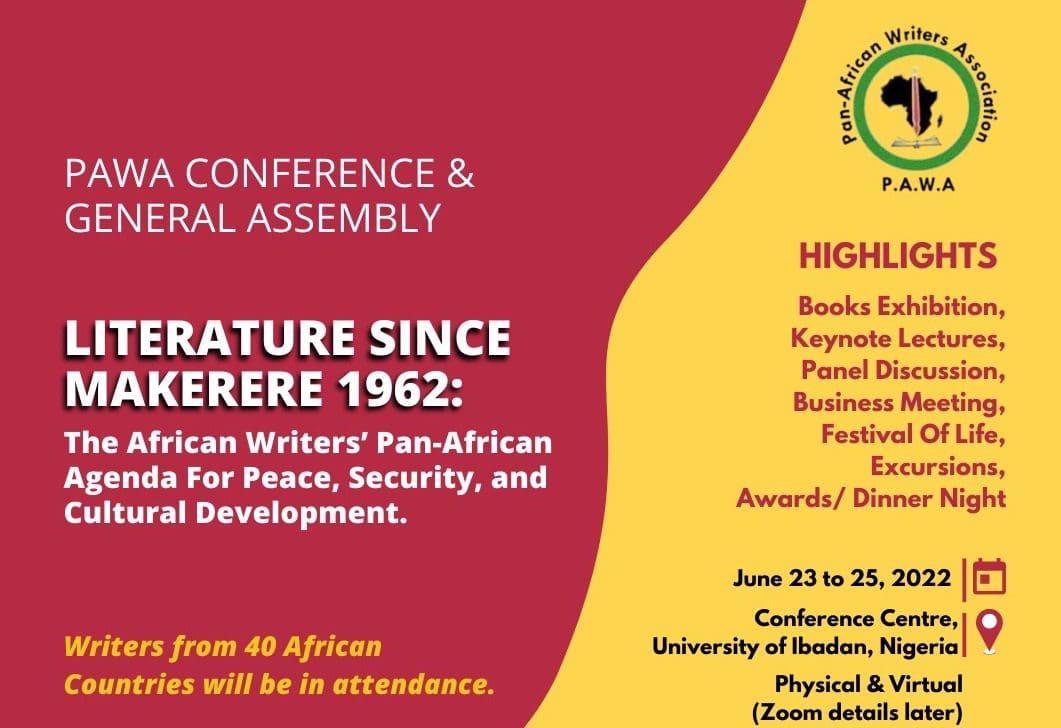
SINCE Thursday June 23, writers from around Africa have been pouring into Ibadan the Oyo state capital for the ‘African Literature Since Makerere’ conference organised by the Pan African Writers Association, PAWA, in collaboration with the Nigerian Academy of Letters, NAL, and Association of Nigerian Authors, ANA.
The conferencing is addressing the theme, “Literature Since Makerere 1962: The African Writers’ Pan-African Agenda For Peace, Security and Cultural Development.” It ends on Sunday, June 26 with departures of the participants, according to Dr Wale Okediran, the Secretary-General of PAWA.
About 48 African countries are said to be represented at the conference which kicked off on Friday, June 24 at the Conference Centre, University of Ibadan, Nigeria, and with keynotes on the theme by the renowned expert on African Literature, Professor Bernth Lindfors and award-winning Egyptian Journalist and Poet, Ashraf Aboul-Yazid.
Lead papers are expected to be presented by the dramatist Prof Femi Osofisan (Nigeria) Virginia Phiri (Zimbabwe) Professor Sarah Agbor (Cameroun) among others. This will be followed by panel discussions in plenary session on the issues raised will then lead to the release of a communique.
Other highlights include a Cocktail, Book Exhibition, Excursion to some areas of interest in Ibadan, a Festival Of Life where writers can read from their works as well as a an Awards/Dinner Night. The PAWA will hold its first General Assembly in 30 years, which will be used to address issues pertaining to PAWA including the election of the Association’s ruling body, the Council.
*****
A release from the Accra-Ghana- based PAWA Secretariat, issued by the Secretary General, Dr Wale Okediran, the Medical Doctor/Writer, and former President of Association of Nigerian Authors, ANA, reads:
A statement from PAWA Secretary-General, Dr Wale Okediran, on behalf of the organizers, explained that the event would, among others, examine the progress of African Literature since Makerere and forge a meaningful path for its future.
“The Conference will also consider the role of African Writers in a Pan African Agenda for Cultural Development, Peace and Security against the backdrop of a continent in the grips of insurgencies, wars and coups. In a global age beset by wars, insecurity, human displacement, coups and insurgency, the conference could not have come at a better time.
“The Conference, which is in line with Article 9 of PAWA’s aims and objectives – to promote peace and understanding in Africa and the world through literature – will be conducted in Arabic, English, French, Portuguese and Swahili which are the five working Languages of PAWA. The event will lead to the publication of the conference proceedings and the release of a communique and blueprint of actions that are expected to address the problems to be discussed. These documents will thereafter be shared through advocacy visits by PAWA members in their respective countries to political, community, religious and civil society leaders.”
*****
Preamble:
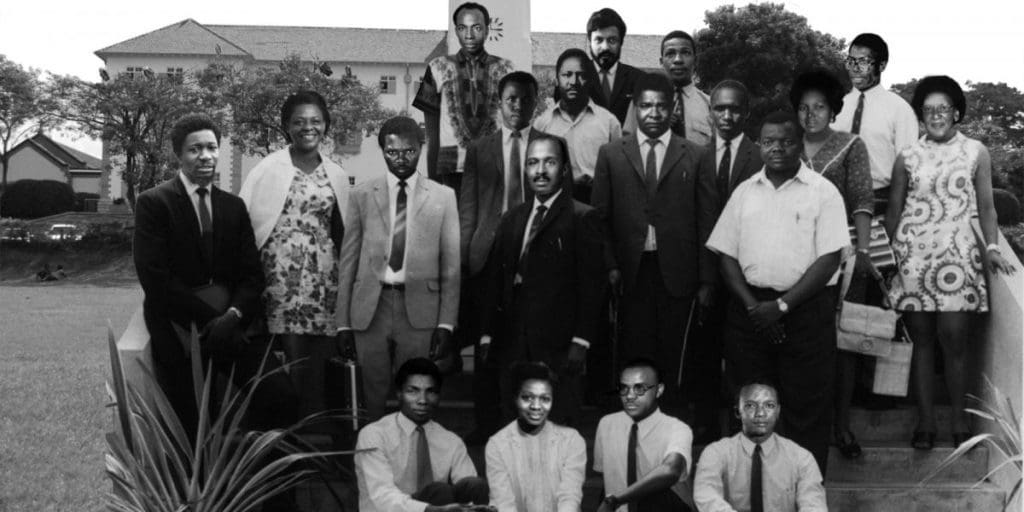
IN June 1962, a conference of African literature in the English language, the first African Writers Conference, was held at Makerere University College in Kampala, Uganda. Officially called a “Conference of African Writers of English Expression”, it was sponsored by the Congress for Cultural Freedom and the Mbari Club in association with the Department of Extra-Mural Studies of Makerere, whose director was Gerald Moore.
The conference was attended by many prominent African writers such as, Wole Soyinka (later Nobel Laureate in Literature), John Pepper Clark, Obi Wali, Gabriel Okara, Christopher Okigbo, Bernard Fonlon, Frances Ademola, Cameron Duodu, Kofi Awoonor; Ezekiel Mphahlele, Bloke Modisane, Lewis Nkosi, Dennis Brutus, Arthur Maimane; Ngũgĩ wa Thiong’o (then known as James Ngugi), Robert Serumaga, Rajat Neogy (founder of Transition Magazine), Okot p’Bitek, Pio Zirimu (credited with coining the term “orature“), Grace Ogot, Rebecca Njau, David Rubadiri, Jonathan Kariara; and Langston Hughes.
The conference was “not only the very first major international gathering of writers and critics of African literature on the African continent; it was also held at the very cusp of political independence for most African countries.”
The conference dealt with the issue of how the legacy of colonialism had left the African writer with a dilemma with regard to the language choice in writing. The questions raised and debated at the conference were:
- What constitutes African literature?
- Is it literature written by Africans, literature that depicts the African experience?
- Does African literature have to be written in African languages?
At the conference, several nationalist writers refused to acknowledge any literature written in non-African languages as being African literature. Ngũgĩ noted the irony of the conference’s title, in that it excluded a great part of the population that did not write in English, while trying to define African literature but accepting that it must be in English. As he would describe it in his 1986 book Decolonising the Mind: The Politics of Language in African Literature: “The bullet was the means of the physical subjugation. Language was the means of the spiritual subjugation.”
In an essay entitled “The Dead End Of African Literature”, published in Transition in 1963, Obiajunwa Wali stated: “Perhaps the most important achievement of the last Conference of African Writers of English Expression held in Makerere College, Kampala, in June 1962, is that African literature as now defined and understood leads nowhere. The conference itself marked the final climax on the attack on the Negritude school of Léopold Senghor and Aimé Césaire…. Another significant event in the Conference, is the tacit omission of Amos Tutuola.”
Writing of the conference 50 years later, James Currey in Leeds African Studies Bulletin quoted Chinua Achebe as saying in 1989: “In 1962 we saw the gathering together of a remarkable generation of young African men and women who were to create within the next decade a corpus of writing which is today seriously read and critically valued in many parts of the world. It was an enormously important moment, and year, in the history of modern African literature.”
The conference is regarded as a major milestone in African literature, and is thought to have defined many African authors’ style of writing. For example, Currey notes that Ngũgĩ wa Thiong’o as a young student ventured to ask Chinua Achebe at the conference to read the manuscripts of his novels The River Between and Weep Not, Child, which would subsequently be published in Heinemann’s African Writers Series, launched in London that year, with Achebe as its first advisory editor. Ngũgĩ subsequently rejected Christianity in 1976, and changed his original name from James Ngugi, which he saw as a sign of colonialism. He also resorted to writing in the Gikuyu language instead of English.
“SOAS African Literatures Conference – 55 years after the first Makerere African Writers Conference” was organised as a memorial event taking place on 28 October 2017, with a keynote speech by Wole Soyinka.
From Makerere to Ibadan
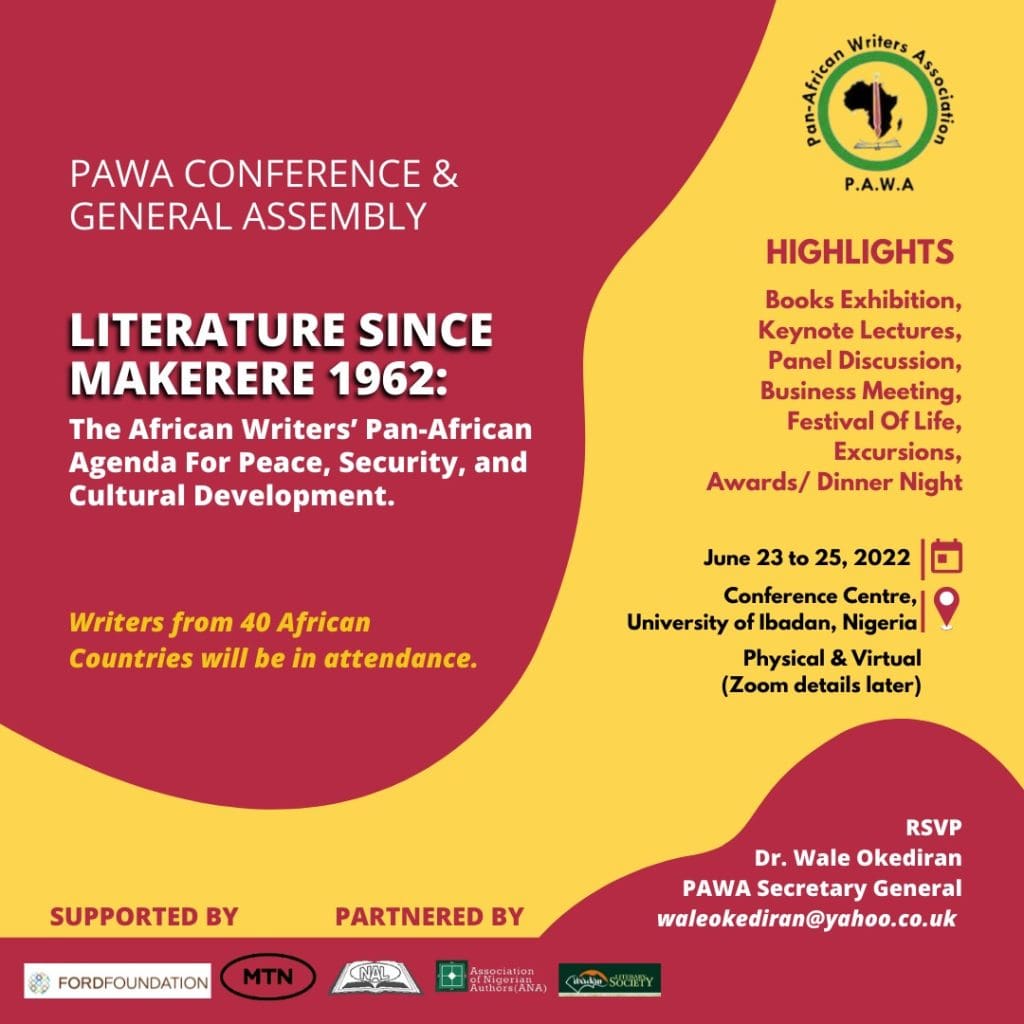
IN commemoration of the 60th anniversary of the maiden edition of the African Literature And Writers Conference which took place in Kampala, Uganda, the Pan African Writers Association (PAWA), the Nigerian Academy Of Letters (NAL) as well as the Association Of Nigerian Authors(ANA) will organise a Writers International Conference at the University of Ibadan, Nigeria on Friday June 24 2022.
The Conference which will be conducted in a hybrid fashion (Physical and Virtual) is expected to host Writers, Academicians and Diplomats from about 40 African countries. Already, PAWA National Writer’s Associations from Ghana, Congo Kinshasa, Togo, Nigeria, Gabon, Cameroun, Zambia, Kenya, Malawi, Zimbabwe, Sierra Leone, Namibia, Ethiopia, Morocco, Rwanda, Sudan, Egypt, Tunisia, Liberia, Mauritania, South Africa, Tanzania, Chad, Botswana, Burundi, Benin, Somaliland, Ivory Coast, Guinea, Niger, Equatorial Guinea, Djibouti, Burkina Faso, Uganda, Gambia, Mozambique, Angola and Algeria have confirmed their participation. The Writers will also be joined by other distinguished Writers, Scholars and Statesmen from the African continent and the Diaspora.
The historic event will examine the progress of African Literature since Makerere. Even though African Literature has come of age in literary productivity and achievements in all genres, the Conference is also expected among other things to define and forge a meaningful path for its future.
The Conference will also consider the role of African Writers in a Pan African Agenda for Cultural Development, Peace and Security against the backdrop of a continent in the grips of Insurgencies, Wars and Coups. In a global age beset by Wars, Insecurity, Human Displacement, Coups and Insurgency, the Conference could not have come at a better time.
The Conference which is in line with Article 9 of PAWA’s Aims and Objectives – To Promote Peace And Understanding In Africa And The World Through Literature – will be conducted in Arabic, English, French, Portuguese and Swahili which are the five working Languages of PAWA. The event will lead to the publication of a Proceedings of the Conference and the release of a Communique and Blueprint of actions that are expected to address the problems to be discussed. These documents will thereafter be shared through Advocacy visits by PAWA members in their respective countries to Political, Community, Religious and Civil Society Leaders.
Literature to the rescue
APART from the long standing cases of Civil wars and Insurgencies in some parts of the World especially, African countries such as Ethiopia, Libya, South Sudan, Algeria, Cameroon, Nigeria and Congo Kinshasa among others, the past two years, have witnessed seven coups and coup attempts in African nations. In Burkina Faso, Chad, Guinea, Mali, and Sudan, military leaders succeeded in seizing power while they failed in Niger and Guinea-Bissau.
Africa’s current wave of coups began in August 2020, after former Malian President Ibrahim Boubacar Keïta was arrested at gunpoint by government forces. The subsequent series of African coups share some commonalities, such as political and economic instability and weak democratic institutions.
In Mali and Burkina Faso, for example, the governments were dealing with violent extremism from ISIS and al-Qaeda affiliates in the Sahel. Between 2020 and 2021, according to recent reports, attacks in the region by militant Islamist organizations increased 70 percent, from 1,180 to 2,005In terms of the differences, in Mali and Burkina Faso, the juntas have claimed that insecurity and an instability with threats from violent extremist groups has precipitated the coups. In Guinea-Bissau, for example, the recent attempted coup is one of many since the nation gained its independence from Portugal. The nation has struggled to establish democratic traditions and institutions; notably, President Umaro Sissoco Embaló — the man whom the failed coup tried to oust — came to power in 2020 after a contested election, which was still being reviewed by the nation’s Supreme Court when Embaló took office.
And in Guinea, a separate country that borders the smaller Guinea-Bissau, last year’s successful coup came after President Alpha Condé changed the constitution and mounted a power grab that gave him a third term in office. Although he initially won a democratic election in 2010 — the first Guinean leader to do so — his power grab, combined with corruption and deep inequality, apparently provided the impetus the military needed to mount a takeover last September.
It is these kinds of unrests and insurgencies which have been confirmed by several authorities as being a threat to the African continent that PAWA, NAL and ANA plan to address at the forthcoming Conference.
Various International Think Tanks and Organizations Including the Economic Community of West African States (ECOWAS) have convened several times to discuss the unrest, which the ECOWAS Chair President Nana Akufo-Addo of Ghana described as “contagious” and a threat to the entire region. Even though some countries as well as ECOWAS have imposed some series of Economic and Cultural sanctions against the erring countries, the spate of unrests and insurgency still linger on in many of the affected countries.
Since PAWA is a continental body made up of writers from all over Africa, the primary geographical region of focus will be Africa with some extension to countries outside Africa which still has some very strong economic and cultural control on the affected African countries. The justification for this kind of approach is the fact that Writers as the conscience of the society cannot afford to fold their arms and watch these unfortunate incidents in their mother countries without adding their voices for moderation. In addition, since the world has become a global village with the ability of ripples of insurgency to have collateral effects in other countries, the potentially ‘contagious’ incidents need to be nipped at their buds.
The Medium term goal is for a gradual reduction in the spate of unrests and insurgencies through the use of dialogue rather than violence among the key actors in the troubled areas in solving their problems. A concomitant improvement in the quality of governance by the political leaders is also expected as pre-requisite for a more peaceful relationship between the Government and the governed. These developments would materialize as a result of the recommendations from our Conference which will be to encourage more dialogue in the resolution of issues as well as a reduction in the level of social problems such as poverty in addition to good governance in the land.
The long – term goal is to see a significant reduction in the amount of unrests and insurgencies in the African continent.
****
Notes on Collaborators
Association of Nigerian Authors, ANA
A NON-profit organization that promotes Nigerian literature, it represents Nigerian creative writers at home and abroad. It was founded in 1981 by Nigerian novelist Chinua Achebe as its president. The organization was founded on June 27, 1981; 10 years after the Nigerian Civil War by Chinua Achebe at a conference at the University of Nigeria, Nsukka. The conference was attended by two Keyan writers Ngũgĩ wa Thiong’o and Gacheche Wauringi. Afterwards, it was registered by the Corporate Affairs Commission of Nigeria in accordance with the now 1990 vide Companies and Allied Matters Act no 1.
******
Nigerian Academy of Letters, NAL
THE apex body of arts and literature in Nigeria, it is an autonomous, scholarly and non-political state institution for advancing scholarship and public interest in the humanities at the highest level in Nigeria. Established in 1974 after recommendation of “Udoji report of 1974” it is currently governed by executive committee of distinguished professors and promote limited number of four types of fellows; Foundation Fellows, Regular Fellows, Overseas Fellows and Honorary Fellows on a yearly basis. There are currently 84 Fellows in the Academy; 7 foundation fellows, 51 regular fellows, 12 overseas fellows and 14 honorary fellows.[The Academy was established in 1974 after a governmental report Udoji Report of 1974 made a recommendation for the creation of national academies
******
Pan African Writers Association, PAWA
A LEADING Pan African Cultural Institution accorded full Diplomatic Status by the Government of Ghana in 1992, the PAWA is made up of the 52 National Writers Associations on the continent, and seeks to contribute its quota to moral, cultural and intellectual renaissance in Africa. It is an important voice of the African, while seeking to restore to our people, confidence in themselves as African and reinforcing the vision for a Common African Home. It is this wide spread in African countries as well as its diplomatic status in Ghana- factors which has enabled the Organization to interact effectively with African Writers and Governments that can be considered PAWA’S strength. Since its formation about 30 years ago, PAWA has organized many Literary Conferences, Seminars and Workshops. A good example is the International African Writers Day which has been celebrated annually on November 7 since 1991 when the Conference of African Ministers of Education and Culture, meeting in Cotonou, Benin, resolved to establish the day on which PAWA was founded, as International African Writers’ Day. The event is now celebrated throughout the continent.

