
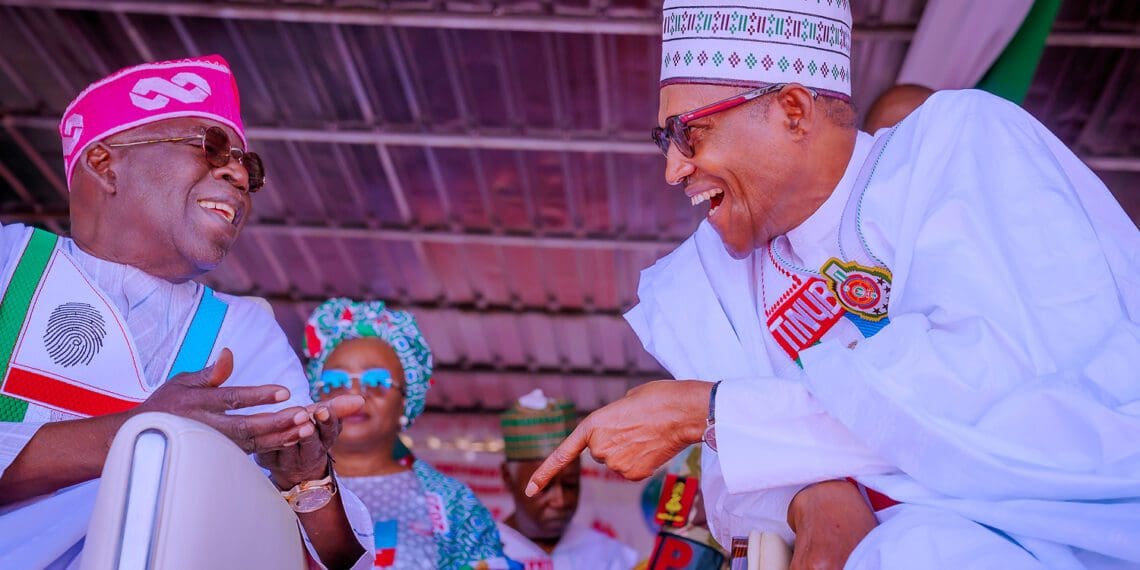

EVEN as the battle for the office of the president and other elective positions across the country shifts to the election petitions tribunal after the eventual exercise of the 2023 general elections, it is obvious that a new administration will succeed the current one as its tenure expires on May 28. In the waning days of the Muhammadu Buhari administration, Nigerians suffered extreme economic hardships as the government toyed with some necessary but painful policy reforms.
It would be stating the obvious to say that the country has been under serious economic stress over a long period owing to a myriad of issues which include unbridled corruption, security challenges, tardiness in policy implementation, deliberate sabotage and large-scale indiscipline, among others. So the administration that would be coming in on May 29 has an unenviable task of dealing with these issues and more. It has the economy to stabilise; it has insecurity to tackle, it has corruption to battle; it has indiscipline to curb; and it has clear and strategic reforms to carry out, if it is to be reckoned with by Nigerians and the international community.
The administration should see the country as an entity in a state of emergency that must be revived first before other considerations. It must not be under the illusion that it is capable of, or can solve all the challenges during its tenure. Some of the issues are endemic and require some time to deal with. They require short, medium and long term plans. The government must therefore identify the immediate ones and deal with them as it steps in. The country has to be stabilised first and foremost: security and the reflating the economy must take precedence.
Nigeria has never been lacking in good policies, the problem has always been with implementation. The new administration would need to deal with the issues of complacency in policy implementation if it is to make appreciable impact. Good policies without proper implementation, are at best adding air to the wind. Given the level of despondency in the polity and the poor perception of government by the people, the new government would need to hit the ground running, if it is to gain the confidence of the people.
As earlier indicated, there is an urgent need to stem insecurity and reflate the economy. There must be a short-term strategic implementation plan to drive the initial process. The government can start with harvesting low hanging fruits, pruning existing revenue stock, sanitising the financial system to conserve funds and immediately embarking on medium and long term strategic growth and development plans with clear implementable guidelines.
Long term strategic planning is the hallmark of good thinking, but the country requires some quick fixes while the more embracing plans are being worked out. The people have severally been told that the major problem of the country is revenue; but it is also obvious that there are avoidable leakages that drain even what is being harvested from existing revenue streams. The government will have to deal with those leakages to conserve funds for a kick-start.
First, the fuel subsidy should be removed. The subsidy regime has overstayed its essence and has not served the purpose. Instead, it has created hardships for the people in diverse ways while opening the vaults to corrupt government officials and industry players. Government must find a way to reduce the over-bloated bureaucracy and drastically cut down on overhead expenditure. Also, a more thorough look at the Central Bank’s cashless policy and currency redesign projects is absolutely necessary. It should have a human face. While pursuing the envisaged objectives, the people must not be turned into sacrificial lambs.
Systemic failure must be addressed. No good policy can blossom in an environment of uncanny entitlement and complacency. The people need some reorientation on culture and behaviour change. The country needs a strategically modelled advocacy that would bring about some kind of transformational revolution on how Nigerians think and behave. The people must be weaned off the culture of selfish exploitation at every opportunity. Government should get to the root of why this happens. It must earn the trust of the people and the people must be nationalistic in their thoughts and actions. Nigerians can’t continue to be their worst enemies.
The President-elect, Asiwaju Bola Ahmed Tinubu has already acknowledged the place of the youths in national development. His government must be prepared to give concrete expression to that acknowledgement by addressing youth unemployment. A large percentage of youths are either not employed or unemployable. Something urgent must be done to address the situation because further delay has serious implications on security and societal stability. It is time also to refocus our education curriculum towards technical skills required for industrialization. Major focus should be on Information Technology (IT) and other technical skills that can be self-sustaining. Part of the revenue saved from removal of subsidy can be ploughed into financing start-ups for those with entrepreneurial skills.
The country has, for a very long time, been threatened by all forms of criminal tendencies: violent crimes, insurgencies, terrorism, banditry, corruption, indiscipline, impunity etc. The in-coming government must fashion out short, medium and long term measures to deal with these challenges. Growth and development can only thrive in a peaceful and disciplined environment.
It is time to give the issue of diversification of the economy concrete expression. Government must create and expand access to ports. There is a stranglehold on exports. Entrepreneurial citizens who have been denied access to ports have been forced into smuggling their goods out. The government should no longer rely solely on oil as the major export commodity; it should focus attention on other commodities with export potentials, including agricultural products, leather, textiles, artworks etc. Trade Officers in the country’s foreign missions should be able to create networking opportunities and expose local entrepreneurs and their products to the international market.
The Government must seriously think towards cutting down the size of the bureaucracy. It might have to familiarise itself with the recommendations of the Oransaye Report and that of the 2014 National Conference concerning the restructuring of the civil service for better efficiency and productivity. The service is bogus, inefficient and unproductive, yet it gulps a huge chunk of the national budget. It is the most profligate sector, yet its contribution to national growth and productivity is very insignificant.
The incoming government has a lot on its plate and it needs to hit the ground running. Four years might look like eternity at the beginning but it comes sooner than it seems. That’s why administrations often seek a second term, but even that disappears in no time. So, time is of the essence, and the new administration might need to set forth at dawn.

