
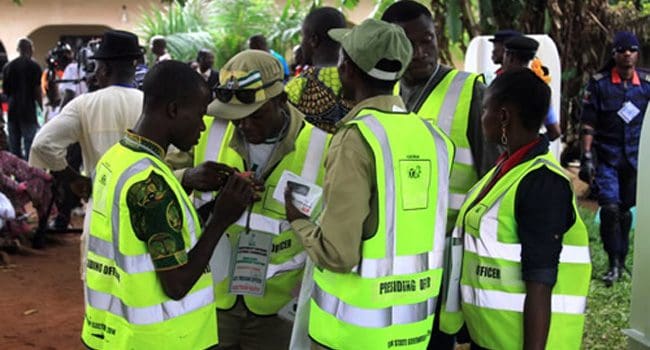

THE outcome of the 2023 general elections in Nigeria and the accompanying reactions by different groups of people have again underscored the urgent need for the country to build strong institutions with capacity to inspire hope and sustain trust across the broad spectrum of the society. Suspicion and mistrust have always trailed every national exercise and this happens principally because of lack of confidence in the critical institutions that shape the direction of governance and the leaders that drive them.
Given the lack of harmony occasioned by the pluralistic nature of the Nigerian Society, coupled with the multi-layered dysfunctional state of ethics in our corporate institutions, trust has become a very scarce commodity. In such an environment, consensus on any matter becomes difficult, and harmony is alien. Disharmony breeds tension and with it comes instability. In a democracy, trust is key in achieving governance goals; and strong institutions, as opposed to strong individuals, is the hallmark of democracy. Most of the disenchantments within the society stem from the failure of institutions to deliver faithfully on their mandates.
As a result of deliberate lack of focus and resultant weak institutions, arbitrariness and impunity have become the hallmark of our national life. This situation has always been with us though, but it was accentuated by the June 12 saga that brought on us crisis of seismic proportions. It brought back memories of the trends that led to the civil war of the 1960s. The suspicions that succeeding ugly incidents throw up pervades the land, widening further the inter-ethnic, inter-religious and inter-regional fault lines. Instead of narrowing, the furrows become deeper particularly with every general election, which outcomes are always contested.
Apart from the electoral body which has severally been seen as incapable of delivering free, fair and credible elections, the criminal justice system has proved on a number of occasions not to be trustworthy. The perception is likely going to affect the planned national population census. The other institutions that should have provided hope at every critical juncture in the corporate governance chain have been prone to corruption and compromise, leaving the citizenry to seek self help when cornered and aggrieved. The weak institutions inspire little or no hope; rather they give impetus to indiscipline and impunity.
The current state of affairs in the country which has been accentuated by the outcome of the just concluded general elections would perhaps not have degenerated if the Independent National Electoral Commission (INEC) was seen to have faithfully discharged its mandate. It would not have been, if the aggrieved have confidence in the judiciary. There would be no reason to resort to protests or self-help if the offended could get justice in the courts. Impunity would not walk the streets if every infringement is visited with prompt and appropriate sanctions. The escalation of violent rhetoric and incendiary messages across the country find expression because the people have lost hope in institutions that should have addressed their concerns.
We must operate a system where no one is oppressed. Equity and justice should be the template of our engagements. It would be foolhardy to assume that there could be peace without justice. Without justice the issues will continue to resurface and at a point, might boil over. The ongoing controversies and the tendentious tone across the entire spectrum of our national space are both intriguing and interesting. Interesting, because all these issues have always been with us and are still with us, and likely to remain unless the needful is done.
It has therefore become increasingly necessary for the country to set forth immediately on the path of national re-orientation and building strong institutions that will inspire hope and confidence in the citizenry; strong institutions that would avail the people the opportunity of developing on an inclusive template. But, how do we arrive at building strong institutions, since institutions do not run themselves! They are run by human beings who are Nigerians. It means the process of building strong institutions must begin with a national re-orientation which would require a change of the mindset and psyche of Nigerians away from doing things arbitrarily.
The National Orientation Agency (NOA) will have to wake up from its deep slumber to mount a massive orientation campaign, to try to bring back patriotism into our national consciousness and wean the people, particularly the youths who have been fed with false and misleading narratives since birth, off ingrained prejudices; and make them toe a new line of thought towards peace and well being of the country. There must be a conscious effort to make public institutions work for the benefit of the people. This means the right calibre of persons with the right frame of mind and patriotic zeal must man and drive critical institutions to deliver on expectations.
In that regard, INEC and the judiciary still have time to reverse the freefall in their reputations that the elections have caused. INEC can finish providing all the BVAS data with the results sheets from the polling units, and it should provide a tally of the totals for the public, the parties, and the courts immediately, so that we can see clearly which areas need to be redressed, especially in regard to the presidential race. The tribunals and courts, and most especially the Supreme Court, need to make their judgments on the merits of the cases, and stop shirking their responsibilities by using technical issues to make decisions that fly in the face of the evidence at hand.
Those who bring down these institutions are Nigerians. Nigerians create the problems and turn around to complain about the very problems that they create when they are overwhelmed by the resultant challenges. Unfortunately, we hardly accept responsibility; we push blames, we point fingers. If everyone keeps pointing accusing fingers, the challenges will remain. There is need for a new and inclusive orientation. A new orientation with strong institutions will definitely plot a new trajectory for the advancement of the country and its citizens.
While these are being pursued, as a matter of urgent national importance, there is need for everyone to remain calm and maintain the peace, even in the face of disappointments. The aggrieved should seek redress through available legal channels instead of heating up the system. The judiciary has a duty to faithfully discharge its responsibilities and ensure that justice is not only done, but seen to have been done, to everyone. There is need for decisiveness by law enforcement institutions on any and all actions likely to threaten the existence of Nigeria, no matter who is involved.
Heating up the system will not be in the interest of anyone; as it is capable of escalating the already tenuous situation and might lead to more catastrophic outcomes for everyone. We do not need that now. If we have to survive to create and build those strong institutions we desire, we have to be calm for now.

