
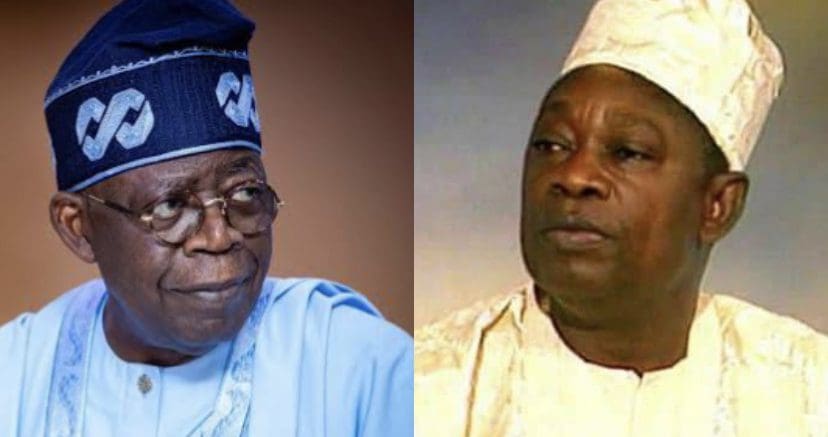

FORMER President Muhammadu Buhari on June 6, 2018 declared that effective 2019 June 12, as opposed to May 29, would be celebrated as Democracy Day in Nigeria. It is to be observed as public holiday to posthumously honour Chief Moshood Kasimawo Olawale Abiola, the winner of the June 12, 1993 Presidential Election and the heroes of the struggle that followed.
Buhari not only made the declaration, he conferred on Abiola, who was eventually recognised as the winner, with the country’s highest national honour, the Grand Commander of the Federal Republic (GCFR). For 18 years into the Fourth Republic, the country was celebrating May 29, the swearing-in day for Presidents and State Governors, as Democracy Day; but Buhari changed the narrative when he opted for the day Nigeria held her widely acknowledged freest and fairest general election.
Thirty years after, on May 29, 2023, one of the arrowheads of the June 12 struggle, Asiwaju Bola Ahmed Tinubu, was sworn in as the 16th democratically elected president of the country. Incidentally, Tinubu campaigned with the slogan of Renewed Hope, which is more or less an adaptation of Abiola’s Hope ’93 slogan.
June 12 has become a watershed in Nigeria’s democracy. The fight for the actualisation of the mandate was long and bloody. Abiola himself paid the supreme price in the process; but the fight for his recognition as the winner of the annulled election continued until the Buhari administration did the needful.
Apart from activists that pounded the streets of Nigeria and abroad seeking the declaration of the withheld result and recognition of the winner, National Conference delegates on the 21st anniversary of the annulment (June 12, 2014), made a strong case for the recognition of Chief Abiola and the heroes of the struggle. They paid glowing tributes.
Moving a motion under Matters of Urgent Public Importance, Chief Orok Otu Duke, South South delegate, informed his colleagues of the need to honour those who paid the price for the struggle. “So many Nigerians died on that day. That is why we are here. Moshood Abiola paid the ultimate price. It is something we should never wish away like it never happened. We should pay tribute to those who fell for the cause of democracy spearheaded by Moshood Abiola. We should always remember this day as a watershed in the history of Nigeria,” he pleaded.
Comparing May 29 and June 12, Afenifere chieftain, Chief Ayo Adebanjo declared that without June 12 there would be no May 29. “That is the basis of our freedom and democracy, and for that, we should remember the day for what it is worth.”
Comrade Isa Aremu, a trade union activists, agreed and asserted that the best way Nigerians could mark the significance of June 12 was to use the occasion to call on all politicians to reaffirm the need for a free and fair election. “What we are seeing today is like we have not learnt from the unfortunate situation that happened on June 12. The real memory of June 12 is to reaffirm our commitment to free and fair election”.
Chief Mike Ozekhome, a Senior Advocate of Nigeria (SAN), who emphasised the potency of June 12 in the annals of Nigeria’s democracy agreed that June 12 gave rise to May 29. “We should not deceive ourselves, some people paid the supreme price to attain the democracy we have today. We should not trivialise June 12. So many elder statesmen here went into exile and some of them were detained unjustly. They paid the supreme price in their sense of messianism. We should give honour to whom it is due. June 12 is not just important; it is a watershed of Nigeria’s democracy.”
Elder statesman, Chief Edwin Clark pointedly said June 12 should be regarded as the authentic democracy day. “I lend my voice to the observations made; but for small-mindlessness June 12 should have been Democracy Day. May 29 is there because someone came to office and decided to make it the Democracy Day.
Unfortunately, small-mindedness also made some of the forerunners to become backbenchers when the proclamation was eventually made. Differences in political camps made a number of those who pushed for the declaration in the days of the struggle to either ignore or scoff at the granting of the request. It portrays the self-serving attribute which has unfortunately become the signature of Nigerian politicians.
Three decades after the annulment, and the agitation that followed, an apostle of the June 12 struggle, Asiwaju Bola Ahmed Tinubu, is now in the saddle as the country’s president. His first outing on Democracy Day is however, planned to be low key, as announced by the Secretary to the Government of the Federation (SGF), Senator George Akume. He indicated that there would be no events except the President’s address to Nigerians on the morning of June 12, 2023. Understandably, the administration just emerged from an elaborate inauguration ceremony barely two weeks ago.
It should be noted that at the start of his political campaign, Asiwaju Tinubu had declared that it would be in the spirit of June 12. Since his electioneering campaign was anchored on Renewed Hope, it would therefore be expected that the new administration would borrow from the very salient points on which Abiola’s Hope ‘93 was anchored and which gave it the support base and acceptance by the electorate.
It needs pointing out here that twenty years down the line, those issues are still outstanding and haunting the country. They still constitute the bane of the country’s growth and development. They include nepotism, poor fiscal policies, opacity in the oil and gas sector, role of the National Assembly in providing oversight for government business and unfocused economic direction.
Abiola had promised to run the country in line with the provisions of the Constitution with people appointed purely on the basis of capacity and competences, pointing to what obtained in his own private businesses where origin and religion were never considered as basis. “We employ people purely on merit, putting round pegs in round holes. Nigerians have every reason to expect from me clear vision when it comes to the management of the affairs of the country as a whole,” Abiola told a press conference in 1993, after the election.
Increased foreign exchange earning was another area of interest for Abiola. “We need to earn more foreign exchange. We shall therefore put in place policies that would broaden the foreign exchange earning capacity of the nation. We would pursue exports and local sourcing for industry”, he said confidently.
Abiola was particularly concerned about the mess in the oil and gas sector. He promised to demystify the issues around the oil and gas industry. “We shall maximise the nation’s returns from oil by turning over future investment to the private sector and by removing the complex structures which makes NNPC’s accountability and efficiency almost impossible. In my government, daily exports of crude will be published and the price at which it is sold.”
He also hinted of his desire to get the National Assembly to do their job and particularly review public expenditure of Government by encouraging public hearings. He emphasised the growth and expansion of the Liquefied Natural Gas (LNG) project.
On monetary policy issues, he assured that Monetary Circulars from the Central bank without the bankers being in the picture will be a thing of the past. He pointed out that the cumulative wisdom of bankers would have seen the country out of the problems it finds itself rather than allowing the IMF and World Bank without proper understanding of the basic issues to make economic prescriptions for the country. “The most brilliant doctor in Norway might not have seen malaria in his life. So, if we should bring him here and impose him as a medical director, it is like sending everybody to death,” he explained.
In his inaugural speech President Tinubu had given indications that his administration will target higher GDP growth, significantly reduce unemployment and put in place an industrial policy that will utilise the full range of fiscal measures to promote domestic manufacturing and lessen import dependency. For now they remain promises until given concrete effect. It would be to the eternal memory of the June 12 struggle and its heroes if the Tinubu government delivers on the issues relating to the Hope ’93 mandate. It would assuage the feelings of the people and justify the theme for this year’s celebration, “Hope Reassured.”

