

IN the past year, there has been an upsurge in tension and discontent among the populace over the consistent rise in the cost of living following President Bola Tinubu’s now famous pronouncement, “Subsidy is gone” which he made at his inauguration. This otherwise powerful but seemingly harmless three-word pronouncement has made life tough and is getting tougher for citizens across the country.
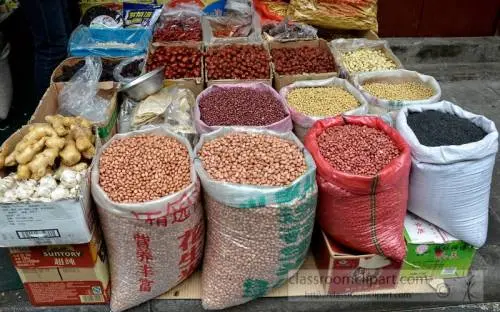
Although the president has consistently promised that the reform he has kick-started with the withdrawal of petroleum subsidy would yield fruits at the end of the day, citizens across the country have been on the edge. Prices of commodities, especially foodstuffs, have skyrocketed and the promise of a better life seems delayed or deferred. It is important to emphasise that a hungry and grumbling stomach would not wait for too long for promises to mature. The people are hungry and the government must do something fast to nip the growing protest against its expected ‘reform’ in the bud.
The first set of protests kicked off in Minna, Niger State, in February. It started with some women protesting the rising prices of grains in the north central state. The women claimed they could no longer cope with the galloping prices, especially with the pittance of home-keeping allowance from their husbands and income from their little sweats. They therefore trooped to the streets to call the government’s attention to the situation. They were soon joined by youths and men who blocked the major highways in the state preventing vehicular traffic entirely or slowing down their movements. A few days later the same scenario was enacted in Sokoto, it soon spread to Kano and later Ibadan in the Southwest and then Lagos.
The Nigeria Labour Congress (NLC) added its voice to the cacophony and actually called out its members made up of organised labour unions across the country on February 27, on what it called a ‘mobilisation rally’. The rally was to last two days, but it was called off after the first day. The NLC served another notice that it might return at a later date.
The Emir of Kano, Alhaji Aminu Bayero, on February 12, 2024, added his voice to the cry of discontent and hunger on the occasion of the visit of the president’s wife, Senator Remi Tinubu, to Kano State where she had gone to inaugurate a building by a private university. The Emir asked the First Lady to tell the president that the citizens are hungry and that something must be done urgently to address it. The Emir, who spoke through an interpreter said, “Although we have several means of communicating to the government on our needs and requests, your way and means is the surest way to tell the President the actual happenings in the country. Hunger has become more alarming and needs urgent attention.”
He also decried the insecurity in the country and called for a radical solution to the menace. Not left out was the Sultan of Sokoto, Saad Muhammad Abubakar. Speaking at the sixth executive committee meeting of the Northern Traditional Rulers Council (NTRC) held in Kaduna on February 12, 2024, the Sultan lamented what he described as the economic hardship in the country, saying Nigerians were hungry and angry.
There is no doubt that the two traditional leaders have spoken the minds of a cross section of the citizens. The government, on its part, through the Minister of Information and National Orientation, Mohammed Idris Malagi, the Special Adviser to the President on Information and Strategy, Bayo Onanuga, as well as others in government, has tried to explain the its stance and efforts in addressing the anomalies.
They all have their points and arguments. However, the government must hasten its steps to redress the anomalies. The people are hungry and there is a limit to which you can convince a hungry person to exercise patience. The government must devise a very radical way to tackle the issue of security. There is no debating what was chiefly responsible for the skyrocketing prices of food in the country. Although the falling value of the Naira could be said to have contributed to the rise in food prices, but if the truth must be told, the major driver of the rise is the issue of insecurity.
In the last few years, kidnapping for ransom, clashes between farmers and herders, and other security challenges have contributed more to the issue than any other. Farmers are no longer safe on their farms. Farmlands have been under siege with the effect that farmers have abandoned their farms due to insecurity. Besides, clashes with herders have also led to dwindling farm yields. These are issues the government must tackle head-on if the issue of food price inflation is to be brought under control. Also, the issue of illegal roadblocks by security agents, mainly the police, and some local government officials and hirelings who demand for bribes from vehicles conveying farm produce must be tackled urgently. They contribute to the hike in prices because whatever is paid is passed on to the buyer by the farmers and transporters.
Although they are also contributing factors, government should not concentrate its attention on blaming hoarders or saboteurs for the challenges but on more fundamental solutions to address the twin problems of food inflation and insecurity. According to government statistics, the inflation rate rose in January to 29.9%, the highest since 1996. The people must be encouraged to return to the farms. All inhibitions must be tackled headlong. The focus must be to address the twin monsters as soon as practicable. It is our view that the issue of insecurity across our northern space, in particular, is not beyond the Nigerian Army. What is required is the political will to deal with it.
It is very important that government moves in very decisively and stabilise security in our rural areas – from north to south, east to west – to the extent that farmers who secure for us the bulk of our food supply can go back to the fields with the onset of the rainy season this year. If that is done and other inputs are given to the farmers at that level and with adequate rainfall (because ours is still rain fed agriculture), we might begin to see harvest in June and July in the South, and between August and October in the north. When we start having robust harvest as a result, we can then take it that we are on the right road to recovery.
The sub-national governments should be more involved in agriculture because it is the states that have land. Some states are already on it and must be commended and encouraged. The Federal Government does not, but it can facilitate the process in several ways. The private sector should be encouraged to go into large scale mechanised farming. This will help to grow and feed agro-allied industries and boost the manufacturing sector.
To reduce the impact of oil subsidy removal on food prices and on other value chains it would be necessary for the Federal Government to get at least two of Nigeria’s refineries working immediately, to guarantee supply of petrol, diesel and aviation gas oil especially, and in the process reduce transport costs. Although some private refineries are coming on stream, they might not address Nigeria’s petroleum products supply challenges. Steady supply of domestic petroleum products is not impacted much by forex volatility issues hence it will be cheaper and capable of reducing cost of all categories of transportation, including food transportation.
While the unwholesome situation remains, government should allow reasonable expression of views regarding the state of things. Muzzling expression of views or restraining peaceful protests would not help the situation. Rather, government should embark on radical interventions to stem the bad situation rather than focus on views expressed or actions contemplated, so long as such are not capable of destabilising the entity. Protests are the oxygen of democracy.
However, it would also be in the interest of the larger society if utterances and actions are focused on drawing attention and redressing the situation rather than worsening it. One wrong step on both sides can tip the scale and that might not be in the interest of anyone. All hands must be on deck to salvage the country from its current precarious situation. Only Nigerians can fix Nigeria. Foreigners cannot come and do it for us!

