
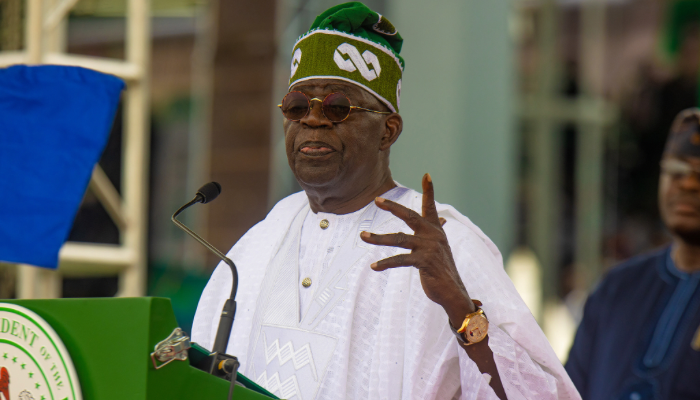

ASIWAJU Bola Ahmed Tinubu, while campaigning for the Nigerian presidency on the platform of the All Progressives Congress (APC), had given indications of what his government team would look like if he were elected and inaugurated as President of the Federal Republic of Nigeria. He had said he would run a government of national competence; and that his team would be made up of tested technocrats and core experts in relevant fields. His focus will be on capacity and competencies in strategic areas.
Commentators agreed that it was the way to go if results and quick wins were to be achieved by a government that is billed to inherit a disabled economy, worsening insecurity and a fantastically corrupt public sector. Four months in the saddle President Tinubu seems to be walking the talk, but in a manner that has started generating complaints from some sections of the Nigerian public.
It has become customary for Nigerians to complain about every move of government that does not seem to involve them directly, more so when sentiments rather than serious interrogation are used as the parameter to judge every action. Region and religion have come to define the rationalisation of issues and any activity that does not consider these as prime factors in the mix is bound to suffer scathing criticisms.
The last one month has witnessed some agitations from certain persons and quarters about perceived lopsidedness in critical appointments made so far by the Tinubu administration. Critics claim that most of the appointments made so far favour the President’s South West zone, to the almost exclusion of other zones of the country. This claim gained more traction in the last two weeks creating divergent camps in the process.
This has become routine in the annals of administrations in the country where accusations usually point in the direction that it has always been a winner-takes-all situation, even if the allegations are not founded or based on raw facts on the ground. The Jonathan administration suffered the same, it escalated during the Buhari administration and the Tinubu government is now visited in its early days with the same disposition.
Although President Tinubu escaped the tag of one-sidedness or marginalisation in the appointment of service chiefs and ministers, holes are being picked in the constitution of the economic and finance teams which critics claim is heavily tilted towards the South West. Incidentally, these are areas perceived by them to be “juicy.” However, divergent views have trailed the claim of parochialism as some have dismissed it as being a product of sentimental indulgence rather than a realistic disposition.
A point of view by some holds that the current state of the country requires tested, trusted and diligent hands in certain critical sectors if the country is to get out of the woods within the shortest possible time. The argument is that if you are going to run a country and run it successfully, you must do so with able and capable hands, people who have the merits to do the job. If that argument is extended, it means the president is free to hire anybody he believes could assist in achieving strategic goals for the nation, no matter where the person hails from.
A different point of view holds that the country is running a fragile federation therefore sensitivities in inculcating a sense of inclusiveness in every critical move are paramount, irrespective of primary intentions. It holds that if the president looks well enough into every section of the country, he could still find tested, trusted and capable hands who may not have worked with him previously, but who have requisite track records that can fit every requirement.
Yet another group is of the view that it has now become the norm in the country’s leadership mentality that any occupier of the office of a chief executive looks in his own corner when making appointments into strategic positions, particularly in the security services, finance and economic sectors. So, they see nothing new or wrong in what President Tinubu is alleged to have done, particularly if the appointees fit the offices and have known track records. They also claim that the South West suffered some level of marginalization in those critical sectors in the last two dispensations.
Again another group is saying that assuming, without necessarily conceding, that it was the case in the past that leaders chose key officers from their zones, was it not time the country jettisoned the “this is our chance” music and danced to a new melody of a mix trend of trust, sincerity and inclusiveness? The question now hanging in this case is: who will bell the cat?
Nonetheless, two sets of views have become dominant and trending. While one holds that the people who are running the administration have been chosen on merit and therefore merit should be the way to go and should be allowed to play out full-time, the other argument is that we are in a federation where there is a constitutional provision for inclusivity, therefore it should be done even in those key ministries and agencies of government since competencies can be found in every region of the country.
Even though facts concerning the spread of appointments made so far might not sustain the tag of parochialism that is already being dangled in some quarters, there are still some more appointments to be made, and the President would do well to ensure that the next set of appointments clears any lingering doubts as to his intention in carrying every segment of the country along in his team formation.
Although he had emphasised during his campaigns that he was going to set up and run a government of national competence, nevertheless he would need some semblance of balance to also make it a government of national unity. Both sides, the meritocracy argument and the federation arguments, should be considered going forward to advance both efficiency and national unity, without necessarily compromising competence.
Agreed, Great leaders work with those who can get the job done, but greater goals are achieved where there is inclusivity and consensus. They go side by side; you must have a united country for you to run a successful administration. So let there be some semblance of balance in appointments in the federal structure, but capacity and commitment must remain the criteria for selection. Nothing should be done, either deliberately or by chance, to worsen the fragile unity the country is currently battling with.
The mentality of tagging some institutions juicy and some not by some people clearly shows a disposition towards corruption in diverse ways. Even though there are pretensions about the condemnation of corruption, especially within the ranks of the less opportune, the classification of agencies as juicy and not juicy and the clamour for their own to be appointed to the juicy ones shows a clear disposition towards avarice and covetousness.
It is our considered position that Nigerians should embrace new realities and walk away from complaints that are based more on primordial sentiments. No country makes good progress when every move, no matter how genuine, is subjected to sentimental interrogations, particularly when facts on the ground do not seem to support the claims. Nigeria is at a critical stage of its existence, and what has now come to be seen as a normal attitude is not going to help its case, no matter how vigorously presented.

