
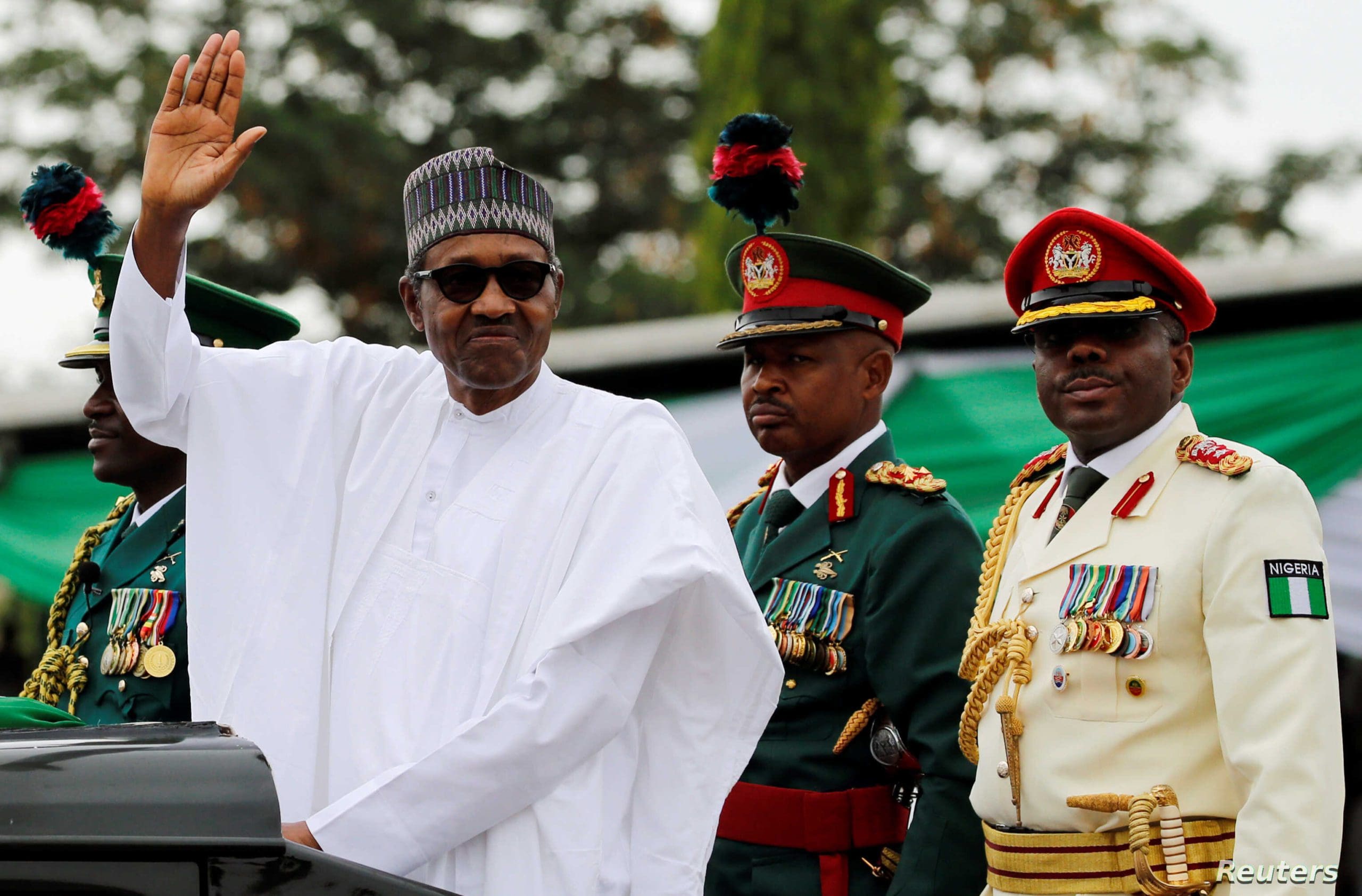

AFTER the third attempt to clinch the Nigerian Presidency through the ballot box, the then-candidate, Muhammadu Buhari and his fellow “change agents” in the All Progressives Congress (APC), finally got their wish in 2015. The 2015 Presidential election was historic in the sense that it marked the first time an opposition political party would triumph in the struggle for presidential power, since independence in 1960.
Amid the sky-high expectations that democratic and governance processes will begin to deliver for the people, many ordinary citizens were inclined to believe that “change” had finally come to Nigeria. Six years down the line, however, it is apparent that the initial wave of optimism and goodwill, which propelled Buhari and his team to the seat of power, has waned.
Notwithstanding the few achievements which the government has made, the dominant picture in terms of the stability, prosperity and unity of Nigeria, looks uninspiring. In the first place, one of the major campaign themes, which Buhari as candidate harped in 2015, and later in 2019, was the security of the country. At the time they were in the opposition, the president and the leaders of his party were not hesitant in knocking the Goodluck Jonathan administration on the challenges of insecurity, which manifested at the time.
The failure of the Jonathan administration to rescue the kidnapped Chibok schoolgirls was for instance repeatedly pointed at by the APC as a sign of the incompetence or cluelessness of the then incumbent. Given the strident and unrelenting criticism, which the then opposition party levelled against the Peoples Democratic Party (PDP) government, the expectation was that they (the APC) would do better if they win the Presidency.
Facts on the ground however point to the reality that the Buhari administration is presiding over the worst escalation of insecurity since the advent of Nigeria’s current democratic dispensation in 1999. Although it may be conceded that the government has managed to restrict the Boko Haram threat to the North East, unlike in the pre-2015 period when even Abuja was susceptible to terrorist threats, the challenge in the last six years of Buhari, is the rise of other very potent threats to national security.
There has for instance been a disturbing upsurge in the activities of armed bandits and other outlaws, who have made the safety of life and limb challenging, especially in the rural areas, with thin police presence. It is now a staple for the news to read of how these groups of bloodthirsty hounds move from one community to another mowing down innocent Nigerians and destroying their property.
Armed bandits have also been consistently going after soft targets, particularly schools where young scholars striving to acquire education have fallen prey to these criminals. Apart from the bandits, who have been comfortably planting their criminal franchises in the North West, the sanctity of life in Nigeria continues to be assailed by the activities of murderous herdsmen, who have been on the rampage all over the country. In the North Central, particularly in Benue State, the problem posed by herdsmen has refused to abate, thereby costing many their lives and property.
This wave of killings and criminality has forced many innocent citizens to flee from their homes, with the consequence of becoming refugees in their own country. In the face of this dastardly onslaught against the lives and property of ordinary Nigerians, the Buhari government in the last six years has been feeble in responding to the threats.
The government does not seem to have put in place effective measures to counter the threats posed by this roving band of criminals.
The government nonetheless claims that in the last two years the country has witnessed and overcome a good number of testy challenges that would have destroyed other nations, especially relating to the nation’s collective security. The president, in his last Democracy Day broadcast, said the onslaught on insurgents in the North East created unintended consequences, resulting in the scattering of the actors further in-country, which is what we are now facing and the government is currently dealing with.
Similarly, the fight against corruption is another one of the cardinal issues, which the Buhari handlers made a talking point before he got into office six years ago. One of the sound bites from the Buhari campaign was that “if Nigeria does not kill corruption, corruption will kill Nigeria.” In line with that bold declaration, the thinking was that the president would move decisively to crackdown on corruption. Six years down the line, the president appears to have lost his way concerning the fight against corruption.
Initial reforms like the introduction of the Treasury Single Account (TSA), Whistle Blower Policy, and the Open Treasury Portal have not been effectively harnessed by the government to stop the financial haemorrhage, which has been synonymous with Nigeria’s public finance management.
On the watch of the Buhari government, many Ministries, Departments and Agencies (MDAs) have continued the culture of financial impunity wherein they blatantly refuse to respond to audit queries. As attested to by various reports from the office of the Auditor-General, many MDAs recklessly mismanage or divert billions of Naira, which should have been used to deliver key social services at the grassroots.
In April for instance, a Civil Society Organisation (CSO), the Socio-Economic Rights and Accountability Project (SERAP), had to file a lawsuit against President Muhammadu Buhari over “his failure to probe allegations that N3,836,685,213.13 of public funds meant for the Federal Ministry of Health, teaching hospitals, medical centres, and National Food Drug Administration and Control (NAFDAC) are missing, mismanaged, diverted or stolen, as documented in the recently released 2018 audited report by the Office of the Auditor-General of the Federation.”
Another verdict on the record of the Buhari government on its signature issue of anti-corruption was recently released by another CSO, the Centre for Democracy and Development (CDD). The pro-democracy group claimed in its report that Nigerians are disappointed with President Buhari’s response concerning tackling corruption.
The CDD report went on to express pessimism that with the onset of the 2023 general elections, it is unlikely that the Buhari administration would be able to do anything significant to stamp out corruption in the remaining two years of his tenure. With so many CSOs reaching the verdict that the president has floundered concerning the fight against corruption, it could be concluded that the government has lost the opportunity to instil fiscal discipline, accountability and transparency in the governance system.
The consequence of unbridled corruption is manifesting in the economy especially in the form of high youth unemployment, the inflationary and recessionary trends, which have made the economy a nightmare for ordinary citizens.
Above all, the most fundamental of the issues, which comes to the fore in the six years of the Buhari’s Presidency, is the very existence of Nigeria itself. On Buhari’s watch, there has been a rise in separatists’ agitations and calls for the dismemberment of Nigeria. Fringe voices and other rabble-rousers calling for the Balkanisation of the country have gained some support base on account of the President’s perceived mismanagement of Nigeria’s diversity.
Since 2015, the president, unfortunately, has not demonstrated the capacity to reach out, dialogue and promote unity and national reconciliation. Added to the shrinking of the civic space, Nigeria has become a cauldron of escalating tension and bloodletting. Although the Buhari government recorded some achievements in the area of critical infrastructure, particularly the investments aimed at reviving the rail sector, revamping the road network, ports development, diversification of the power sector and others aimed at opening up opportunities for the Nigerian economy, those achievements would not matter if the country itself goes under.
In the last six years, therefore, the verdict is that the President has neither steadied the ship of state nor pulled it out of stormy waters. Whether by omission or commission, Nigeria as an entity and its long-suffering citizens have received more lacerating whips with Buhari on the saddle. The current outcomes are clearly different from what majority of the Nigerian electorate endorsed in 2015 and later in 2019.


4 comments
… [Trackback]
[…] Here you can find 86310 additional Information on that Topic: naijatimes.ng/evaluating-buharis-six-years-on-the-saddle/ […]
… [Trackback]
[…] Info on that Topic: naijatimes.ng/evaluating-buharis-six-years-on-the-saddle/ […]
… [Trackback]
[…] Here you can find 53373 additional Information to that Topic: naijatimes.ng/evaluating-buharis-six-years-on-the-saddle/ […]
… [Trackback]
[…] Read More on that Topic: naijatimes.ng/evaluating-buharis-six-years-on-the-saddle/ […]
Comments are closed.