

RECENTLY, former Chairman of the Independent National Electoral Commission (INEC), Professor Attahiru Jega, was reported to have admonished Nigerians not to repeat the mistake of voting in either the ruling All Progressives Congress (APC) or the opposition Peoples Democratic Party (PDP) in the 2023 general elections. To the mind of the former INEC helmsman, both parties have woefully failed Nigerians, after being given the mandate to govern the country for a combined 22 years.
As the APC and PDP henchmen rallied to counter and disprove the assertion of the former INEC helmsman, their case has not been helped by the internal contradictions and crisis within the camps of their parties. Factional squabbles and various forms of proxy wars have engulfed the two major parties, with real implications for Nigeria’s democracy and the rule of law.
Consequently, the turf wars within the parties have robbed them of the much needed cohesion and unity of purpose. As the constitutionally recognised vehicles to contest for and access political power, the parties have critical roles to play in driving the policies and programs on which they won their respective mandates from the electorate, whether at federal, state or at the local levels. As things stand however, both parties have been wracked by internal wrangling and the lack of political consensus. The infighting has taken a toll on governance, especially because top functionaries of government, especially at the national and state level have to devote substantial time to resolving the internal party conflicts, instead of facing the business of governance.
In the PDP, which ruled Nigeria for 16 years before being toppled by the APC in 2015, the party’s National Chairman, Prince Uche Secondus has been fighting tooth and nail to save his job. Although party leaders managed to hammer out a temporary truce, following talks, the main issues, which led to the insurrection in the party and the subsequent calls for the National Chairman to step down, have remained unresolved. The temporary reprieve for Secondus means he will keep his position till October 2021 when a convention will be conducted. It is clear that the temporary reprieve has merely pushed forward the infighting.
The challenge in the PDP is that it is yet to fully recover from the devastating electoral defeat, which was handed to it by the APC in 2015. The party has not been agile enough to act as the counterweight to the ruling APC. This void in terms of absence of an informed, articulate and decisive opposition, has allowed the APC to get away with whatever it wants.
Apart from the fact that the PDP has been enfeebled by its loss of political power, leading to lame opposition politics, its atrocious record on governance has been an alibi for the ruling APC. Despite being in charge of governance six years, the APC continues to resort to blaming the failures of the PDP for its (APC’s) failure to fulfil the electoral promises made to Nigerians, first in 2015, and later in 2019. Beyond its artful dodging, the APC as the ruling party has shown much disdain for the rule of law and due process. One of the current issues propelling the crisis and discontent in the ruling party is the violation by the party of the clear provision of Section 183 of the 1999 Constitution as amended.
The section disqualifies the governor from taking up other jobs during his tenure, as it expressly states that “The Governor shall not, during the period when he holds office, hold any other executive office or paid employment in any capacity whatsoever.” This constitutional provision has been interpreted by the recent minority judgment of the Supreme Court in its adjudication of the gubernatorial election dispute, which emanated from last year’s contest between Rotimi Akeredolu of the APC and Eyitayo Jegede of the PDP. Despite the patency of its illegality on display, the APC, just like the PDP before it has stuck to its guns, in pushing through an act of illegality.
Subsequently, there is no mistaking the fact that the unending squabbles and instability in the two major parties signpost the legacy of bad governance, which they have bequeathed to the country. A close look at critical aspects of Nigeria’s national life would clearly point to the colossal non-performance and the dereliction of duty by the two major parties. After over two decades of being in charge of running the government in the globe’s most populous black nation, the results the APC and the PDP have to show for their time amount to a serious reversal in the fortunes of the country. In such areas as infrastructure, education, health, job creation and even the basic security of lives and property, Nigerians have witnessed their fortunes turning for the worse. Nigeria is much less secure now than it was in 1999 when the reign of PDP began. Many more Nigerians are poorer today than they were in 2015.
In the face of this poor record of performance by the two major parties, there is the school of thought, which believes that Nigerians need a viable and vibrant alternative to the APC and PDP come 2023. While there are constraints imposed by time and the details of organising such a pan Nigerian political alternative, it is nonetheless a worthy exercise, which should begin, whether or not it will result in clinching the big prize, come 2023. On the other hand, there is another school, which is of the position that what Nigerians need are not new parties, but reforms in the existing parties. Given the challenge in the two major parties for instance, there is the belief that if patriotic Nigerians, who have the interest of the country at heart were to move en masse into the existing parties, they could actually use their numbers to alter the culture, purpose and direction of the party for the good of the nation.
Either way, the reality is that the country is not on the right track, and fundamental changes in the political system are required to rescue the country from the brink. However, the push to end the perpetual floundering of the country cannot be achieved without reforms in the electoral process. That political parties and their leaders, who have failed to deliver good governance, have continued to hold sway for so long is a pointer to the deficiencies of the electoral process. The dominant parties have over the last two decades perfected the art of rigging the electoral process to ensure the votes of the electorate do not count.
The use of money to overawe the more popular and visionary candidates has over time made voters despondent and distrustful of the entire democratic process. These challenges do not mean that pro-democracy advocates should throw up their hands in surrender. The struggle for a political system, and by extension an electoral process that will produce genuine, patriotic and visionary leaders, must go on. While there is no doubt that the old guard would continue to scheme to perpetuate the current system, and its less than salutary outcomes, citizen power, combined with the clamor for democratic, inclusive and accountable governance, will win in the end.
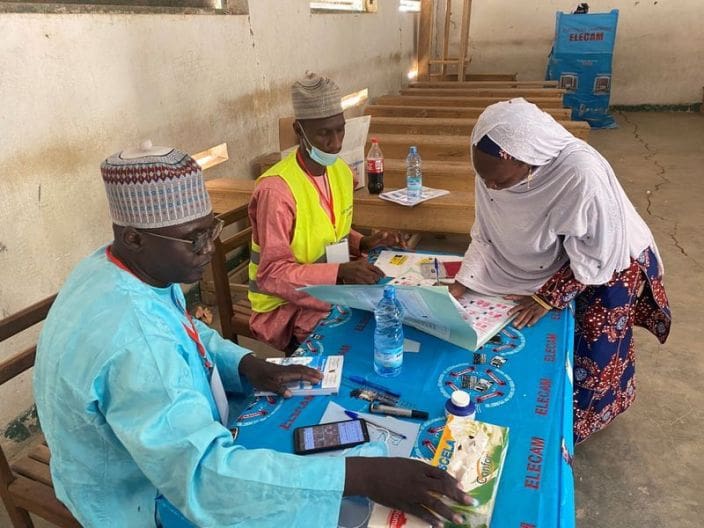
That is why Nigerians in one accord should rise and insist on an electronic voting and result transmission system, which is capable of dealing with the demon of election rigging, the most potent avenue through which undesirable elements and incompetent persons find their way into political positions. The recent show in the National Assembly, where majority of the lawmakers were against the electoral bill seeking electronic transmission of results, is indicative of the fact that the old order is not yet willing to play by the rules during elections. Playing by the rules and allowing votes to count might be the beginning of the end of some politicians and political empires that keep recycling and throwing up unfit persons for political offices.
There are indications that the National Assembly might reverse its earlier position on the Bill and include provisions for the electronic transmission of election results in the Amendment Bill, following pressure from the public. The public should sustain the pressure until concrete expression is given to the desire. The President must not sign the Bill if that provision is missing. As a victim of alleged election malpractices, he should know better and do the needful; particularly as he often claims to be an apostle of free and fair election. As he is preparing to leave the stage in 2023, it would be a befitting legacy to bequeath to Nigerians if he is in the forefront of ensuring that elections in the country are free, fair and reflect the desires of voters.

