
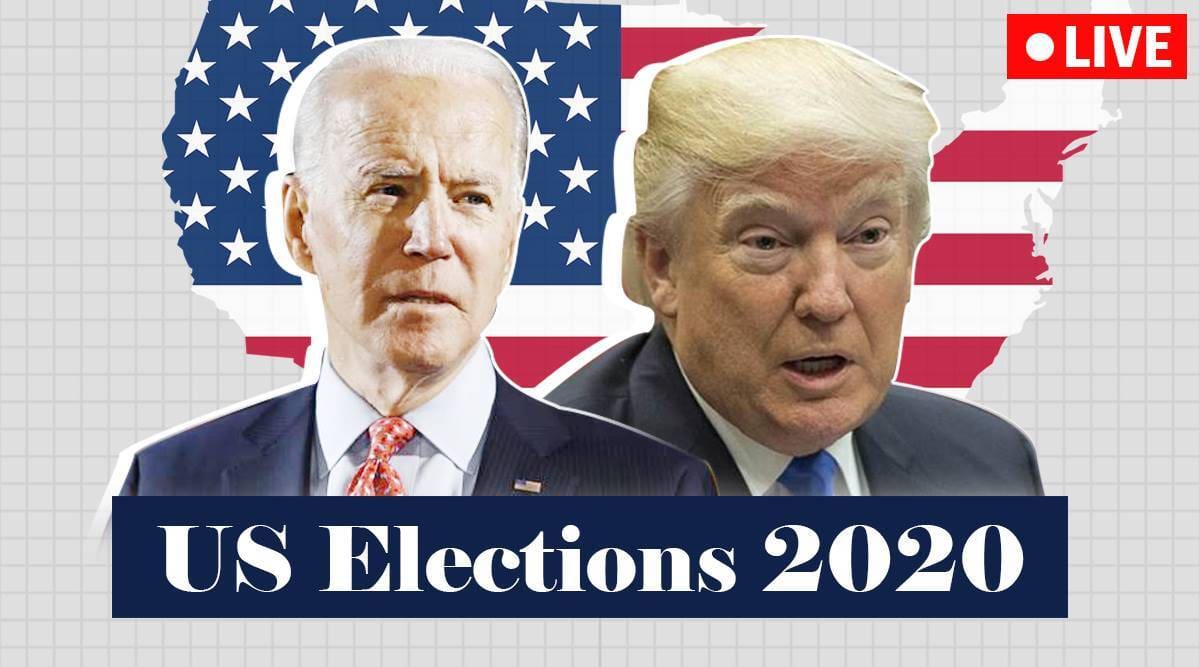

AMERICANS head to the polls in a few days in what is perhaps one of the most contentious elections in the United States in decades. Most of the attention is focused on the Republican Party presidential flag bearer, Donald Trump, but most of the federal Congress and state and local government offices across the nation will also be contested.
This year started with President Trump in good position to retain his office, despite his offensive character that makes even some of his own supporters wince. American presidents running for re-election during periods of economic growth are difficult to defeat – the last was in 1912 – whereas one-term presidents George H.W. Bush in 1992 and Jimmy Carter in 1980 were beaten largely because of economic downturns at the time. President Trump, on the other hand, inherited solid economic growth from the Obama administration, and added to it through tax cuts that disproportionately benefitted the rich and sent Wall Street stock values skyrocketing. Overall US growth slowed a bit in 2019, but wages were rising, even for low income earners. Environmental regulations were torn up, and government agencies were gutted, including a special unit that the Obama administration set up to prepare the United States for a pandemic.
Then came COVID-19. Unemployment exploded from 3.5% in February to 14.7% in April – a rate not seen since the Great Depression in the 1930s. Job numbers have improved every month since April, but unemployment still stood at 7.9% in September – a level typically associated with recession periods. More harmful than the economy to President Trump’s reelection chances, however, has been his own erratic behavior toward the COVID crisis. His persistent refusal to acknowledge the threat of the virus in the first place, followed by his refusal to wear a mask or follow the advice of his own health officials, clearly undermined the nation’s response efforts and allowed the virus to spread rapidly and kill many more Americans – now over 220,000 dead – than victims of the disease in most of the other major industrial nations. The 50 state governments were forced to take 50 different approaches to the pandemic, sometimes with the president refusing to co-operate with governors he did not like – mostly Democrats.
At one point, President Trump even suggested that Americans should drink chlorine bleach (known as Clorox, which is poisonous) to fight the disease, although he later claimed that he was joking. Throughout, he has sought to shift the blame for the pandemic to China and for poor government response to Democratic governors and mayors nationwide. Perhaps the greatest setback occurred when President Trump himself finally tested positive for COVID on October 2, followed by members of his staff in the coming days, the latest being the Vice President’s chief of staff on October 25. The president received an experimental medical treatment that seems to have allowed him to suffer only mild symptoms from the disease, and he has returned quickly to the campaign trail.
More concerning than the president’s mismanagement of the pandemic response, however, has been his clear efforts to undermine the US election system. He has repeatedly raised false accusations that vote-by-mail systems across the nation are fraudulent, and supports wild conspiracy theories that question the integrity of the system without providing any evidence. In addition, he refused to condemn white supremacist groups during the first presidential debate with former Vice President and Democratic presidential nominee Joe Biden on national television. The president did condemn such groups the following day, but racist militias like the “Proud Boys” took Trump’s comments in the debate as an endorsement and reveled in the publicity and newfound legitimacy.
These groups have increased their activity recently and have tried – and so far failed – to kidnap the governors of two different states. If the election proves to be close, many observers fear that the president and his supporters will use teams of lawyers to challenge results based on the false mail-in ballot accusations and bog the nation down in an election crisis for months, prompting supporters of both sides to fill the streets. Such instability could in turn provoke white supremacist groups to take further actions leading to violence and unrest.
Amid all these concerns, President Trump’s popularity has plummeted, and Republicans also look vulnerable to lose control of the federal Senate. The House is already controlled by the Democrats, and they appear likely to extend their number of seats there as well. Trump currently trails Biden in opinion polls by nearly double digits – twice as bad as what he trailed Hillary Clinton at this point in 2016 when he managed to pull an upset win. US polling data guru Nate Silver of FiveThirtyEight.com notes that President Trump’s chances of winning in 2016 were one in three, while today they are about one in six – not impossible, but unlikely.
The key to victory, however, is not the national popular vote, but winning state by state, because of the archaic US Electoral College system, in which each state has a certain number of electoral votes. The largest vote winner in each state receives all of its electoral votes, such that the candidate who receives the most electoral votes – and not necessarily the most total individual votes nationally – wins the presidency, as happened in 2016 and 2000. Consequently, winning swing states like Pennsylvania and Wisconsin, which are traditionally Democratic-leaning but Trump won in 2016, can give a candidate the victory even if he or she receives less of the total votes cast. Biden leads by significant margins in these and other swing states, but not by much more than Clinton did in 2016.
Biden has run an unorthodox campaign, keeping a lower profile rather than defining his issues, in order to let President Trump continue to self-destruct. Biden has, however, wisely kept the spotlight on Trump’s mismanagement of the COVID crisis, as well as on questions about the president’s taxes, once it was revealed that Trump paid a mere $750 in 2016 and 2017 and owes over $300 million in loans, as well as having a Chinese bank account. In addition to a national COVID strategy – including a mandatory mask requirement – Biden’s signature policy platform is a $2 trillion renewable energy initiative investing in green manufacturing jobs. This proposal plays well with his Democratic base, but it is riskier with moderate independent voters who have grown more worried about climate change in recent years but may not be ready to pay for such a massive effort.
US Africa policy has not been an issue in this campaign, but Nigerians will no doubt remember President Trump’s dismissal of African countries as “shitholes.” Nonetheless, Nigerians can expect a continuation of military assistance against Boko Haram under a second Trump term, as well as a tilt toward the protection of the lives of Christians in Nigeria, reflective of Republicans in Congress who seek to make this a central plank of US Africa policy. A Biden presidency will also continue to target Boko Haram, but will likely return to the Obama-era policy of a more balanced approach on North-South issues. Climate concerns may also play a larger role. Ultimately, this election turns on Donald Trump. Americans are deciding if they wish to keep him, but the president himself is also going to make the momentous decision whether to respect the results if they are close or inconclusive on election night, or whether he will bog the nation down in weeks or months of litigation that could lead to destructive unrest and global financial uncertainty. When push comes to shove, the president tends to bluster a great deal and then back down, and if the vote goes clearly in Biden’s direction, this may be what we see. If the results are tighter, however, and with so much at stake, the nightmare scenarios will become more of a threat. We can only hope that the president will, uncharacteristically, act presidential, and respect the process and the will of the American people.


2 comments
… [Trackback]
[…] Read More to that Topic: naijatimes.ng/america-votes-2020/ […]
… [Trackback]
[…] Read More to that Topic: naijatimes.ng/america-votes-2020/ […]
Comments are closed.