
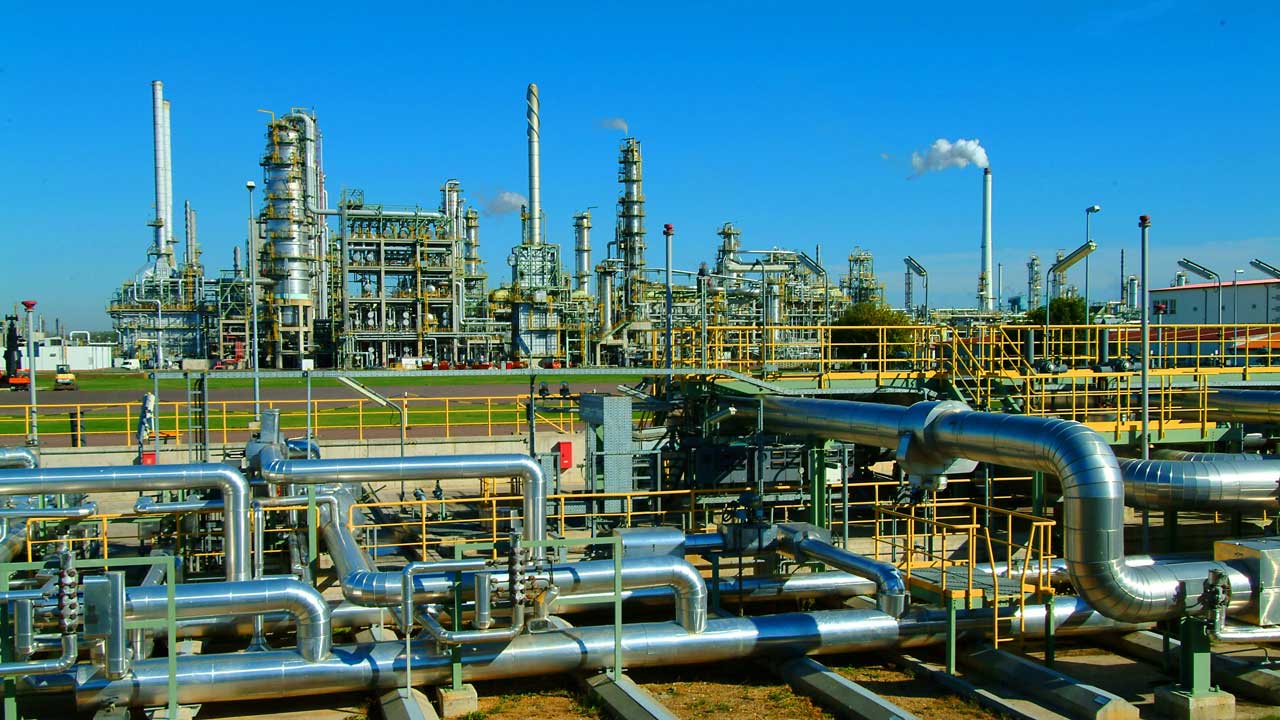

THE recent approval of $1.5billion by the federal government for the rehabilitation of the Port Harcourt refinery triggered discussions on the Nigerian economy as to the exact motive of the decision. It came just after government had announced its desire to sell off some of its non-performing assets to raise money to reduce the funding gap in the 2021 budget.
Expectedly, the proposal on assets sale was greeted with mixed reactions although some economic experts and industry players are of the view that it was a better option than to launch out on another borrowing binge.
Those knocking the move to revamp the refinery had thought the refineries should have been top on the list of assets government should dispose of, as it has become obvious that their current status is not just a sore thumb but constitutes an unnecessary drain on the economy through phoney maintenance contracts.
For more than four decades, government has been pouring huge amounts of resources into the turn-around-maintenance (TAM) of the four crude oil refineries in the country, with absolutely nothing to show for it. Instead of bringing the expected gains, the situation in those refineries have progressively moved from bad to worse. No valid explanations have been offered for this sordid state of affairs; instead, government opened another floodgate of profligate spending through subsidy on imported finished products.
The Olusegun Obasanjo administration, convinced that the refineries were more of a drain pipe, decided to sell them off but the Umaru Yar’Adua administration, following complaints about how the sale was executed, reversed the decision and decided on revamping them. The story has not changed since then. If anything, it has gone worse, a development that has seriously affected the income stream of the country, sending it on a borrowing spree.
The announcement early this year that government would look into the sale of its assets to gather huge capital to help prosecute the capital component of the 2021 budget was therefore seen as a better option than another round of borrowing. However, it would not be the first time government is making this proposal, not even the Buhari administration. It has often been a convenient option for government whenever it finds itself in a financial bind, a proposal it never really had the courage to carry through.
In 2016 when government revenues dwindled so much that it threatened the implementation of the budget, government decided on a stimulus plan in which the sale of some critical assets was the primary focus. Just as it was announced recently, the intention of government was just to get enough money to fund the 2016 budget and get the economy, which had slipped into recession, back on the path of recovery.
Instead of going ahead with the plan, government demurred because of opposition from Labour and other interested parties who cried foul. It rather decided to source for more loans to fund the budget, a development that ballooned the already huge debt burden hanging on the country’s shoulders.
The country has over the years relied largely on proceeds of crude oil sales to fund its operations, as contributions from other sectors of the economy often come in trickles; but crude oil sales is often subjected to market volatility. It thus makes a valid case for the economy to be fully diversified to provide more reliable and sustainable revenue streams for the country. To pursue that line of action however, government needs to inject a large dose of capital into the system to get the economy back on track and to faithfully implement those provisions in the capital budget tailored at reflating the economy and further aiding the diversification process.
It is not that government has not realised this need; but instead of looking for more strategic ways of raking in more funds, it has always found the easy way out through borrowing. Given the current huge debt profile, the borrowing option is no longer conducive as more loans will obviously raise the level of debt service to an unsustainable level. Government therefore must find other ways of meeting its expenditure requirements.
Since it is obvious that it cannot manage some of its critical assets profitably and given the fact that a number of other assets are wasting away across the country, government needs to explore strategic avenues to dispose of such assets and use the proceeds to fund its activities instead of piling more debts which may eventually prove difficult to offset.
It is evident that government must reflate the economy through a fiscal stimulus approach and strategic implementation of annual budgets, but certainly not with borrowed funds. Selling off unviable assets is therefore a much better and convenient way of gathering huge funds to finance government business. Other areas like advance payment for license rounds, infrastructure concessioning and better application of recovered funds amongst others, can be looked at, to reduce funding gaps in the national budget.
Government therefore needs to urgently take inventory of its non-viable assets including the refineries, real estate, sporting facilities, plants and machineries as well as idle or wasteful industries, and do the needful. It must be emphasised here that selling off assets does not necessarily mean the assets are not viable or useful; it’s just that government does not seem to have the capacity to manage them to the benefit of the economy and the country.
If government is so enamoured about those assets and would not want to completely let go, it could explore other angles in the asset sales proposal including repurchase options, which will make provision for buy-back of those assets when the situation improves.
The tax option is also an area that can pull a lot of resources into the economy. However, instead of increasing tax rates, government should focus more on widening the tax net. Continuous increase in tax rates might result in, or discourage compliance, by those already in the net.
Government has often cited opposition to its well-intentioned policies and proposals as reason for going back on them. The challenge of opposition can be stemmed through proper and inclusive consultation with critical stakeholders. Proper enlightenment on the stakes they have in such ventures can go a long way in assuaging them. If stakeholders fully understand the import of a policy action and are offered stakes in the affected sectors, they would be compelled by self interest to protect the organisation or sector from going down.
Time is ticking and procrastination could be dangerous. Government has to move fast to avoid a situation where deterioration will further deplete the value of the assets and inflation would make nonsense of the eventual proceeds, if it is serious about the assets sale option. We hope that the assets sale proposal is not just another game of distraction under which government intends to hide and emerge later with an excuse of an urgent need for more loans to fund its activities.


4 comments
… [Trackback]
[…] Read More on on that Topic: naijatimes.ng/sale-of-assets-option/ […]
… [Trackback]
[…] Here you will find 29594 additional Information on that Topic: naijatimes.ng/sale-of-assets-option/ […]
… [Trackback]
[…] Read More Info here on that Topic: naijatimes.ng/sale-of-assets-option/ […]
… [Trackback]
[…] Read More on that Topic: naijatimes.ng/sale-of-assets-option/ […]
Comments are closed.