
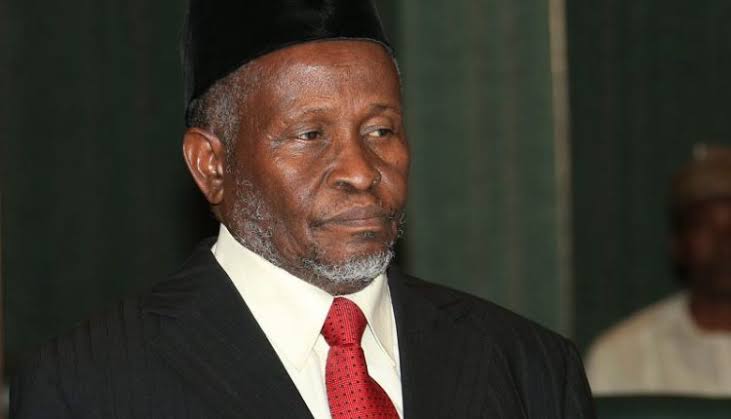

ON Tuesday, August 31, 2021 the Chief Justice of Nigeria (CJN), Justice Tanko Muhammad, met with Chief Judges of six states in the country over the recent wave of conflicting orders issued from their courts. The meeting was a prelude to a broader probe by the National Judicial Council (NJC), over which he also presides. They were required to explain what led to the issuance of conflicting orders by courts of coordinate jurisdictions in their domain. The affected states are Anambra, Imo, Rivers, Cross River Kebbi, and Jigawa.
The CJN was reportedly embarrassed by the development. In a statement issued from his office, he stated that his attention had been drawn to media reports to the effect that some courts were granting conflicting ex-parte orders on the same subject matter. The NJC had intervened on a matter like this before, and had warned judicial officers on the need to be circumspect in granting ex-parte applications.
Going by events in the last three months, that warning must have fallen on deaf ears. It is not the first time the judiciary would be suffering from this very worrisome development. In fact, it is gradually becoming the norm. In the past, this phenomenon had led to the truncation of the democratic process. Irregular court judgements have done incalculable damage to our electoral process and are fast taking the place of the electorate in deciding election outcomes. A number of governors and legislators are currently holding office by the grace of the courts.
This unbecoming indulgence has affected every facet of development in the country, including the fight against crime and corruption. The corruption in the judiciary is seen as a major stumbling block in the fight against corruption in the wider society. There are enough indications already that if there is no urgent intervention against this kind of indulgence, Nigeria’s democracy and governance structure could be seriously imperiled.
The recent rash of conflicting orders from courts of coordinate jurisdiction started trending after the governorship primaries in Anambra State where factions of almost all the registered political parties emerged with their own candidates, with the opposing camps heading to the courts. The internal conflict in the Peoples Democratic Party (PDP) at the national level over the continued relevance of its chairman added to the charade and gave it a national spread. It has become a recurring decimal during party primaries and whenever there are issues with the leadership of political parties.
This macabre dance in the temple of justice has become an embarrassment and is raising concerns in relevant quarters. In particular, the populace is becoming more and more apprehensive that the courts are becoming “cash and carry” supermarkets where the super-rich easily buy judgements and frustrate justice. The Nigerian Bar Association (NBA) while also taking a slice of the blame, lamented that the recurring contradictory decisions by the courts, based on indiscriminate granting of orders and counter orders, evokes memories of those eerie and unwanted dark days.
The NBA has admitted that its members are complicit in the orgy of events because some of them have become willing tools for politicians who wantonly abuse the judicial process for their selfish gains. It blamed judicial officers who indulge politicians that go around shopping for judgements. The unprofessional conduct of these judicial officers, both at the bar and the bench, bring the judiciary to public ridicule. The NBA therefore warned that it would no longer be an onlooker while the country’s hard-earned democracy is rubbished by the venal acts of a few. We hope the NBA is not just engaging in fanciful rhetoric but would walk the talk.
Nigerians are beginning to lose count of the number of times the irregular actions of some judicial officers created serious concern for the society, given the peculiar nature of the judiciary. Not too long ago the actions of some of these officers provided a ready excuse for the Executive to wield the sledge hammer, when it suspected some judges were hawking judgements and selling to the highest bidders. Homes of the suspects were invaded in the dead of the night, giving rise to serious controversy over the propriety of the action.
Some members of the legal profession supported the action of the Executive and insisted that some judges were indeed like one-chance armed robbers. Even though some did not endorse the method applied by the DSS, they nonetheless supported the action, saying the authorities were left with little choice than to intervene and save the judiciary from the antics of a corrupt few.
In an interview with Television Continental for instance, an elder statesmen and very senior lawyer, Chief Ayo Adebanjo, agreed that the DSS acted within its mandate by arresting the judges on alleged corruption charges. He pointed out that quite a number of judges in the country see appointments into election tribunals as an opportunity to gather as much money as they can. He said cash-for-justice had long been the mainstay in the Nigerian judiciary, perpetrated by a small clique of judicial officers that are corrupt and corrupting the entire system.
It is time that small clique of corrupt judicial officers is tamed before we have a bigger crisis on our hands, as the judiciary remains the temple of justice and cannot be left in the hands of mercantilists who auction instead of dispense justice. The days of election tribunals, where judges collect money from all shades of characters and dole out interlocutory injunctions and judgements to the highest bidder, should never be allowed to return.
Given the very embarrassing trajectory that the judiciary in Nigeria is taking, we believe that it is time the NJC takes a second look at the process of appointing judicial officers. The quality of education received; the milestones in practice and the character of prospective officers should be the minimum requirements for the office of a judge. Back in the day, judicial officers used to have honour and integrity, but the same cannot be said of them today. The scenario in the judiciary today is akin to what may be seen on the streets between corrupt policemen and reckless Danfo drivers.
It has been observed that the process of appointments to the bench has been fraught with terrible policy summersaults. The entire system has degenerated to a point where appointments have become a reward for loyalty and other mundane considerations. Most of the judges today never really had interest in the office but were nominated by some powerful persons in the society. Quality has been replaced with mediocrity. Loyalty now is to patrons and sympathisers, not to the law; not to the Constitution.
Therefore, there is an urgent need for a review of the recruitment process of justices in the various courts. The NJC must show diligence in the appointment of judges and it must also be quick with sanctions when they err. The NBA should wield the big stick in cases involving its members, if sanity must prevail.
There is however the question of whether the NJC is appropriately equipped to investigate intricate cases of corruption among judicial officers. The body’s responsibility is majorly the appointment of judges and the administrative regulation of their conduct. It is argued in some quarters that whilst the NJC has powers to sanction professional infringements, it might not be the same with investigating cases of corruption. They claim that judges are often relieved of their positions but not properly prosecuted for offences committed because the NJC does not have the power to prosecute corrupt judges. The NJC should go further than that to prosecute corrupt officers in the law courts.
Except if it is for purely administrative reasons, the summoning of the States’ Chief Judges by the CJN instead of allowing the normal process of getting the suspected judges to appear directly before the NJC, on receipt of petitions from affected parties, was seen as curious. There should be no place for political interventions in the line of justice administration and delivery. Those who err must be disciplined immediately. Politicians will stop at nothing to corrupt the judiciary, and the judiciary has a responsibility to ensure they do not succeed – they must resist every form of temptation.
“Black Market” judgements must be seen as an aberration, a monumental abuse of the judicial process and a very potent threat to our democracy. It is capable of rendering the justice system impotent. An impotent justice system leaves on its trail a lawless society where only the fittest survive. Such a scenario would definitely lead to frustration and eventual breakdown of law and order. This is why this commotion in the judiciary must stop now; and everything must be done by all concerned to halt it.

