
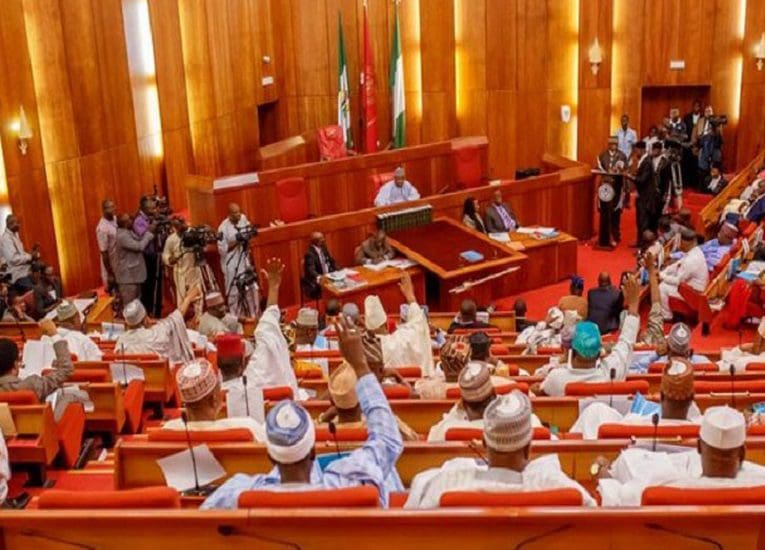

IN a sudden reversal, the Senate last week changed the election bill to allow INEC the power to utilise electronic transmission of vote tallies directly from polling units. In addition, the Senate made direct voting of candidates in primaries required. Both provisions, if passed by the House of Representatives and signed by the president, would constitute a major victory for democracy in Nigeria.
It would make a key contribution toward reducing the potential for election violence in 2023. Nigeria’s tireless civil society groups, journalists, and reformist legislators who drove the effort deserve high praise for building enough public pressure to push senators to make the right choice for democracy, and for the nation overall. And this goes to show that public opinion is a powerful force in determining the direction of government action.
Nigeria’s election system is much improved from the days of INEC chair Maurice Iwu’s outright selling of political offices, producing in 2007 what the US embassy called “an election-like event.” The introduction of the electronic voter registration system was particularly important in reducing voter fraud in 2015. Yet the main political parties and politicians remained determined to buy, steal, and fight their way into office as a “do or die” affair, such that by 2019 they had developed new ways to circumvent the process, including buying and hoarding voter cards.
Perhaps the weakest link in the election chain, however, has been Nigeria’s unnecessarily complex collation process. International election observers, like those from the European Union and the US-based National Democratic Institute and International Republican Institute, have long advised Nigeria for years that its collation process had far too many levels that opened far too many opportunities for politicians to change the results as they moved up the chain.
That is exactly what politicians have done, and exactly why many legislators did not want to change the status quo, since many of them know their poor performance would be punished by constituents if the true voter preferences were tallied. Powerful local politicians can change results at the ward and local government levels, and state and national kingpins can change them at the state level as well, before they ever reach INEC in Abuja.
The introduction of direct transmission of results from the polling units will go far in helping INEC fight such tampering at the intermediary levels. Former INEC chairman, Prof. Attahiru Jega, based on hands-on experience, has said that electronic transmission of results will reduce election fraud in the country. With each polling unit officer sending Abuja their results, INEC will have the data to challenge figures that show obvious signs of tampering during the collation process, as will candidates who have clear reason to believe their opponents cheated. Moreover, the political parties will have a better chance of policing each other by keeping parallel counts at each polling station and producing such evidence as needed.
At the same time, we must acknowledge that no such fix is a panacea, and that if this bill is passed, the parties and politicians will continue the shift toward focusing more of their rigging efforts to the polling units, which began with the introduction of the electronic registration system. INEC polling unit staff, already in danger of intimidation and bribery, will come under greater threat and will need more support and protection.
Clearly, reform of the political parties is an essential part of the democratic success in Nigeria, and the Senate’s introduction of direct elections in the primaries is also a major step forward. Senators like Adamu Aliero and others who argued for the provision deserve praise and support for the efforts. Shamefully, Senator Smart Adeyemi argued against the idea based on his elitist notions that most of his party members are illiterate and “need enlightenment” – he should put his views before his constituents at the ballot box, and let them enlighten him as to who he is in office to serve.
Primaries for the largest parties are now basically determined by the candidates with the most money and muscle, since their elections are negotiated by party elders through backroom deals and front room brawls. Direct candidate elections will now open the way for candidates to have to seek the actual support of voters in the party. This approach replicates all the problems that the general elections face, of course, but that would be a dramatic improvement to the current primaries, which are little more than auctions.
What is unclear at this point is if the parties themselves are expected to run these primaries, or whether INEC will conduct them. INEC running them is far preferable, given its expertise and relative neutrality. Yet the commission’s leadership, ironically, has resisted having to run primary elections out of fear of the logistical nightmare of managing so many party contests. Workable solutions are available, however, such as requiring all the parties to have primaries on the same day.
Now the effort for reform must turn to the negotiation between the Senate and the House to ensure that the revisions are passed by the Assembly. President Buhari now must step up and lead, calling on legislators to support these changes and to ensure their legacies while they have the chance. They have so far avoided doing so – but it is not too late.

